I've noticed a few threads lately where people are "thinking about jumping on a P bass" or have actually "jumped on a P bass". I'm not sure why someone would want to do that but apparently P basses are up to the task. Perhaps it's the thicker neck? Maybe since they are bolt-on necks they would be easier to replace if the jumping got too aggressive? I don't know. I've read that Jamerson had really high action on the Funk Machine, maybe it made the jumping funner? Who knows? All I know is that I read that P basses are good.

Enjoy the benefits of a premium membership!
Upgrade Account
-
TalkBass has been independent since 1998. Add your voice.
Create a free account to reply to discussions, view embedded media, and browse with fewer display ads.
Join free Log in
Want zero display ads or expanded classifieds tools? Compare plans.
You are using an out of date browser. It may not display this or other websites correctly.
You should upgrade or use an alternative browser.
You should upgrade or use an alternative browser.
Why the P bass obsession
- Thread starter JRuben
- Start date
More options
Who Replied?
I've noticed a few threads lately where people are "thinking about jumping on a P bass" or have actually "jumped on a P bass". I'm not sure why someone would want to do that but apparently P basses are up to the task. Perhaps it's the thicker neck? Maybe since they are bolt-on necks they would be easier to replace if the jumping got too aggressive? I don't know. I've read that Jamerson had really high action on the Funk Machine, maybe it made the jumping funner? Who knows? All I know is that I read that P basses are good.
Usually the "jumping on" is restricted to double basses.
Did you notice that he is playing a Squier?
not just "a Squier", it's a Classic Vibe 60's, one of the best series ever made by Squier
 don't know the price in USA, but here in Europe they cost around 450 euros, not that cheap, and they are wonderfully made. I have had a couple of basses (60' P and 60's J) and I still have a 60's Strat that is the best Strat I've ever used (the ending of a research lasted TEN years, really! 2003 to 2013)
P-basses are okay, they have a history which cannot be denied. But session heavyweights like Abe Laboriel, Nathan East, Stanley Clarke, Alphonso Johnson, Verdine White, Robert Trujillo, Paul Jackson, Tony Levin, Chuck Rainey, Mark King, and many many many more have long since gone the boutique route which throws a monkey wrench in the theory that producers would rather have a P-bass. To me it's more their history which keep their sales bolstered but in truth they're a one trick pony in that with a set of flats you get that thick tone that sits well in the mix but that's not to say you cannot get another quality instrument to sit equally well in the mix. YMMV 

Right...one trick pony...that's why Jamerson, Paul Jackson, Rocco Prestia, Dave Hope from Kansas, Mike Dirnt, Roger Waters, and Steve Harris all sound identical.P-basses are okay, they have a history which cannot be denied. But session heavyweights like Abe Laboriel, Nathan East, Stanley Clarke, Alphonso Johnson, Verdine White, Robert Trujillo, Paul Jackson, Tony Levin, Chuck Rainey, Mark King, and many many many more have long since gone the boutique route which throws a monkey wrench in the theory that producers would rather have a P-bass. To me it's more their history which keep their sales bolstered but in truth they're a one trick pony in that with a set of flats you get that thick tone that sits well in the mix but that's not to say you cannot get another quality instrument to sit equally well in the mix. YMMV
Yeah, that sounds like a good idea.
I predict it would be an entirely uncontentious thread.
Right...one trick pony...that's why Jamerson, Paul Jackson, Rocco Prestia, Dave Hope from Kansas, Mike Dirnt, Roger Waters, and Steve Harris all sound identical.
...pretty much
...they all sound good
...but they each have their own styles
and I'll throw in Willie Weeks
Right...one trick pony...that's why Jamerson, Paul Jackson, Rocco Prestia, Dave Hope from Kansas, Mike Dirnt, Roger Waters, and Steve Harris all sound identical.
Or John Glascock. Early user of the MM, at least in the Heavy Horses video - don't know about in reality.
Not to mention Donald "Duck" Dunn, Carol Kaye, Pino Palladino, Willie Weeks, Sting, Paul Simonon, and George Porter Jr.Right...one trick pony...that's why Jamerson, Paul Jackson, Rocco Prestia, Dave Hope from Kansas, Mike Dirnt, Roger Waters, and Steve Harris all sound identical.
People say they are after "that P bass sound" which implies a singular sound yet no one complains but if someone says "one trick pony" people get very defensive even though it is essentially saying the same thing. Personally I don't think that there is "a P bass sound". I've had a few and they sounded similar but different. You can get different sounds from P basses with different strings and different playing techniques but you can do that with any other bass. Maybe the reason P basses are a good starting point is the fact that they are so simple(one pup and basic passive electronics) that they let the character of different strings and techniques shine through more than a more "complicated" bass that has more things(dual pups, active electronics.....) asserting their own character into the sound. I don't know. Just thinking out loud.
People say a lot of meaningless stuff when it comes to describing the sounds they like 
People say they are after "that P bass sound" which implies a singular sound yet no one complains but if someone says "one trick pony" people get very defensive even though it is essentially saying the same thing. Personally I don't think that there is "a P bass sound". I've had a few and they sounded similar but different.
I have some recordings and to be honest it's often hard to know, even with solo tracks, if I was playing a P or a J (front pickup only) on some of them as on the old ones I recorded through a preamp to give a fairly chunky direct sound (these days it's as dry as possible for reamping, but those were different times back then). It all sounds like me, though.
(What surprised me, given it was folk-rock, was how dirty the sound was, but then listening back to solo tracks by other bassists I can see how that gets hidden more than you think. I just hadn't listened back to them solo in a decade)
I swear to god
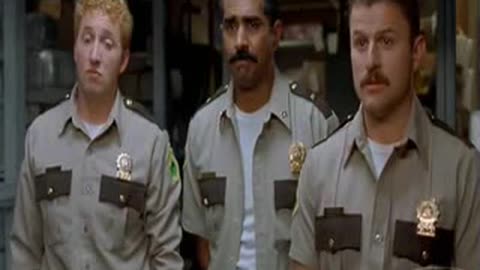
I'll pistol whip the next guy who says "one trick pony"
I'll pistol whip the next guy who says "one trick pony"
I find it humorous that some folks claim they can tell just by the sound what sort of electric bass was used in different recordings despite the chain of electronics and processing involved making the end product. If they didn't already know what sort of bass the player usually records with, I doubt they would be able to identify anything.
I find it humorous that some folks claim they can tell just by the sound what sort of electric bass was used in different recordings despite the chain of electronics and processing involved making the end product.
I use mine to trigger MIDI synths sometimes. Does using a P or a J matter in this context?
I swear to god
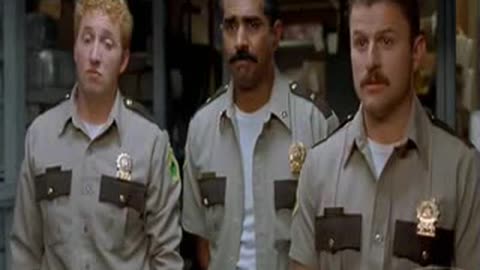
I'll pistol whip the next guy who says "one trick pony"
Seriously. Once again, no such thing as a one trick pony electric bass.
Anyone making that claim about such an instrument should come to realize it is not the bass that isn't versatile; it is their playing and technique that is deficient.

Jimmy - nice post! With due respect, though, please don't forget JAE and his Fender P-bass (Frankenbass), which he only used for Tommy, Who's Next, and part of Quad. Of course, he sounds no different than the others. Hahahaha.Right...one trick pony...that's why Jamerson, Paul Jackson, Rocco Prestia, Dave Hope from Kansas, Mike Dirnt, Roger Waters, and Steve Harris all sound identical.


