
Enjoy the benefits of a premium membership!
Upgrade Account
-
TalkBass has been independent since 1998. Add your voice.
Create a free account to reply to discussions, view embedded media, and browse with fewer display ads.
Join free Log in
Want zero display ads or expanded classifieds tools? Compare plans.
You are using an out of date browser. It may not display this or other websites correctly.
You should upgrade or use an alternative browser.
You should upgrade or use an alternative browser.
Will I die?
- Thread starter slowjam98
- Start date
More options
Who Replied?


The bigger question is, is there life after electrocution? Be sure and drop us a line here on TB if you can answer that.
Seeing as how the definition of the word electrocution is to die from electricity running through you to ground I don't think he'll reply if he gets electrocuted


As an eBay Associate, TalkBass may earn a commission from qualifying purchases.

We're gonna need proof of this "death" thing. If you die, we need you to post some details of that.

buldog5151bass
Kibble, milkbones, and P Basses. And redheads.
Those of us old enough to remember getting shocked when amps had polarity switches (and have heard about people who DID die) will tell you to go to the hardware store and get a replacement plug.

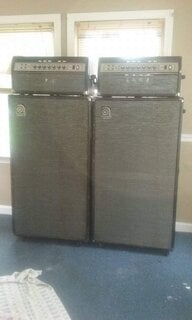
i thought it was going to be a 4x10 on top of a 1x15...
yes, you're going to die. eventually. we all are. using ungrounded electrical equipment won't make you live forever.
yes, you're going to die. eventually. we all are. using ungrounded electrical equipment won't make you live forever.

I'm already dead. Great venues here.
I'm already dead. Great venues here.
The competition must be fierce.

I'm already dead. Great venues here.
Have you jammed with Hendrix yet?

I will say I would get a good cord cap but will also say that those of us here who are old enough here to have used polarity switch amps when that was all there were knew how to set the polarity switch before we got shocked. First of all always make sure you have shoes on, don't stand in any water, don't touch anything else metal after you plug it in, turn the power switch on, wait a minute or so for it to warm up, turn the standby switch off and then throw the polarity switch to whichever way has the least hum. If there is no hum either way unplug your bass and hang it over the amp so it can't touch the floor and again put the switch to whichever way has the least hum, if it doesn't change, your polarity switch is probably bad. If that is so, reverse the plug. If that doesn't change it bring it to get fixed, bring it to get it fixed anyway.

it depends on the era, in the 70s it was the drummers most at risk.Bass playing is an extremely dangerous endeavor. The death rate for bass players is estimated to be 100% (+/-).

Why take the chance ?? A LONG time ago my band was playing on a metal flatbed truck at a local festival, and I was the victim of a pretty nasty polarity shock. I was playing and went to sing a vocal - when I touched the mic it felt like an explosion, and literally knocked me down ! I could not move for several seconds, and had a swollen lip and dizziness for several hours. Why even ask this question - FIX IT ! Not only for your safety - for the life of your amp. Just last year a local sound guy found out the hard way that the stage at a local fair was wired incorrectly, and fried the amp modules in 4 of his Bose PA cabinets !!!

gregbackstrom
These aren't stock curves--things move around!
And deservedly so!it depends on the era, in the 70s it was the drummers most at risk.

- Feb 12, 2006
- 61,044
- 5
- 220,992
- Disclosures
- Development Engineer-Mesa Boogie, Development Engineer-Genzler (pedals), Product Support-Genz Benz
There’s some bad, false and downright dangerous advice being given here by folks who really don’t have the slightest idea what they are talking about.
There are good reasons why electrical/electronic equipment today is built with either a grounded chassis or with a special type of construction called double-insulated (or reinforced insulation). This is to reduce the risk of electric shock and/or electrocution. Yes, people are injured and die every year from this, some people are more sensitive, some conditions make a person more vulnerable to such injuries.
Correct, it’s the current through the body that causes the damage, either through burning or through involuntary contraction of the muscles (including the heart).
The commonly accepted average threshold is roughly 100mA, but this can vary greatly with conditions and the person. The threshold for GFCI’s takes this into consideration, the trip threshold’s high limit is ~20mA. This is the only safe way to use an ungrounded product that is not double/insulated.
This is precisely the reason that construction sites in the US that follow the code require that all construction power that is present/supplied through standard 5-15 and 5-20 (duplex) receptacles be provided with GFCI’s.
There are good reasons why electrical/electronic equipment today is built with either a grounded chassis or with a special type of construction called double-insulated (or reinforced insulation). This is to reduce the risk of electric shock and/or electrocution. Yes, people are injured and die every year from this, some people are more sensitive, some conditions make a person more vulnerable to such injuries.
@agedhorse Andy, help me save some lives here. This is 100% false. What’s the figure that can stop the heart, like a tenth of an amp?
(It’s the amps/current, not the voltage)
I’ve been lit up by an old Fender amp and the 2-prong non-polarized power plug. Not fun, my arm tingled for days.
Please, no more Darwin awards. Repair that power cable or toss it.
Correct, it’s the current through the body that causes the damage, either through burning or through involuntary contraction of the muscles (including the heart).
The commonly accepted average threshold is roughly 100mA, but this can vary greatly with conditions and the person. The threshold for GFCI’s takes this into consideration, the trip threshold’s high limit is ~20mA. This is the only safe way to use an ungrounded product that is not double/insulated.
This is a false sense of security and will not help. There is a hazard whenever there is leakage internally from the hot conductor to the case, and the case is ONLY connected to the ground pin of the power source which must be intact to function.When I encounter a cord like that in which some pinhead cut off the ground I make sure when I plug it in to align it as if it still had an intact ground and then change it as soon as I can. I used to see that a lot when I worked construction when I was a youngun.
This is precisely the reason that construction sites in the US that follow the code require that all construction power that is present/supplied through standard 5-15 and 5-20 (duplex) receptacles be provided with GFCI’s.
There’s some bad, false and downright dangerous advice being given here by folks who really don’t have the slightest idea what they are talking about.
There are good reasons why electrical/electronic equipment today is built with either a grounded chassis or with a special type of construction called double-insulated (or reinforced insulation). This is to reduce the risk of electric shock and/or electrocution. Yes, people are injured and die every year from this, some people are more sensitive, some conditions make a person more vulnerable to such injuries.
Correct, it’s the current through the body that causes the damage, either through burning or through involuntary contraction of the muscles (including the heart).
The commonly accepted average threshold is roughly 100mA, but this can vary greatly with conditions and the person. The threshold for GFCI’s takes this into consideration, the trip threshold’s high limit is ~20mA. This is the only safe way to use an ungrounded product that is not double/insulated.
This is a false sense of security and will not help. There is a hazard whenever there is leakage internally from the hot conductor to the case, and the case is ONLY connected to the ground pin of the power source which must be intact to function.
This is precisely the reason that construction sites in the US that follow the code require that all construction power that is present/supplied through standard 5-15 and 5-20 (duplex) receptacles be provided with GFCI’s.
I agree 100% and haven't worked construction for many years, hopefully it is a little better nowadays. I also recommend having old amps converted to three prong cords unless they're collector amps, I have a few with the old polarity switches but very rarely if ever take them on gigs. I don't know if you're old enough to remember when there were only amps with standby switches but it became second nature to most of us and still the occasional person got killed, much better the way it is now. Incidentally it is 220 VAC with no ground out here in Lima, I don't like it but nothing I can do, haven't had a problem yet but still.....


