• TalkBass has been independent since 1998. Add your voice.
    Create a free account to reply to discussions, view embedded media, and browse with fewer display ads.
    Join freeLog in
    Want zero display ads or expanded classifieds tools? Compare plans.

Winter Build Off 2020 - Malefactor 5

I've used CF rods on two builds now, without really knowing if they were necessary, but they did no harm either so.... Both necks seem stable, just the usual seasonal tweaking needed. Warmoth and Carvin/Keisel use them, which could be science or marketing hype, who knows. I feel you on the house construction vs. bass work! Painting inside now. Oh, the drudgery.
 
  • Like
Reactions: Beej and JIO
I've used CF rods on two builds now, without really knowing if they were necessary, but they did no harm either so.... Both necks seem stable, just the usual seasonal tweaking needed. Warmoth and Carvin/Keisel use them, which could be science or marketing hype, who knows. I feel you on the house construction vs. bass work! Painting inside now. Oh, the drudgery.

I think that's right - it can't hurt, like a backup plan. Wood being organic and because of industries continual demand probably is using mostly pretty new harvested wood these days compared to old growth which may be more prone to move around. I was pretty impressed watching the Keisel factory tour - they really go the extra mile on their necks to assure they stay put with multiple stage wood dryers and standard carbon reinforcements.
 
The back of the house is basically finished. A few details left before it's ready to paint, but mostly there. I'm now concentrating on trimming out the new french doors to match (approximately) the original 1906 trim on the interior. I'll take a pic when I get a chance. Because our new doors head to a deck that doesn't exist yet, and it's a 6.5' drop, and I have a 4 year old, I also nailed a board across the doors on the back so that they can't be opened.

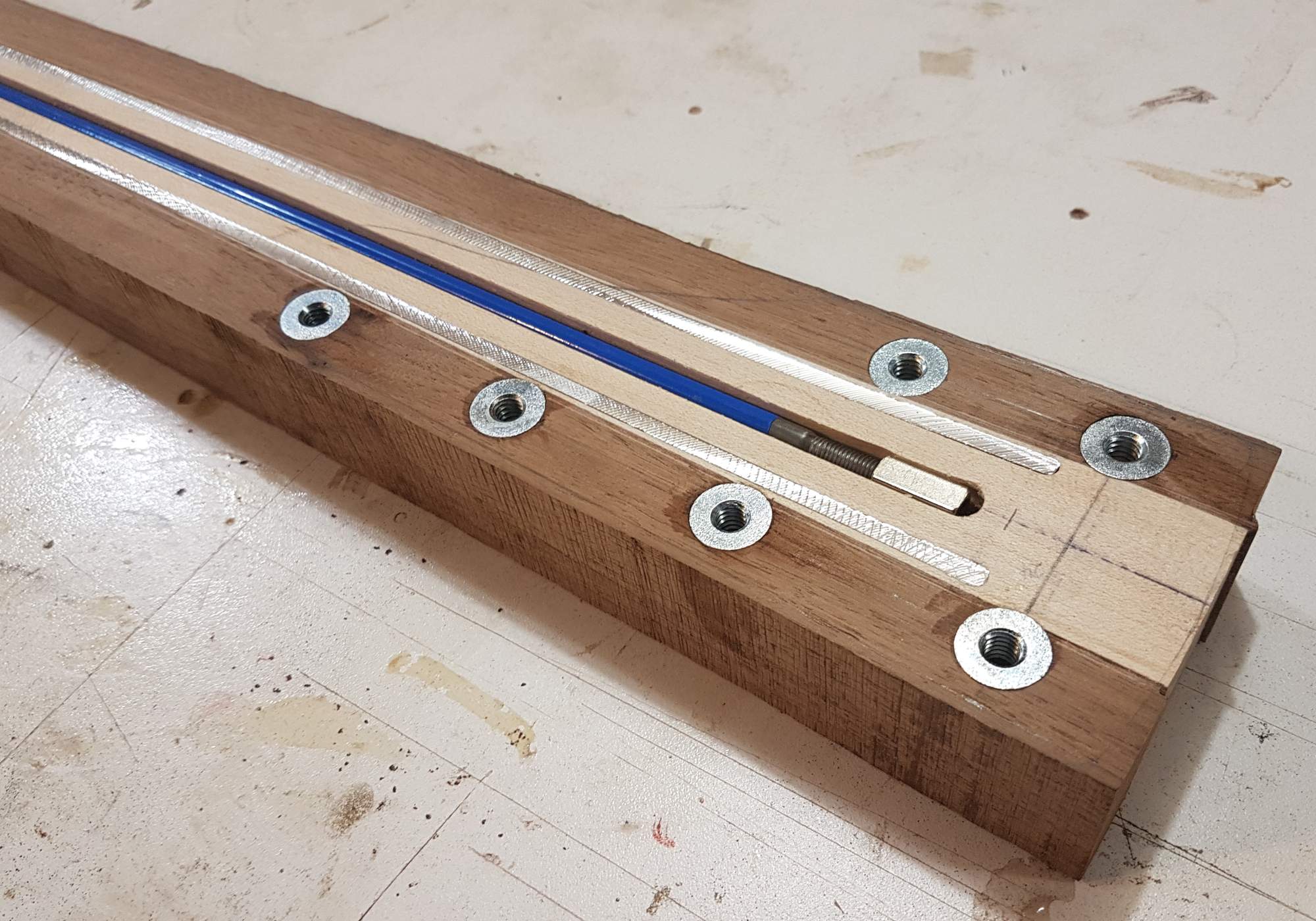
Anyway, between working on that stuff, I got the inserts in.

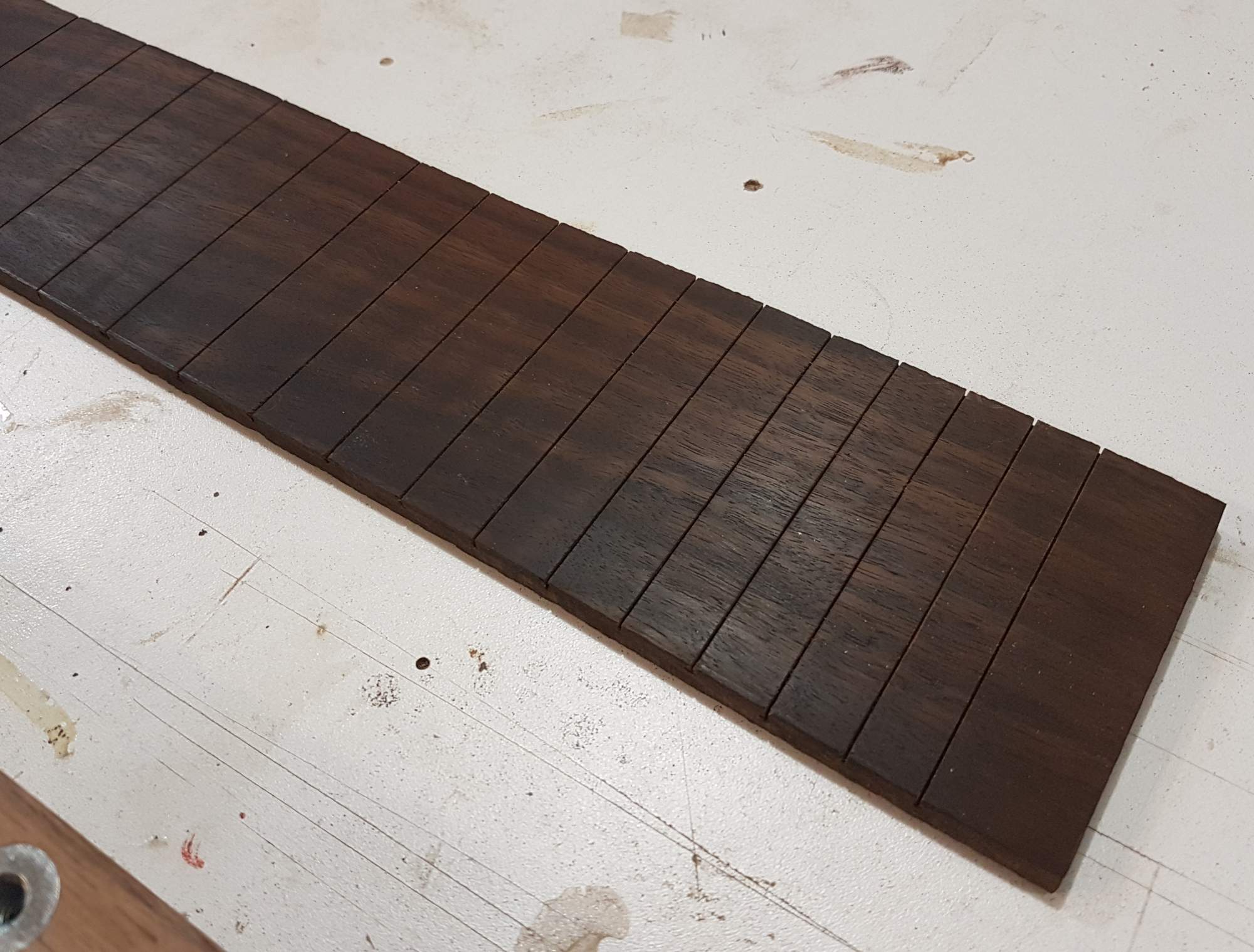
And I also slotted the fretboard. My last couple of basses have had flat boards (zero radius), but I might radius this one for something different.

Lots more to do before the end, but thankfully the finish I'm using is quick and easy to apply. :thumbsup:
 
On a guitar I see the point in having both styles because its a case of different instruments for different styles of playing. For finger picking classical style the flat board is nice. For chords the radius feels nice. I remember learning guitar on an instrument with a flat board, but basically trying to play chord-driven pop songs on it, and then playing a radiused board for the first time and thinking "wow this is nice." I'm not exactly strumming chords all day on a bass but I'm just mentally hung up on trying to imagine what it would feel like to play a bass with a flat board. I guess I need to just try it some time. And since I would venture a guess that no one makes a left handed flat boarded bass, I guess that means building one!
 
That looks killer! :thumbsup:

Have you decided on a "f hole" design?
Thank you kindly :)

I have decided on a design, but I've not tested it out on a practice piece yet. If it works, I'll post it asap. :D If it doesn't...well...you probably won't hear anything about a hole for a bit lol

For now, I'm wrapping up the neck and preparing to attach the top to the body. :woot:
 
  • Like
Reactions: wraub and Reedt2000
I think that's right - it can't hurt, like a backup plan. Wood being organic and because of industries continual demand probably is using mostly pretty new harvested wood these days compared to old growth which may be more prone to move around. I was pretty impressed watching the Keisel factory tour - they really go the extra mile on their necks to assure they stay put with multiple stage wood dryers and standard carbon reinforcements.
I posted this in the other thread, but it bears repeating - I own a Keisel Icon 5 with carbon rods, that neck moved a LOT for the first year I had it. None of my other necks moved like that, it required a truss rod adjustment practically every week. At one point I was convinced the truss rod wasn't moving (it was). It has settled down now and I haven't touched the truss rod in a year. I saw someone post on FB the same exact observation about a Keisel bass (small sample size). Perhaps in all that drying they are taking too much moisture out and the neck moves as it regains equilibrium. The Icon is in the same studio where all my home made basses sit - humidity but not temperature controlled.
 
Last edited:
I posted this in the other thread, but it bears repeating - I own a Keisel Icon 5 with carbon rods, that neck moved a LOT for the first year I had it. None of my other necks moved like that, it required a truss rod adjustment practically every week. At one point I was convinced the truss rod wasn't moving (it was). It has settled down now and I haven't touched the truss rod in a year. I saw someone post on FB the same exact observation about a Keisel bass (small sample size). Perhaps in all that drying they are taking too much moisture out and the neck moves as it regains equilibrium. The Icon is in the same studio where all my home made basses sit - humidity but not temperature controlled.

Interesting - it might be something you could (respectfully) bring up to Keisel - if there are others like you and the other tb member, it would be legitimate feedback for them.
 
  • Like
Reactions: Jisch and Beej
The back of the house is basically finished. A few details left before it's ready to paint, but mostly there. I'm now concentrating on trimming out the new french doors to match (approximately) the original 1906 trim on the interior. I'll take a pic when I get a chance. Because our new doors head to a deck that doesn't exist yet, and it's a 6.5' drop, and I have a 4 year old, I also nailed a board across the doors on the back so that they can't be opened.

Anyway, between working on that stuff, I got the inserts in.

And I also slotted the fretboard. My last couple of basses have had flat boards (zero radius), but I might radius this one for something different.

Lots more to do before the end, but thankfully the finish I'm using is quick and easy to apply. :thumbsup:

What do those inserts look like uninstalled?
 
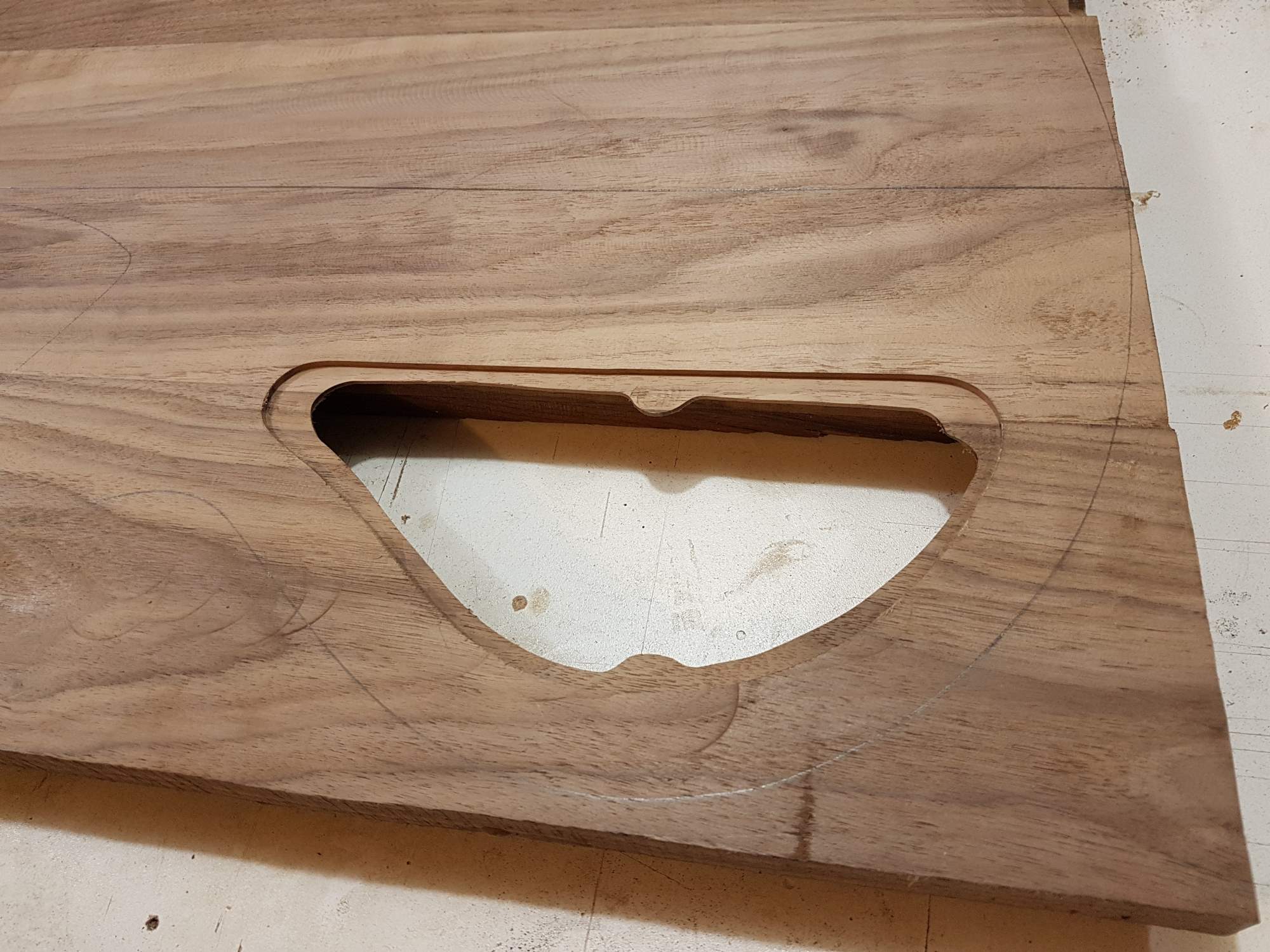
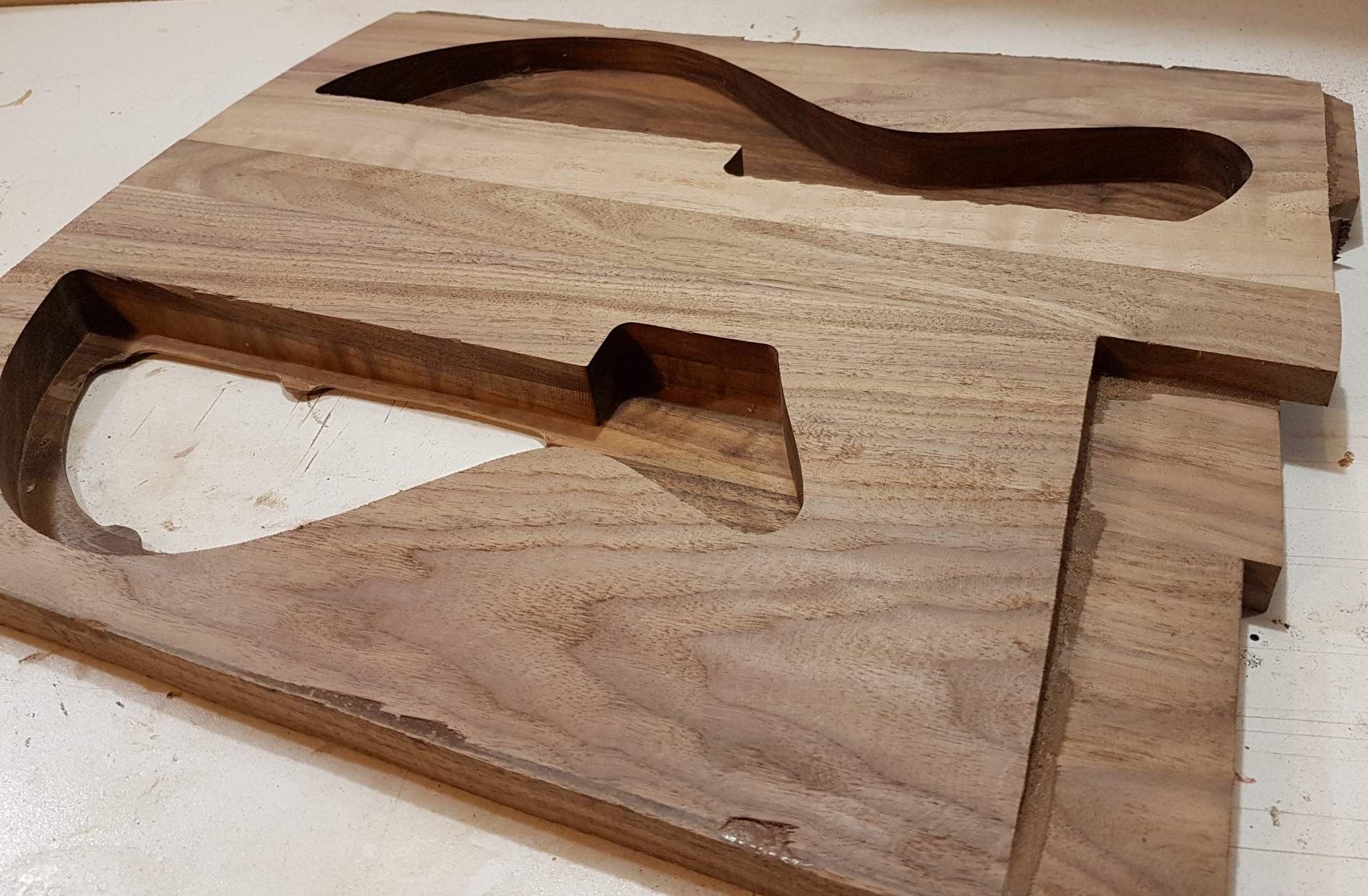
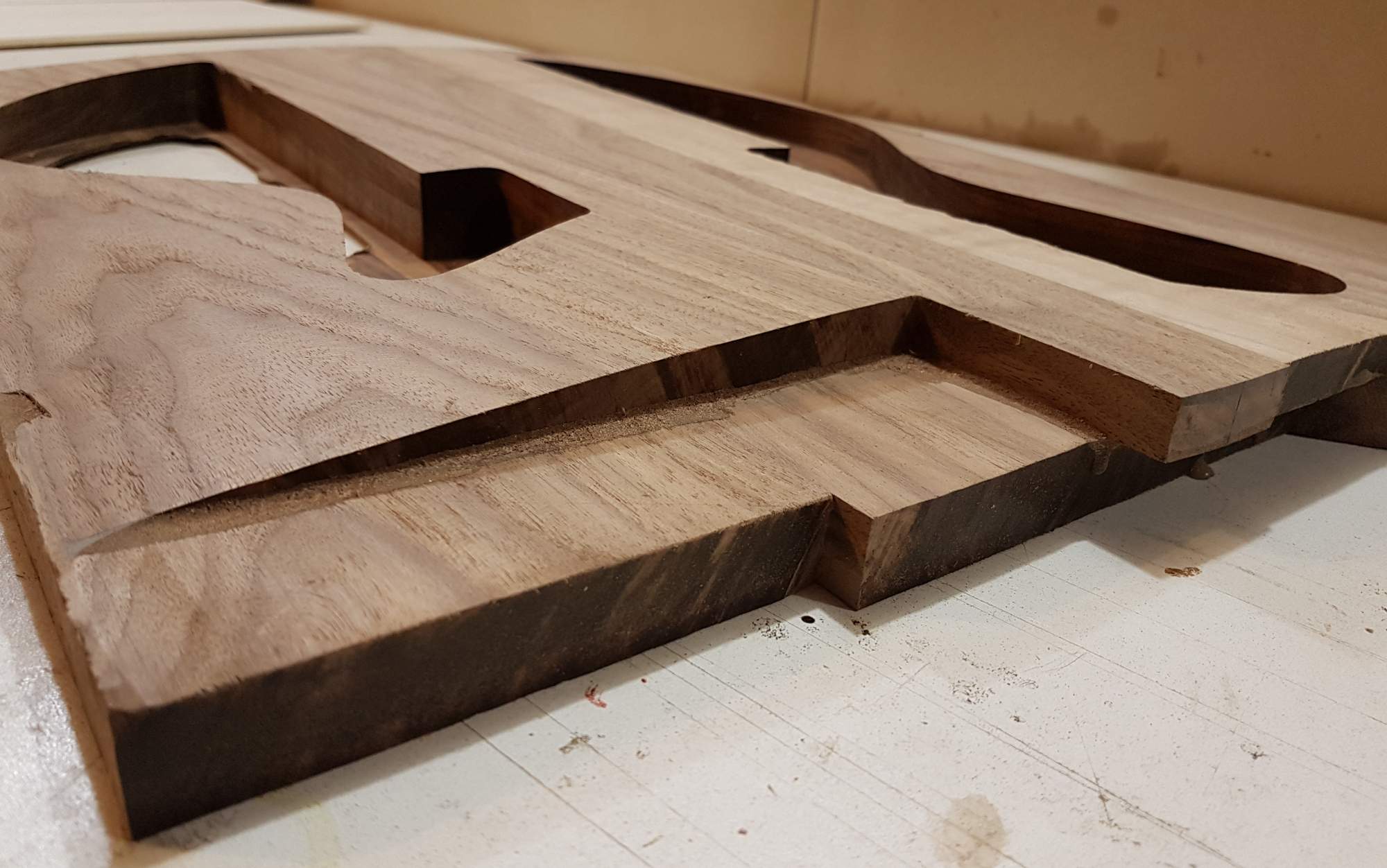
I cut the control cavity access and cover recess while the body was still a brick.

Then I used my radius sled and routed the radius in the topside of the body core.

The ledge for your cover looks thin - are you using screws or magnets to attach it?
 
  • Like
Reactions: Beej
What do those inserts look like uninstalled?
They are tapered slightly and have a hexagonal shape that is serrated. The head is 2mm thick and is inset. I'll get a pic up of one. They are glued in with epoxy, and the screwed into from the back of the neck, so they are sucked in harder when tightened. :)

The ledge for your cover looks thin - are you using screws or magnets to attach it?
It's only a couple of mm thick, and I'm not sure yet on the attachment. :D Probably magnets glued to the cover that then fit into holes in those ledges, and those will have more magnets glued in behind.
 
  • Like
Reactions: Reedt2000