

Enjoy the benefits of a premium membership!
Upgrade Account
-
TalkBass has been independent since 1998. Add your voice.
Create a free account to reply to discussions, view embedded media, and browse with fewer display ads.
Join free Log in
Want zero display ads or expanded classifieds tools? Compare plans.
You are using an out of date browser. It may not display this or other websites correctly.
You should upgrade or use an alternative browser.
You should upgrade or use an alternative browser.
Winter Buildoff 2022: Still A Diva
- Thread starter TerribleTim68
- Start date
More options
Who Replied?
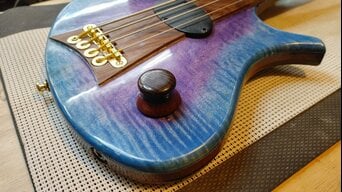
I assume teh smooth section is just to get it started in the hole. I also assume that is the hole size needed.
That's my measurement including the height of the fretboard since this bridge will sit close to flush with the fretboard.1.5" is thin?
I kinda feel like that's the max for thickness.
Edit To Add: So if you take 6mm off for the fretboard height, the body itself is only 1-1/4"-ish.
Test fit the inserts in some scrap wood - drill through holes so you can tap them back out and reuse them. I've had many where a hole sized to match the smooth section was way too tight on the fluted portion.
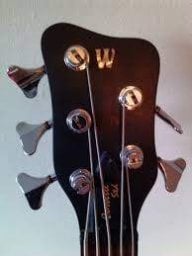
How much wider than the bridge are they? I'd be concerned that the route for the bridge will have extra space around it at the ends cause you have to sink the posts and sleeves into the body. Not sure how else you'd do it. Could you epoxy threaded sleeves into the bridge (inside the post holes)? Then just sink a brass plate in the body under it and get Allen head screws that thread in and press on the plate.
Yup, already been thinking about that too. The bridge itself is 16mm "wide". I think the only part of the insert that is a problem is that lip at the top, plus the threaded part has that knurled part at the base of it that matches that lip diameter. So you are correct, there may be a larger hole drilled at each end, it's just part of the joy of going this route I guess. I haven't fully committed yet, I guess there's still time to just fab a bridge out of a piece of brass stock or something. I dunno. I have massive reservations about trying to do that and actually get intonation remotely close.How much wider than the bridge are they? I'd be concerned that the route for the bridge will have extra space around it at the ends cause you have to sink the posts and sleeves into the body. Not sure how else you'd do it. Could you epoxy threaded sleeves into the bridge (inside the post holes)? Then just sink a brass plate in the body under it and get Allen head screws that thread in and press on the plate.
Everyone who's intonated an acoustic guitar or bass with a traditional bone saddle can understand your concerns!
It's not as big a deal as it seems, to be honest, and generally you can just try again if you get it wrong. If you have a good idea of where you need to end up (from measuring known-good setup on existing basses) it's hard to mess up so badly that you can't recover. Based on the skill you've shown in your builds I would expect you to do a great job if you decided to go that route!
It's not as big a deal as it seems, to be honest, and generally you can just try again if you get it wrong. If you have a good idea of where you need to end up (from measuring known-good setup on existing basses) it's hard to mess up so badly that you can't recover. Based on the skill you've shown in your builds I would expect you to do a great job if you decided to go that route!
She made her own bridge from aloominoom bar stock, set at a slight angle. But she didn't cover the fabrication of it much, just a post showing it done and said "Got the bridge done". So basically an acoustic style bridge.Also, you'll be burying the TOM intonation screws... making something might be the best idea. What did @mapleglo do?
I'm not against that, but I don't know that I am smart enough to know how to get it angled correctly.
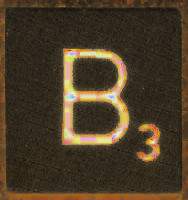
Two things on the knob:
1. I think your wife is right, and it could stand to be a little smaller, like maybe 3/5 what it currently is? Still oversized but perhaps not so ostentatious.
2. Personally, I think wenge doesn't match the overall gestalt of the front. I'd think about using another fretboard offcut so that it matches the fretboard. I also think the wenge TR cover doesn't go for the same reasons. I'll shut up now.
1. I think your wife is right, and it could stand to be a little smaller, like maybe 3/5 what it currently is? Still oversized but perhaps not so ostentatious.
2. Personally, I think wenge doesn't match the overall gestalt of the front. I'd think about using another fretboard offcut so that it matches the fretboard. I also think the wenge TR cover doesn't go for the same reasons. I'll shut up now.
Okay, some answered questions. My combined body thickness, including the fretboard -
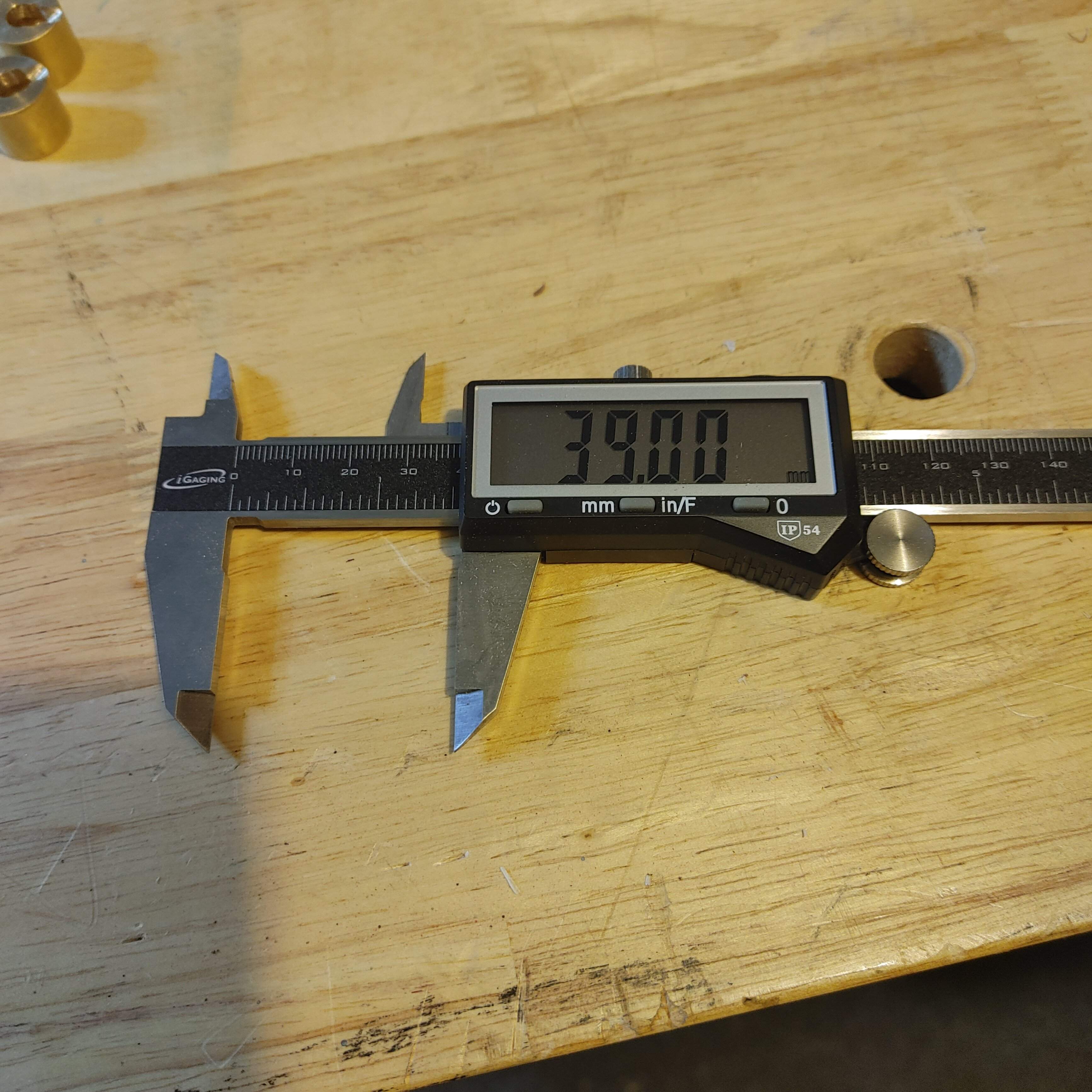
39 mm.
Now, the "height" of my bridge including the inserts and adjustment posts -
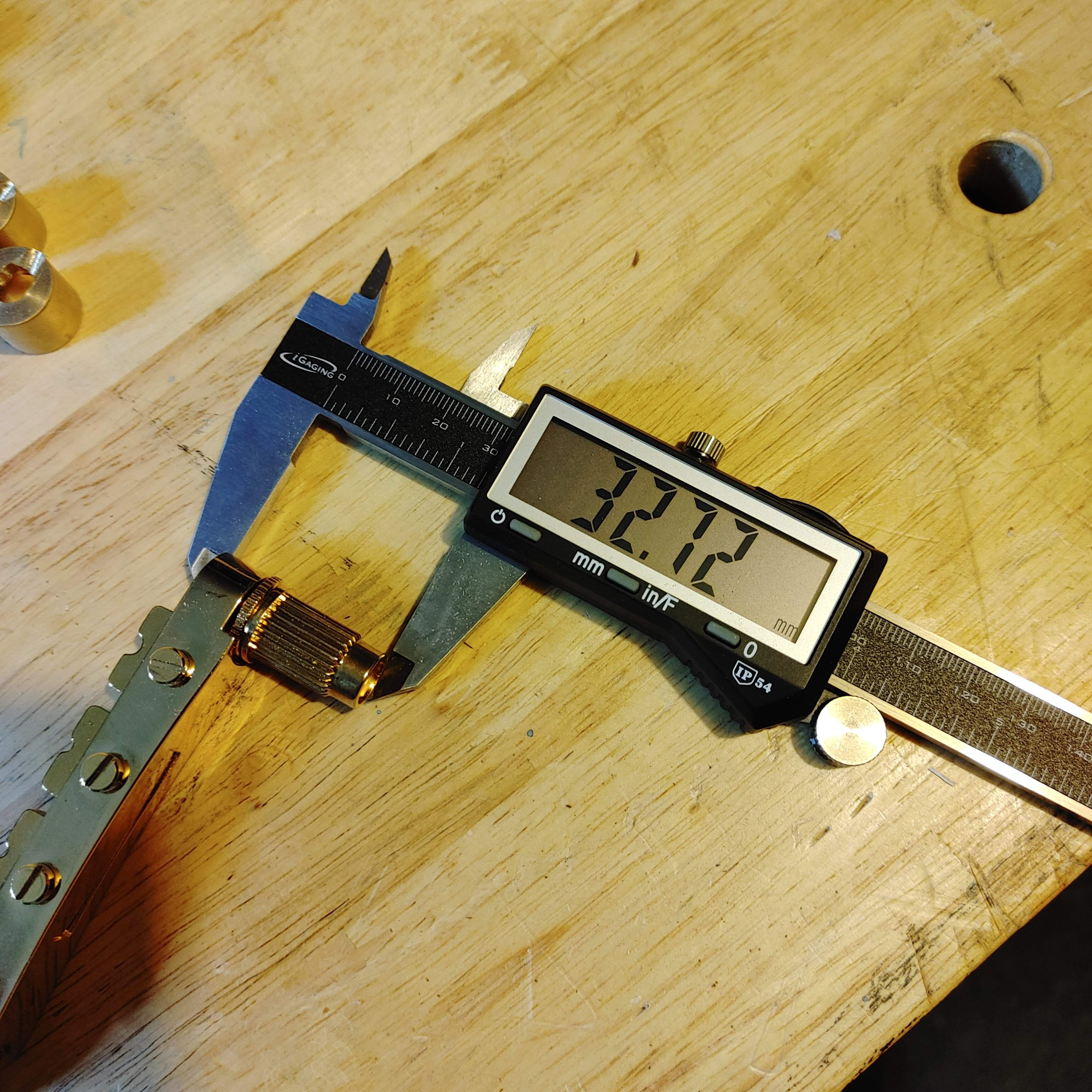
32.72 mm.
Ideally I'd like to be closer to this -
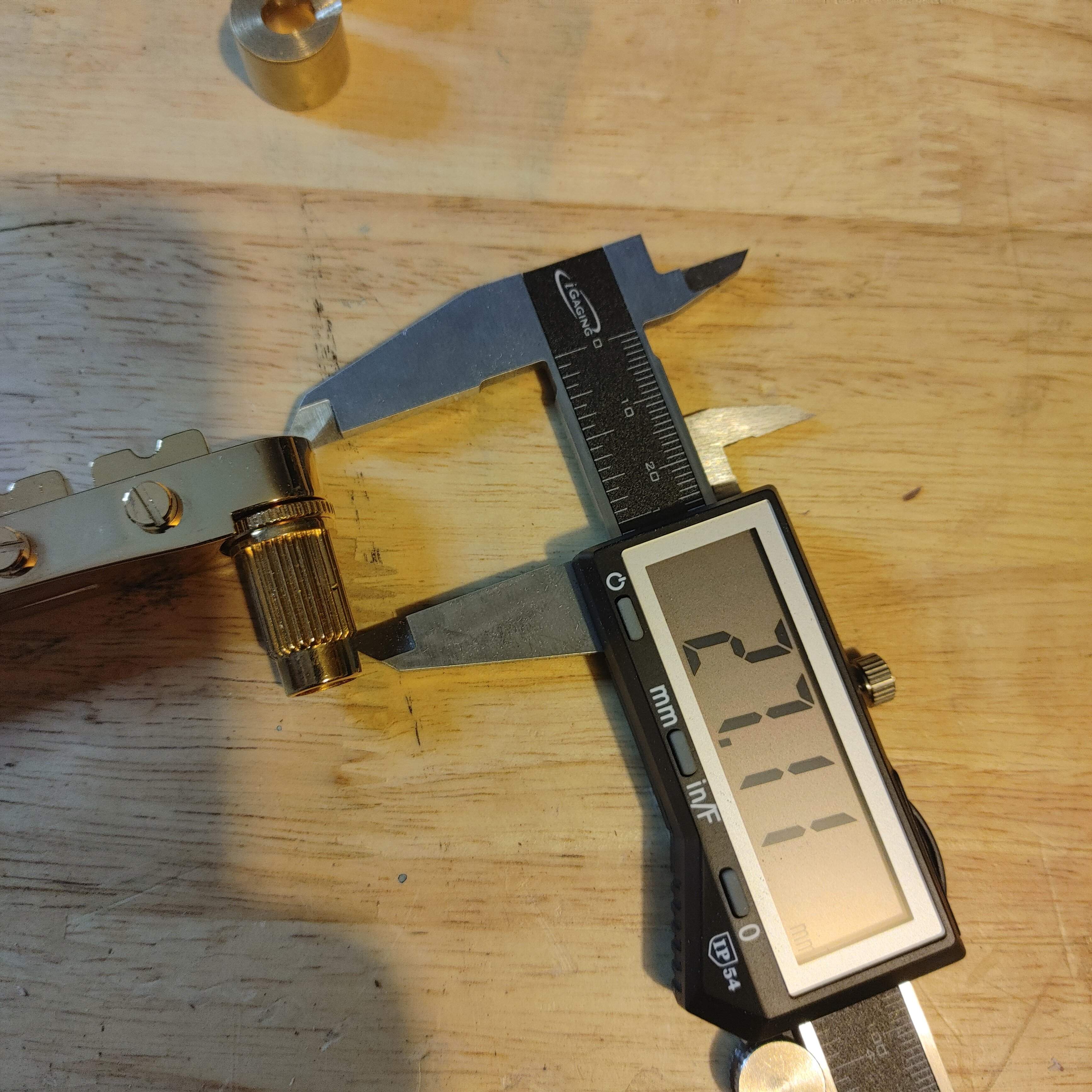
27 mm.
So I'm thinking I'll just chop them off shorter to give me some room here. I know, I probably have room. 7mm is probably fine underneath the posts. I'd just rather it be thicker for whatever reason.
Now, there was some questions about the posts being a larger diameter than the width of the bridge. Well, it looks like that is not the case -
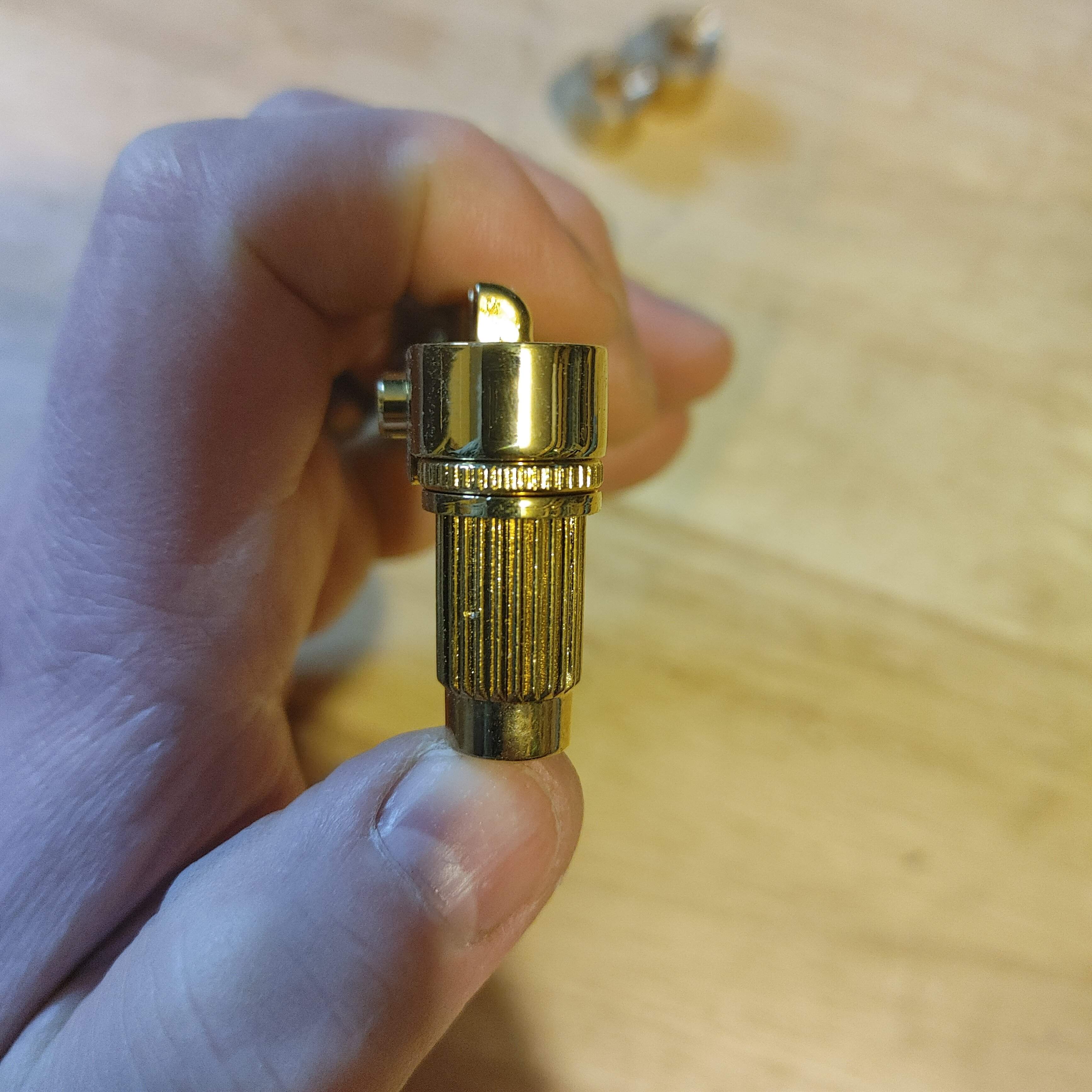
They seem to be pretty much exactly the same. So i think this is gonna work just fine. The plan remains, recess this bridge into the fretboard and body so that just the saddles sit above, giving me height adjustment if needed and then I can raise the bridge up out of the recess to adjust the intonation screws, then lower it back down after adjustment. It's not ideal for any intonation adjustment, but it does allow for intonation adjustment. I guess the plan is to mark and drill the inserts holes, then route the bridge recess. The inserts holes will excavate some of the bridge routing too.
Now, as for getting anything done today, not gonna happen. I'm really in the mood to just destroy everything around me. It's been a long, irritating day full of anger and hatred. So I'm just not messing with it. Maybe tomorrow, probably not.
39 mm.
Now, the "height" of my bridge including the inserts and adjustment posts -
32.72 mm.
Ideally I'd like to be closer to this -
27 mm.
So I'm thinking I'll just chop them off shorter to give me some room here. I know, I probably have room. 7mm is probably fine underneath the posts. I'd just rather it be thicker for whatever reason.
Now, there was some questions about the posts being a larger diameter than the width of the bridge. Well, it looks like that is not the case -
They seem to be pretty much exactly the same. So i think this is gonna work just fine. The plan remains, recess this bridge into the fretboard and body so that just the saddles sit above, giving me height adjustment if needed and then I can raise the bridge up out of the recess to adjust the intonation screws, then lower it back down after adjustment. It's not ideal for any intonation adjustment, but it does allow for intonation adjustment. I guess the plan is to mark and drill the inserts holes, then route the bridge recess. The inserts holes will excavate some of the bridge routing too.
Now, as for getting anything done today, not gonna happen. I'm really in the mood to just destroy everything around me. It's been a long, irritating day full of anger and hatred. So I'm just not messing with it. Maybe tomorrow, probably not.
I'm not against that, but I don't know that I am smart enough to know how to get it angled correctly.
That ends up being easier than it sounds. Get your hands on a bass that's set up similarly (same scale length, same action/relief to what you want, set up with the same strings you'd like to use). Then measure the actual speaking length of each string and you know a starting point for where your saddle needs to be. If you're nervous about having enough adjustability, just make it from 1/4" wide stock and you'll be golden.
I've read a lot of stuff that basically says "intonation is scale length plus thickness of string". So if you have a .100 low E that one should intonate at 34.1". But, I've never actually put that to the test, and when I see guitars with saddles that move forward, it makes me pause.That ends up being easier than it sounds. Get your hands on a bass that's set up similarly (same scale length, same action/relief to what you want, set up with the same strings you'd like to use). Then measure the actual speaking length of each string and you know a starting point for where your saddle needs to be. If you're nervous about having enough adjustability, just make it from 1/4" wide stock and you'll be golden.
The "plus thickness of the string" thing is probably a good general reference, but when positioning a saddle from scratch I'd want to have some experimental data to back it up.
If anything, a 4 string electric bass is probably the simplest instrument to set a saddle up for - you've got 4 strings with a consistent change of gauge from string to string, and consistent construction and materials from string to string. No concerns over mixing plain strings with wound, or nylon with steel, or strings that are out of order in terms of gauge, etc.
That said I do like the idea and ease of adjustability from the TOM style bridge and I wouldn't want any of this to be construed as trying to influence you away from that. I just think you should choose based on what you think fits best with instrument vs potentially staying away from the acoustic style bridge because it seems difficult. I know you could make it work if you wanted to!
If anything, a 4 string electric bass is probably the simplest instrument to set a saddle up for - you've got 4 strings with a consistent change of gauge from string to string, and consistent construction and materials from string to string. No concerns over mixing plain strings with wound, or nylon with steel, or strings that are out of order in terms of gauge, etc.
That said I do like the idea and ease of adjustability from the TOM style bridge and I wouldn't want any of this to be construed as trying to influence you away from that. I just think you should choose based on what you think fits best with instrument vs potentially staying away from the acoustic style bridge because it seems difficult. I know you could make it work if you wanted to!
Bridging The Gap -
Let's try to keep this build moving forward, shall we? I decided the tune-o-matic was the chosen direction, so it was time to do the thing. Apply "The Trick" to some spacers and the template -
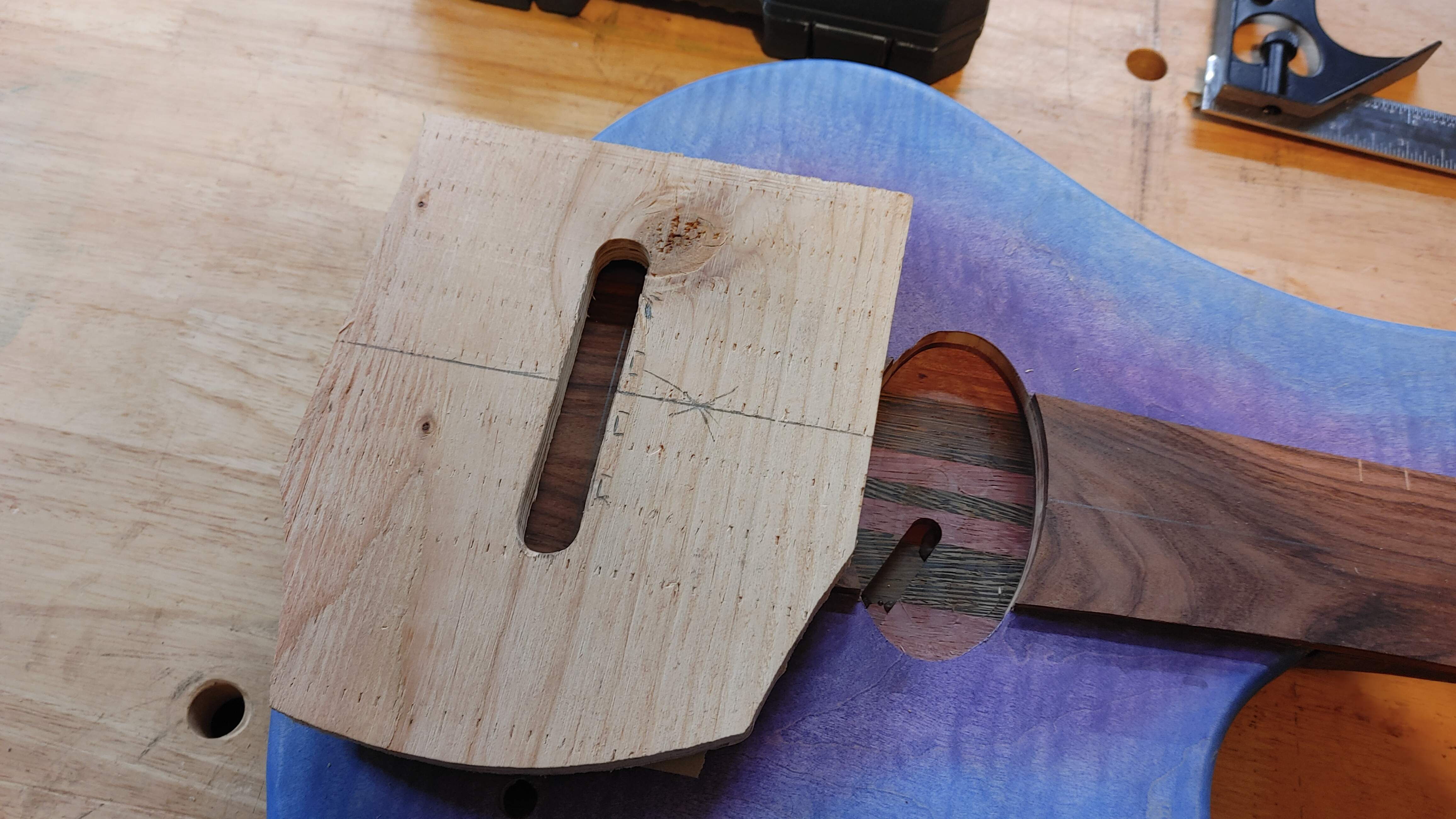
Head over to the drill press and hog out the bulk with the forstner bit and then attack it with the workhorse Amana pattern bit. From there I needed to cut some little reliefs for the intonation screws. So, luckily I own a chisel that was the exact width of the required relief -
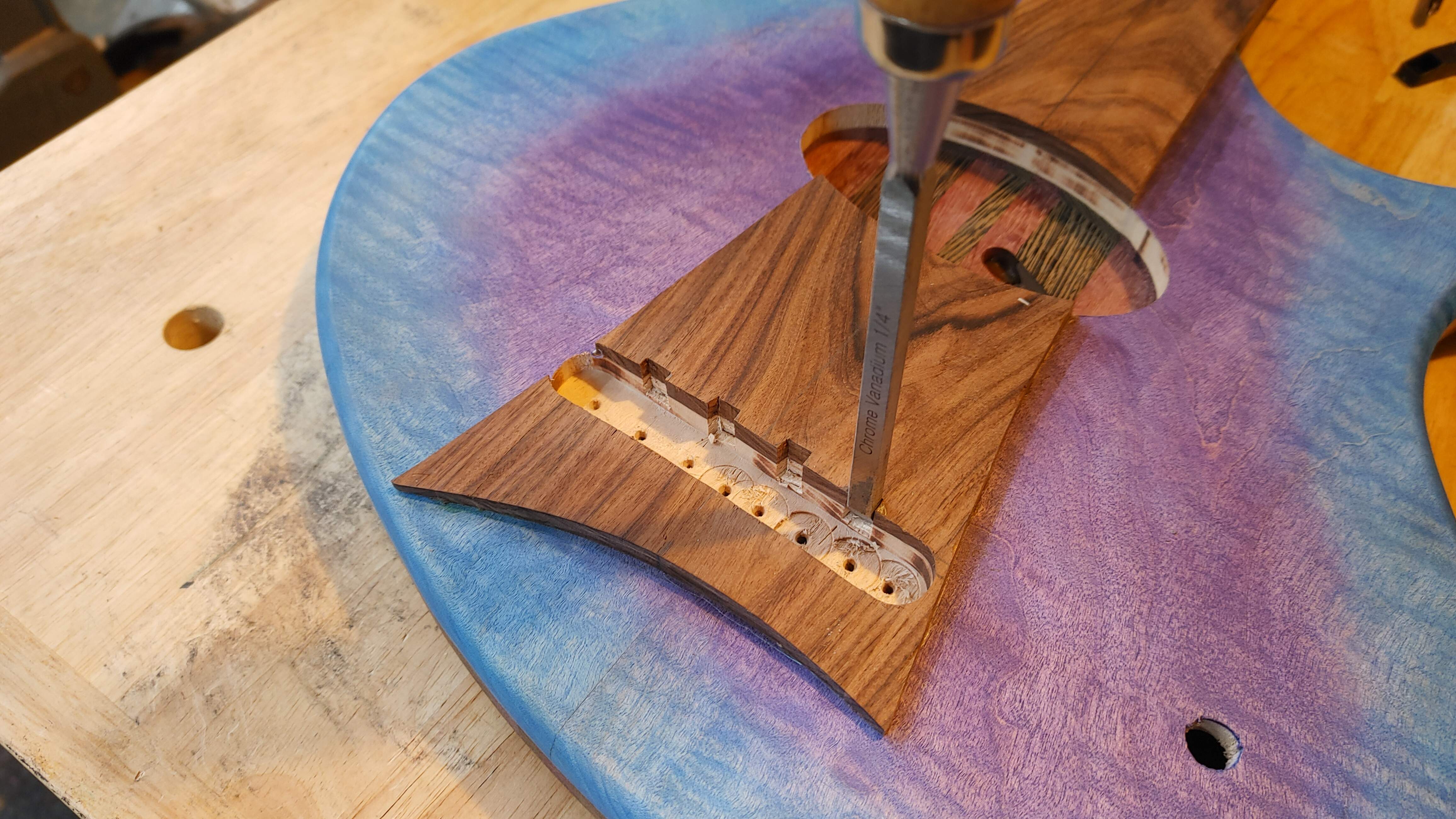
I do enjoy the hand tools, so no worries. And hey, it fits nice -
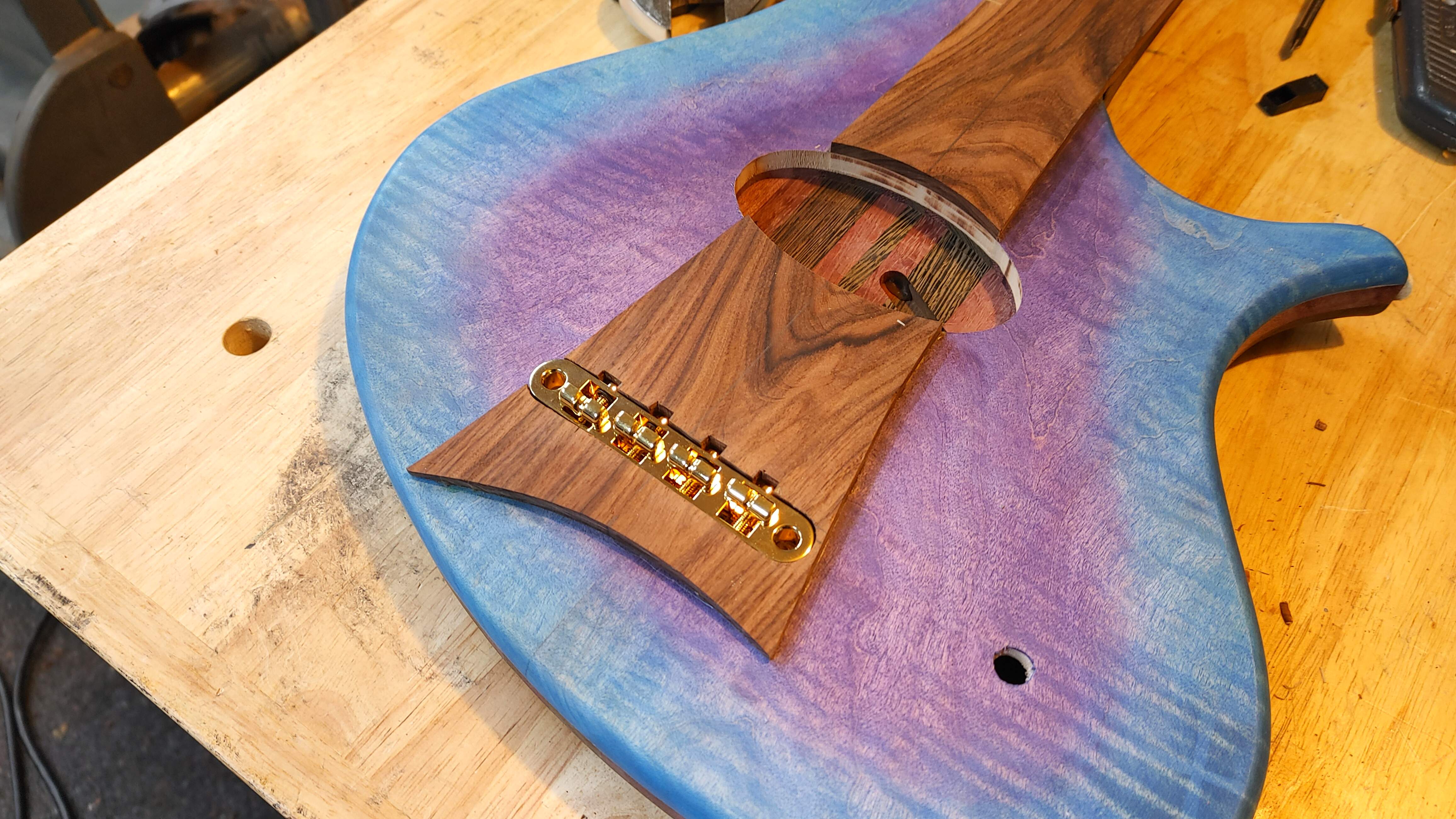
And I think I got the depth where I want it -
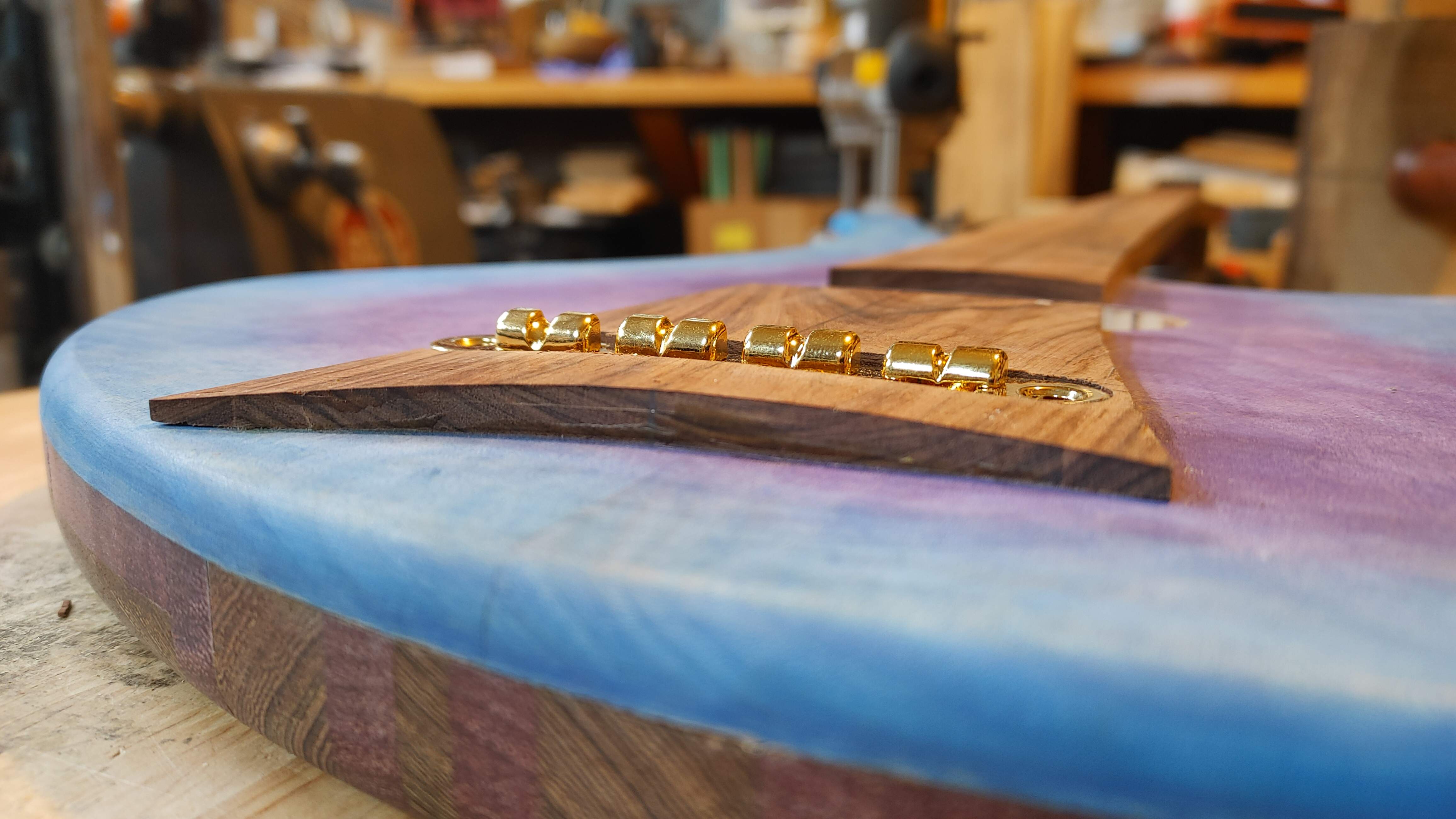

Okay, let's see about tackling these retainers while we're here. So I marked them with a phillips screwdriver that fit perfectly in the hole, then made my mark better with my awl. The awl was sloppy in the hole, so this was a more accurate method. It sounds weird, but that's just how I work, unconventional.
Anyways, we ended up with this -
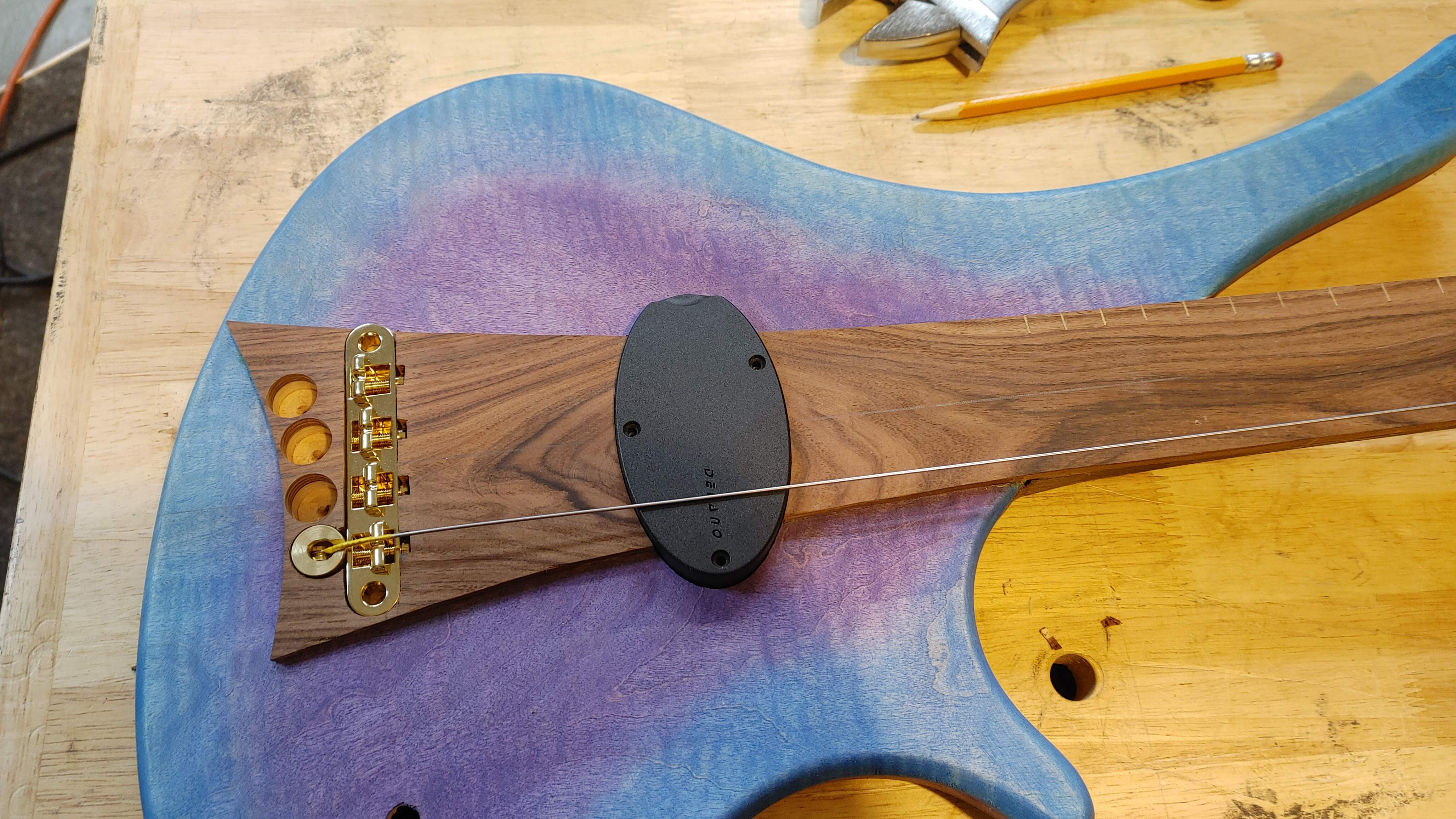
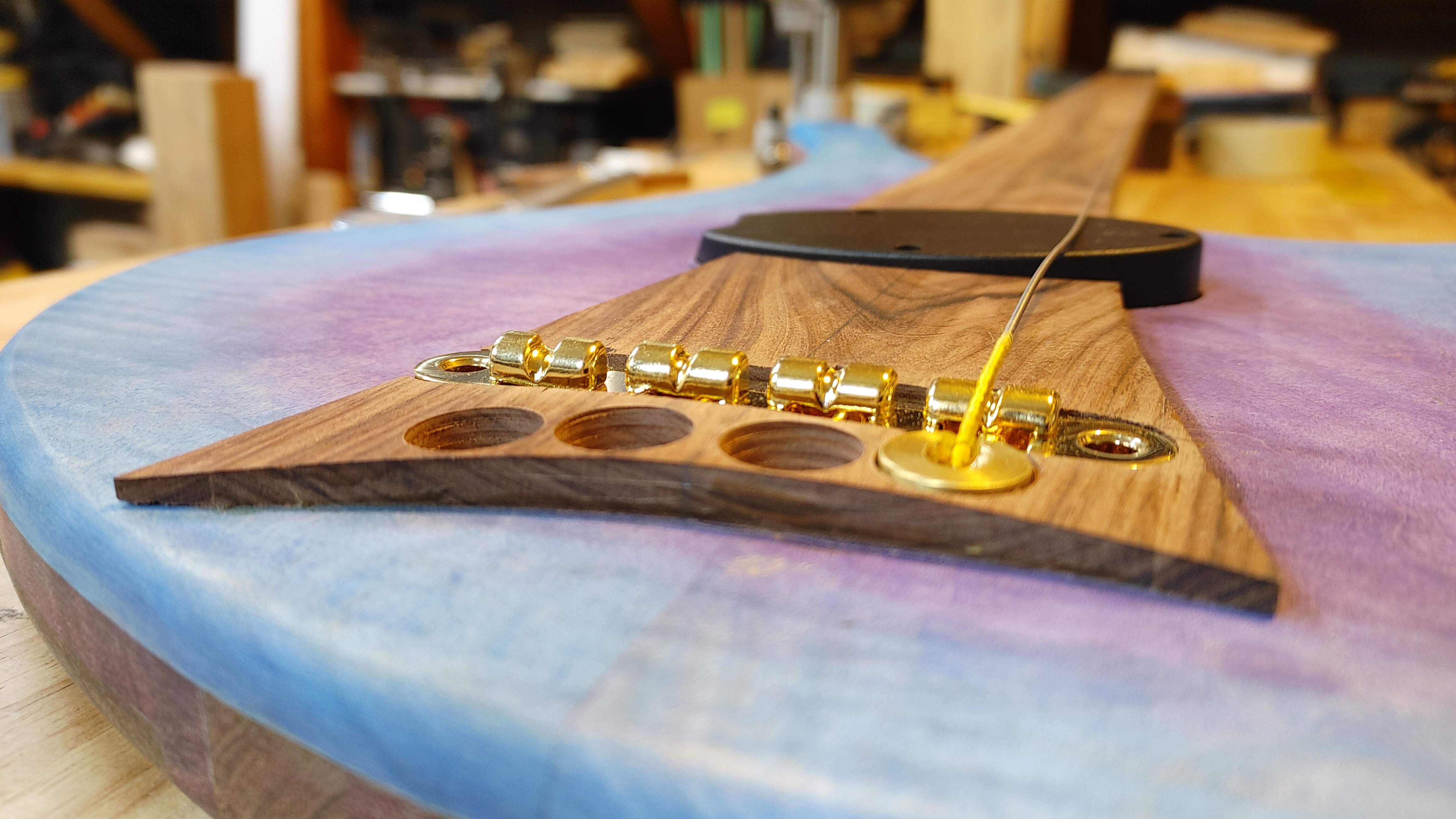
I'm pretty happy with it. I still need to drill the bridge insert holes but i want to cut them off first so I can accurately judge the depth I need. That's enough for tonight.
Let's try to keep this build moving forward, shall we? I decided the tune-o-matic was the chosen direction, so it was time to do the thing. Apply "The Trick" to some spacers and the template -
Head over to the drill press and hog out the bulk with the forstner bit and then attack it with the workhorse Amana pattern bit. From there I needed to cut some little reliefs for the intonation screws. So, luckily I own a chisel that was the exact width of the required relief -
I do enjoy the hand tools, so no worries. And hey, it fits nice -
And I think I got the depth where I want it -
Okay, let's see about tackling these retainers while we're here. So I marked them with a phillips screwdriver that fit perfectly in the hole, then made my mark better with my awl. The awl was sloppy in the hole, so this was a more accurate method. It sounds weird, but that's just how I work, unconventional.
Anyways, we ended up with this -
I'm pretty happy with it. I still need to drill the bridge insert holes but i want to cut them off first so I can accurately judge the depth I need. That's enough for tonight.
Last edited:
Oh, the G string retainer was a bit loose in the hole because that hole connects to the bridge recess. So that one drops in and falls out with no problem. The other three are really snug so I suspect they will fit easier once I polish them up some. So that's why you only get to see the one.

Rôckhewer
Commercial User
- Feb 28, 2015
- 2,922
- 9,028
- Disclosures
- Owner/Builder- RockHewer Custom Guitars LLC
Maybe I missed something...
But I'm gonna need a close-up of those retainers..
....and where you got them. Pls.
But I'm gonna need a close-up of those retainers..
....and where you got them. Pls.


