Hambone I am sure you are great at what you do. but,,, A true Craftsmen does not = a Artist... "Luthiery Art" Most of what I have seen here is more like Fine Furniture than Fine Art.... There is a big differance between being a Craftsman and being a Artist....Wishnevski work is the closest example of a true artist that I have seen on this site.. Ever look at Folk art? Not folk music or arts and crafts either..It's not to refined is it...? Whatever! It's useless talking about what is "real art" and what isn't to a bunch lug nuts anyway.

Enjoy the benefits of a premium membership!
Upgrade Account
-
TalkBass has been independent since 1998. Add your voice.
Create a free account to reply to discussions, view embedded media, and browse with fewer display ads.
Join free Log in
Want zero display ads or expanded classifieds tools? Compare plans.
You are using an out of date browser. It may not display this or other websites correctly.
You should upgrade or use an alternative browser.
You should upgrade or use an alternative browser.
Wishnevsky!!!!!!
- Thread starter rllefebv
- Start date
More options
Who Replied?
Fetch, I'm not sure what you're driving at here. My statement referred to the "art" of luthiery. That, in my mind, says that along with great design and flawless execution, the finished object should be able to be played. Now, I haven't held this instrument - I've only looked at it but I am making the educated guess that it is NOT playable. In my mind that puts it in a completely different category than the examples we usually see here.
I "see" art everywhere - in designs of all kinds - be it functional or merely fun. For example, take Stanley Klopfensteins creations. He makes "guitars" from stained glass. They are truly beautiful creations and can actually be played. But because of their inherent limitations, even Stanley just considers them "art". The craftsmanship of the work is impeccable but it's his design that makes them unique.
There's another case that a real craftsman can be an artist. Take the creations of Stickley. His furniture encompasses the essence of the arts and crafts movement though, at the time he created his masterpieces, they weren't seen as much more than functional. Later, when the entire genre could be looked at as a whole, his genius was recognized. He truly was an artist with remarkable craftsman skills. I don't think that time will be as kind to Wishnevsky's designs.
If you reread my post, you'll notice that I put Wishnevsky in the "artist" category not the craftsman category. Why? because his work lacks the care in craftsmanship required to create good instruments. And if there is anything to the "art" of Luthiery it's the ability to create a fine instrument - both in design and function. In fact, creations of furniture, jewlery, music, etc. all benefit from artistic vision and stellar craftsmanship.
I "see" art everywhere - in designs of all kinds - be it functional or merely fun. For example, take Stanley Klopfensteins creations. He makes "guitars" from stained glass. They are truly beautiful creations and can actually be played. But because of their inherent limitations, even Stanley just considers them "art". The craftsmanship of the work is impeccable but it's his design that makes them unique.
There's another case that a real craftsman can be an artist. Take the creations of Stickley. His furniture encompasses the essence of the arts and crafts movement though, at the time he created his masterpieces, they weren't seen as much more than functional. Later, when the entire genre could be looked at as a whole, his genius was recognized. He truly was an artist with remarkable craftsman skills. I don't think that time will be as kind to Wishnevsky's designs.
If you reread my post, you'll notice that I put Wishnevsky in the "artist" category not the craftsman category. Why? because his work lacks the care in craftsmanship required to create good instruments. And if there is anything to the "art" of Luthiery it's the ability to create a fine instrument - both in design and function. In fact, creations of furniture, jewlery, music, etc. all benefit from artistic vision and stellar craftsmanship.

wish is a really nice guy, exchanged a couple emails with him about one of his totally wild creations. i think his guitars look like their of a much higher standard than his basses, and i'd really like one of his jazz archtops. i recommended talkbass to him, but he mentioned his being featured on bunnybass, and seemed a little put off. maybe if some more of us showed a little enthusiasm, made some suggestions.....i'd buy one, really liked the scroll style bass on the bay recently.
i'd love to visit his shop sometime....
i'd love to visit his shop sometime....
Pigpen02, it's really not our place to change our opinions about an object just to lure someone to the site. If Wishnevsky wants to, he can come in here and defend his creations on his own at any time. We would likely listen with respect and then engage in some banter. He should, however, be prepared to get hit hard with some sharp observations about his work. If he takes himself seriously then he can take the criticism seriously.
And how in the world can anyone compare bunnybass to Talkbass anyway? They are definitely 2 different beasts.
And how in the world can anyone compare bunnybass to Talkbass anyway? They are definitely 2 different beasts.
Interesting point pigpen02,
Perhaps his reticence to come here and discuss his creations solidifies his work as that of an "artist". I certainly don't think that artists should ever have to defend their work (unless it's some of that scat crap). But if someone wants to create playable bass instruments, I fail to see how input from members of the worlds largest community of bassists could hurt ones product. After all, he does need to sell them and we are always ready to buy - if it's right.
That's the last I'll say about this.
Perhaps his reticence to come here and discuss his creations solidifies his work as that of an "artist". I certainly don't think that artists should ever have to defend their work (unless it's some of that scat crap). But if someone wants to create playable bass instruments, I fail to see how input from members of the worlds largest community of bassists could hurt ones product. After all, he does need to sell them and we are always ready to buy - if it's right.
That's the last I'll say about this.
Originally posted by Fetch Da bass
Type O Negative... I read some of their lyric's..I don't think anyone should be getting advice about anything form these guys...I really don't get what they mean by "Fuctionless Art"???
Yeah because lyrics are exactly how a person thinks, feels, acts, and lives, huh? Have you ever met them? Spoken to them? Probably not. I have. Peter Steele is one of the nicest, most down to earth guys I've ever had the pleasure to talk to. Yeah, he has had some personal tragedy in his life, haven't we all? Singing about it is his therepy.
Functionless art? Seems pretty self expainatory to me. Art that serves no purpose what so ever.
Hambone stated a good example with "that scat crap" (kinda redundant there Hambone
 ).
). ChaosGwar, What happend to that MIM Squier P-Bass you where looking at on eBay???
He said he had to take it off for some reason, but he e-mailed a better pic of the headstock, and it is MIM. He said he would let me know when he re-listed it. Too bad I hate sunburst finish, or I would probably get it.

Not real sure this belongs in "basses", but I figured it would get the most attention here.
I just found out this past weekend that my dad is friends (or at least good aquaintences with Wishnevsky). He said the next time i come to visit that he will take me over to meet him. That would be cool, to meet th infamous-on-here Wishnevsky and his off-beat bass designs 
My Dad says he is a unique person. And that he is very internet savvy (he probably reads this site).
I'll give an update if i get to meet him

-KB
I just found out this past weekend that my dad is friends (or at least good aquaintences with Wishnevsky). He said the next time i come to visit that he will take me over to meet him. That would be cool, to meet th infamous-on-here Wishnevsky and his off-beat bass designs
My Dad says he is a unique person. And that he is very internet savvy (he probably reads this site).
I'll give an update if i get to meet him
-KB
Please do what you can to convince him to post here. I don't think I'm inviting him into a hornets nest and I bet he would have some fun.
Shucks, we might too!
Shucks, we might too!
KB, Cool, It would be a honor to meet Steve Wishnevsky. Hambone, Wishnevsky has a web site you could write him and ask him anything. As far as him getting on here to defend his Art I wouldn't ask him... IMO..
I agree, he shouldn't have to defend it, but he could come over and explain it. Most of us probably bash it because we don't see it as art, just as we don't see the Toilet Seat bass as art. I'm sure he has a point of view about his basses that we obviouosly can't see and don't understand.
I for one would like him to come and let us know why he makes basses the way he does. I'd be certainly more compelled to try one, or buy one if I knew the story behind it.
I for one would like him to come and let us know why he makes basses the way he does. I'd be certainly more compelled to try one, or buy one if I knew the story behind it.

Originally posted by SMASH
What's going on with HUM? Are they totally kaput? I hear they gig once in awhile.
???? don't understand the question.
I'll mention talkbass to him if I get to meet him (apparently my dad has known him for many years).
But I will leave it up to him to decide if he wants to post. I would bet that he probably reads this board occasionally.
-KB
But I will leave it up to him to decide if he wants to post. I would bet that he probably reads this board occasionally.
-KB
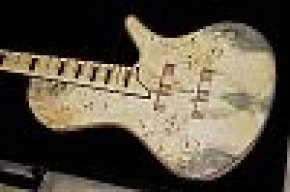
 This guy gets a lot of xxxx for his basses but I think anybody that can make music and art come together like that should get and has my respect. I never played one but I hope I will someday. Im not saying they are the best sounding/looking basses out there but I would rather play something original like a "wish" then any fender out there. They look vary cool to me, and if you are to uptight to look at one and see its an awesome looking bass I fell bad for you.
You may be feeling bad for quite a few people then. I personally think they are silly, and would take a Fender over a Wish any day of the week. I'd rather play something that was ergonomically comfortable, and had a classic, time tested tone, and not be laughed off stage for my 28" scale fretless doubled 8 string equiped with a single humming like crazy single coil pick up.
But hey, to each his own, right?
But hey, to each his own, right?
Why are you posting the same thing in EVERY wishnevsky thread, along with starting a new thread?


