• TalkBass has been independent since 1998. Add your voice.
    Create a free account to reply to discussions, view embedded media, and browse with fewer display ads.
    Join freeLog in
    Want zero display ads or expanded classifieds tools? Compare plans.

With Tube Prices So High, Worth Looking into NOS?

In my experience none of this is true. There were plenty of tube failures back in the "good 'ol days".

In some ways, some tubes are even better today, and up until recently they were less expensive than the "good 'ol days" when inflation is factored in. Quite a bit less expensive.

Well if I'm understanding you correct you are dealing with amps as a manufacturer? Of course yours would be a different experience as you're seeing hundreds (thousands?) of amps. And if you're associated with Mesa(?), perhaps they hadn't made a tube that works well in those amps and your designs were hard on tubes?

I'm talking from a user's POV. Which in the scheme of things has some merit. Since there are more of us than there are of you. Today still as a user if a tube fails now when it didn't before and repair companies of amps that were around since the 60's using 6550 and certain preamp tubes complain of failures like EH Tungsol (where Tungsol was what the factory put in as standard in these particular 40 watt amps) then the failure is definitely higher than what it was in the "good old days."

I still have the Tungsol USA 6550 pair that was in this type/brand of amp from the factory back in the 60's and it was run balls to the walls 4 hours a night 6 days a week for years. The amp from where these tubes came still worked great without repair when I sold it a few years ago.

Just a few years ago the same type amp using a pair of 6550 was rebuilt and Svetlanas were installed circa 2005. The Svetlanas failed after a few years. A pair of Sovteks were installed and although there was a difference in tone, they've lasted till today even though with major concert use.

There was this article on "hard vacuuming" that came out long ago describing how tube makers were trying to decide how to go about this process and if they should "soft vacuum" or even add certain gases to the tube and the hard vacuuming is what they went with that had something to do with a certain pump that achieved this. This vacuum process took a while in production which meant each tube spent more time in the assembly line.

Today a single USA Tungsol 6550 made back in the 20th is $400 per tube.

Tung-Sol 6550 ST NOS-U.S. Made


Made today $90 per tube.
Tung-Sol 6550

By the start of the 70's (isn't that when Mesa came into being?) things started to go down hill as regards tubes. So if you as an amp factory were receiving batches of tubes made after the 60's that were defective or not to your spec, then one can see why your experience was what it was.

I don't consider someone who abused amplifiers (yeah that's how you got your tone) as the touchstone for a tube's longevity, more the exception than the norm. That type of usage would appear as using up the life of the tube like burning a candle at both ends.


RJ7Uf8jOxgLtK.gif
 
Last edited:
These are legendary 6550 tubes and I still have a set in my SVT, but I am skeptical of the one offered for sale now. I had heard they are likely to be 'factory seconds.' But yeah, the St. Petersburg Svetlana Winged-C 6550s are considered to be some of the best 6550s ever made. I wish they would fire up the equipment and make more.

Winged -C- were based on the GE6550A. Can't go wrong there.

The guy at tctubes does extensive testing and matches the set at the actual plate voltage and bias type of your amp. It's the way to best do it. Larger shops can't usually take the time to do this. You can read about it on the web site.
 
Winged -C- were based on the GE6550A. Can't go wrong there.

The guy at tctubes does extensive testing and matches the set at the actual plate voltage and bias type of your amp. It's the way to best do it. Larger shops can't usually take the time to do this. You can read about it on the web site.
What Tyler explained to me back in 2013 the Winged C brand came from what was previous an initial incarnation of (Winged C) SED Svetlana that was made in SPb, St. Petersburg before becoming Winged C under New Sensor and made at a different factory (according to Tyler). He sold me 2 matched pairs of 6550B from the remaining 1990's Svetlana SPb stock he had which he suggested based on the type of amp I was planning to use and that the purpose was pro back-line use not a weekend warrior at home.

This means to me the brand names changed in quality as they were sold. This is how things are going for tube making these days.

Tyler also suggested a certain tube based on the amp running the tubes hard that according to him would help with the longevity of the tube. In my case he studied the schematics of the amp in order to suggest a proper tube.

I paid $30 per NOS tube back in 2013 from Tyler.
 
Last edited:
  • Like
Reactions: beans-on-toast
  • Like
Reactions: wcriley
Well if I'm understanding you correct you are dealing with amps as a manufacturer? Of course yours would be a different experience as you're seeing hundreds (thousands?) of amps. And if you're associated with Mesa(?), perhaps they hadn't made a tube that works well in those amps and your designs were hard on tubes?

I'm talking from a user's POV. Which in the scheme of things has some merit. Since there are more of us than there are of you. Today still as a user if a tube fails now when it didn't before and repair companies of amps that were around since the 60's using 6550 and certain preamp tubes complain of failures like EH Tungsol (where Tungsol was what the factory put in as standard in these particular 40 watt amps) then the failure is definitely higher than what it was in the "good old days."

I still have the Tungsol USA 6550 pair that was in this type/brand of amp from the factory back in the 60's and it was run balls to the walls 4 hours a night 6 days a week for years. The amp from where these tubes came still worked great without repair when I sold it a few years ago.

Just a few years ago the same type amp using a pair of 6550 was rebuilt and Svetlanas were installed circa 2005. The Svetlanas failed after a few years. A pair of Sovteks were installed and although there was a difference in tone, they've lasted till today even though with major concert use.

There was this article on "hard vacuuming" that came out long ago describing how tube makers were trying to decide how to go about this process and if they should "soft vacuum" or even add certain gases to the tube and the hard vacuuming is what they went with that had something to do with a certain pump that achieved this. This vacuum process took a while in production which meant each tube spent more time in the assembly line.

Today a single USA Tungsol 6550 made back in the 20th is $400 per tube.

Tung-Sol 6550 ST NOS-U.S. Made


Made today $90 per tube.
Tung-Sol 6550

By the start of the 70's (isn't that when Mesa came into being?) things started to go down hill as regards tubes. So if you as an amp factory were receiving batches of tubes made after the 60's that were defective or not to your spec, then one can see why your experience was what it was.

I disagree.

I've looked at large lots of (genuine) NOS tubes back in the early '80's, when manufacturers had access to older production quantities of tube inventory from industry. My experience is that the failure and off-spec rates weren't much different than they are today.

There were good and poor tubes in all eras.
 
Well if I'm understanding you correct you are dealing with amps as a manufacturer? Of course yours would be a different experience as you're seeing hundreds (thousands?) of amps. And if you're associated with Mesa(?), perhaps they hadn't made a tube that works well in those amps and your designs were hard on tubes?

I'm talking from a user's POV. Which in the scheme of things has some merit. Since there are more of us than there are of you. Today still as a user if a tube fails now when it didn't before and repair companies of amps that were around since the 60's using 6550 and certain preamp tubes complain of failures like EH Tungsol (where Tungsol was what the factory put in as standard in these particular 40 watt amps) then the failure is definitely higher than what it was in the "good old days."

I still have the Tungsol USA 6550 pair that was in this type/brand of amp from the factory back in the 60's and it was run balls to the walls 4 hours a night 6 days a week for years. The amp from where these tubes came still worked great without repair when I sold it a few years ago.

Just a few years ago the same type amp using a pair of 6550 was rebuilt and Svetlanas were installed circa 2005. The Svetlanas failed after a few years. A pair of Sovteks were installed and although there was a difference in tone, they've lasted till today even though with major concert use.

There was this article on "hard vacuuming" that came out long ago describing how tube makers were trying to decide how to go about this process and if they should "soft vacuum" or even add certain gases to the tube and the hard vacuuming is what they went with that had something to do with a certain pump that achieved this. This vacuum process took a while in production which meant each tube spent more time in the assembly line.

Today a single USA Tungsol 6550 made back in the 20th is $400 per tube.

Tung-Sol 6550 ST NOS-U.S. Made


Made today $90 per tube.
Tung-Sol 6550

By the start of the 70's (isn't that when Mesa came into being?) things started to go down hill as regards tubes. So if you as an amp factory were receiving batches of tubes made after the 60's that were defective or not to your spec, then one can see why your experience was what it was.

I don't consider someone who abused amplifiers (yeah that's how you got your tone) as the touchstone for a tube's longevity, more the exception than the norm. That type of usage would appear as using up the life of the tube like burning a candle at both ends.


RJ7Uf8jOxgLtK.gif

Two to go, please.
upload_2022-10-12_17-48-22.jpeg
 
I disagree.

I've looked at large lots of (genuine) NOS tubes back in the early '80's, when manufacturers had access to older production quantities of tube inventory from industry. My experience is that the failure and off-spec rates weren't much different than they are today.

There were good and poor tubes in all eras.

Well from your end your data might not have taken into consideration the consumer's POV. I'm not the only one who has made the comment that back then we (consumers) don't remember having to change tubes as often.

I deal with backline gear to the majors and when they request tube gear we have to make sure (hope) it won't fail. Granted they ask for a duplicate of the piece of gear. Still from my experience the 2004-2005 Svetlanas didn't last long and this was installed by a professional amp re-builder of this type of amp who also worked on backline gear for the majors.

Hence I went to a tube dealer TC (and others) to at least pick some tubes that might not be duds. Guys who know tubes, can read a schematic and have laboratory testing gear.

Sovtek is New Sensor's front-line tube even if they make other brands, they tend to make sure the Sovteks are better than the name brands they now own. Hence longevity may be the saving grace even if not the first choice for tone.

I still have USA Tungsol 6550 in the same type/model amp and these were provided by factory trained (1950's) technicians of this particular amp. This was back in 2010. The technician was in his late 70's and was the Northeast coast rep for this type of gear. He had stock of the USA Tungsols and gifted us with some of his prized stock.

Another tech for this gear complained a few years ago he ordered bulk of EH and had so many bad ones.

He ended up going with JJ as he wasn't going to install USA NOS tubes if the customer didn't want them. Have not heard anything since on tube failure from him.

Perhaps when ordered in bulk, the "iffy" tubes get mixed in with the order to reduce inventory(?)

And did those that supplied the tubes, test each tube for you before they sent them along you being a manufacturer?

Perhaps being a designer of boutique amps, it would've helped your company to have someone who checked the tubes before you bought them. At least screen them. Not saying it's as easy as it could sound.

These days... Tube industry?
 
Can't help but wonder in all of this if anything else has changed since the early 70's?
How much has the average wall outlet voltage in the US increased since then?
How much does that raise the voltages found in those old amps?
Are people seeing shorter tube life now just plugging in new tubes, or are they checking tube bias?
Does tube bias affect tube life?
Just wonderin'
 
Can't help but wonder in all of this if anything else has changed since the early 70's?
How much has the average wall outlet voltage in the US increased since then?
How much does that raise the voltages found in those old amps?
Are people seeing shorter tube life now just plugging in new tubes, or are they checking tube bias?
Does tube bias affect tube life?
Just wonderin'

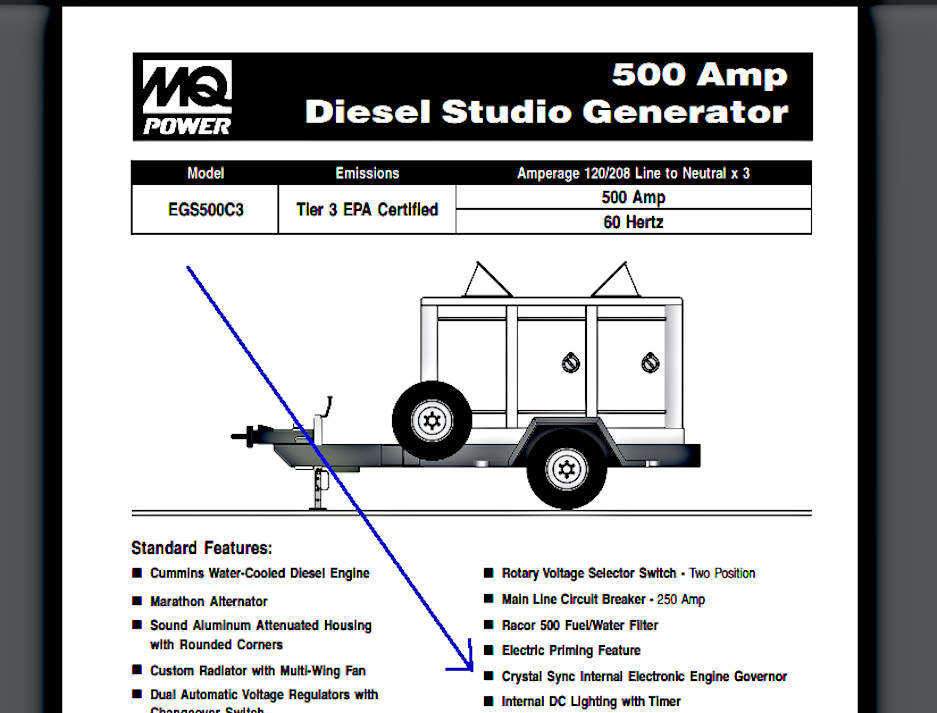
Yes AC is dirty which is why (besides a grid failure) major concerts use crystal sync gen sets to provide power to the entire stage.

We won't run on city power!

If you're plugging your music gear into the wall and without knowing if the power company fiddled with their settings (voltage and Hz fluctuations) then you're exposing your gear to AC that is not clean and stable.

I'm not a electronics expert but as Tyler from TC tubes explained some tubes in certain amp circuits he could tell how the performance in a certain amp might run the tubes too hard. So he would suggest a tube based on the amp.

Bias, if it can be adjusted, is important.

But overall, the experience I had with the 2004-2005 Svetlana 6550 pair in a 40 watt amp, even running through clean regulated AC they still failed. The Sovteks (and these are old stock/new) are still working and that's after being driven hard during a concert back in 2018.

Back in the "day" we used to run gear, were not knowledgeable enough to check bias, or use a variac, but tubes worked for a long time we never thought about tube failures.

Ac was "cleaner" back in the day when we'd play gigs off of wall/city grid power.

Of course back up tubes are a necessity.

And at the stage, back up amps are rider requests.
 
There is so much bad information here that it's embarrassing actually.

1. Manufacturers can and do receive pre-screened tubes, but like with all vendors, we also do a lot of additional testing and screening. Those that screen out are returned to the vendor and presumably resold to another manufacturer or retail tube dealer. We've been doing this since the 1970's on what are now considered vintage USA tubes.


Crystal sync generators??? C'mon, that's absurd. For non-inverter generators, the speed of the prime mover and the number of poles of the alternator determine the frequency.

On modern gen-sets, the output frequency is compared with a 60Hz standard and the difference output feeds the ecu that controls the speed of the prime mover and this the frequency. It's exactly the same principle as older cruise controls. This can be done in analog domain or the digital domain, but there's no precision to this process because there's a fine balance between quickness of response and system stability. It's classic setup control system theory.

On older generators, this process may also be done via tach feedback, mechanically or via pneumatics (governor type), the control system stability criteria rules still apply.

The frequency control of a high quality gen-set is roughly 10 times less stable then the US electrical grid.

Voltage control of alternator also has a variety of control methods. The most common method is the field control method, the output voltage is compared with the reference voltage, if the voltage is too high, the field current is decreased. If the voltage is too low the field current is increased. There are also PM alternators and brushless alternators that use phase control capacitors for regulation. Again, there's not a lot of precision in gen-sets compared with the USA grid.

I'm an EE, worked in the touring world for 40 years as an A1 and TPD (lead audio and technical production director), as well as designing control systems for machinery like gen-sets. Whenever possible and there is adequate capacity, tours generally prefer to use shore power. Sometimes there's no alternatives and genny power has to be used, the larger the show the more likely it is.
 
Last edited:
There is so much bad information here that it's embarrassing actually.

1. Manufacturers can and do receive pre-screened tubes, but like with all vendors, we also do a lot of additional testing and screening. Those that screen out are returned to the vendor and presumably resold to another manufacturer or retail tube dealer. We've been doing this since the 1970's on what are now considered vintage USA tubes.


Crystal sync generators??? C'mon, that's absurd. For non-inverter generators, the speed of the prime mover and the number of poles of the alternator determine the frequency.

On modern gen-sets, the frequency is compared with a 60Hz standard and the difference output feeds the ecu that controls the speed of the prime mover and this the frequency. It's exactly the same principle as older cruise controls.

On older generators, this process may be done mechanically or via pneumatics (governor type)

The frequency control of a high quality gen-set is roughly 10 times less stable then the US electrical grid.

Voltage control of alternator also has a variety of control methods. The most common method is the field control method, the output voltage is compared with the reference voltage, if the voltage is too high, the field current is decreased. If the voltage is too low the field current is increased. There are also PM alternators and brushless alternators that use phase control capacitors for regulation.


Sounds like you're nit picking.

But thanks for the extra technical info.

Gen sets had/have crystal sync technology.

Specially for cinematography which is what I'm used to.

Crystal sync generators??? C'mon, that's absurd.

Known equipment in circulation.

And the crystal sync system is more expensive than the inverter.

To be or not to be...

HMI and crystal sync gennies

Crystal sync genne

gen-set-chicago-power-crystal-sync-gmp-Copy.jpg


studio-gen-crystal-sync-gmp-Copy.jpg


Bad information or just not tracking in your neck of the woods? Screening tubes in lots must then be a further nit pick.

NOT necessarily bad information
just not privy to your amp building requirements.

The consumer is not building amps with specific tube requirements.

As one poster mentioned to you why can't someone comment that they didn't seem to have problems with tubes "back in the day?"

To blanket your experience as an amp builder with the consumer's is not the same thing.

I realize you started in the 1970's as mentioned previous. The more prized NOS USA valves are made before the 1970's.

And if a consumer were aware that there are tube merchants who specialize in hunting down tubes that work, then the consumer does not need to do what your company does.

If I'm not mistaken, isn't this what JJ does? Screens tubes and re-brands? I can't seem to get a good answer to the JJ company's source if they make tubes or just test tubes for sale.

Some tubes are finicky. Like the 6x4 in a specific keyboard/speaker rig. This tube is problematic and is a known issue in a certain keyboard used for back line. If this goes bad the speaker doesn't work. There goes the keyboard player.

You can get JAN 6x4 for $8.
DSCN6547.JPG


Or one 6x4 that is less likely to fail:

nos-6x4-gec-1.JPG

GEC CV4005 / 6X4 for $75

GEC CV4005 / 6X4

CV4005 6X4 GEC Rectifier Valve Tube NOS (V38) | Vintage Electronics


https://www.thevalvestore.com.au/home/132-gec-cv4005-6x4.html

Welcome to the club. Car makers can't get chips, truck drivers can't get DEF.

But we digress.

Whether the grid is more stable than a gen set or not does not control things if the grid goes down. There goes mega-buck concert preparation and all the logistics of ticket refunds, sponsors-producers po'd, angry artists... concert goers...venue owners.. FOH backline owners, light companies, scaffolding, stage rentals, barricade rentals, generator rentals... snack and beverage sales..the list is huge.

dominoes-falling-one-by-one.gif


Often there are BACK UP GEN SETS in case the one generator goes down.

Redundancy is king.

There is so much bad information here that it's embarrassing actually.


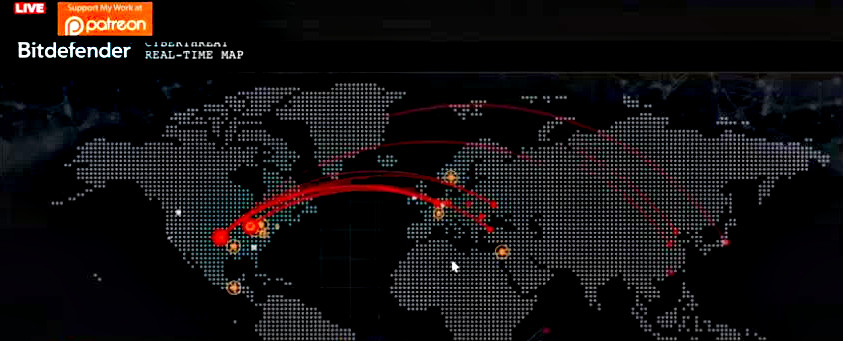
Since the net in conus is being attacked as per Bitdefender, the video you posted did not appear right away when your post first appeared in my browser. So it just appeared now. Have that same thing with photos and lots of beach ball and slow downloads or pages not loading. Yeah they're messing with the net like it or not.

bitdefender-gmp-Copy.jpg


Yes, I remember now I saw that tube testing video years ago. Doesn't mention where/when the tubes are/were made. Still you're not making tubes, you're testing them. It also doesn't mean the tube sounds better for other applications except for your amps, or so you think.

This is supposedly off your Mesa news circa 2013:

There are only 3 countries manufacturing tubes left in the world: China, Russia, and the Czech Republic. ((China - Shuguang (Penta, Ruby, Groove Tubes, etc), Russia - New Sensor (Sovtek, Svetlana, EH, Tung Sol, etc), and Czech - JJ.

You're not using USA tubes you're using whatever they're making on the planet now.

And the way you have your amps bias fixed, you void warranty if other tubes are used.
Nothing wrong with designing your amps around tubes you find and test to use.

Basically you're making the best of a not optimal situation making do with what's on hand that is cost effective.

I don't think you'd do that with NOS.

Imagine if the tube industry in the 20th never went away and the ones made then are available today hot off the presses and even updated on the technology?

Tube technology has not improved IMO and reason some seek NOS. I've experienced it and many other repair techs, basic musicians have as well.

You saying tubes are better made now than then is misinformation.

Or as mentioned earlier the way your amps are designed perhaps a different type of tube would need to be invented?

I never operated or used a Mesa but they do sound ok for what they do and I have no idea if others have come across other brands (NOS) that work in your amps.

Tubes made today in Russia or China do not have the exact same recipe that American tubes had. They are copying old technology but not making them as good as they were once made.. It's brand recognition mainly. And when a brand sells off the new owner makes them the way they want which is not classic but stylized and with economics at the helm.

Plugging in NOS tubes in most tube gear gives a different sound. How does that happen from something decades old?
 
Sylvania Pennsylvania factory 1945-46.
The guy below is in charge of destroying the factory defects. If they were concerned about the chance of bad tubes falling into unscrupulous hands back then, what's going on today?

From here:
Sylvania Factory Tour – Vintage Tube Services
View attachment 4841172Caption from Vintage Tube Services site (link above):
Sylvania Production Line – Tube Crushing Machine. This tube crushing machine prevented any seconds from falling into dishonest hands!