• TalkBass has been independent since 1998. Add your voice.
    Create a free account to reply to discussions, view embedded media, and browse with fewer display ads.
    Join freeLog in
    Want zero display ads or expanded classifieds tools? Compare plans.

Worship Bass Pedalboards

Thinking about selling my Dual Broadcast to pick up one of these bad boys. I assume it does a better soft drive which is what I mainly use at church.

BROADCAST AP-II – HUDSON ELECTRONICS UK
It really depends on what you mean by “drive.” Overdrive? Distortion? Mid-rangey drive? Some pedals made for Guitar can often lose or cut significant amounts of low end. Especially if you play a five string. Some of that can be fixed by using a blend pedal like a damnnation audio bloop.

I spent years chasing that soft overdrive sound for church. I finally found it and so much more in the HX Stomp. However, before that, my quest ended with the Broughton SVPre for that pushed Ampeg tube amp sound with finger style. There is none better, in my opinion. And they are readily available, which is rare for Broughton gear. My distortion quest ended with the Tech21 Dug. But the YYZ is also a good one. For pick playing, with a little grind, the best I have found is the Broughton Scorpion. So good, so powerful, so flexible. No clean blend necessary.

Part of the trick with using dirt on a pedalboard, especially when running direct, is having a cab sim. But that’s a whole other conversation.
 
Thinking about selling my Dual Broadcast to pick up one of these bad boys. I assume it does a better soft drive which is what I mainly use at church.

BROADCAST AP-II – HUDSON ELECTRONICS UK

I’m very hesitant to use a bass drive pedal without a blend unless FOH is running a clean blend for you. The original Darkglass Microtubes is my favorite low to medium bass drive pedal. The deluxe and ultra versions without the era control sound nothing like it fyi. Spaceman Saturn VI is great low only drive (no blend but it doesn’t cut low end).
 
Todays setup. Not that much ever changes. Recently moved to GHS Pressurewound strings. Very impressed. Like slightly worn in nickel rounds but with less finger noise & high end sizzle, just like all the reviews say. Not cheap but I believe they last a long time. Because the high end stuff is tamed, I can get away with more drive & blend on the VTDI than usual.

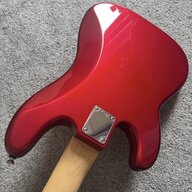
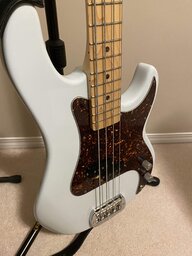
That’s a Player P bass with upgraded wiring - CTS pots, Switchcraft jack, & Fender Custom Shop CS62 pickups. Got a Tone Hammer DI to try out soon, but I was really happy with the sound today.


IMG_4923.jpeg
 
I have looked at that pedal and I am tempted. Since my drive will be right beside my Empress ParaEq Deluxe, will there be a bit of redundancy since both are technically an EQ pedal (albeit one also has a drive)?
No. They are quite different in function. The DCX Bass is a boost/drive with a fixed point, 2-band EQ; the Empress is a parametric EQ with three fully sweepable bandwidths as well as control over the Q for each and--in the Deluxe version--four filters plus a clean boost.
 
No. They are quite different in function. The DCX Bass is a boost/drive with a fixed point, 2-band EQ; the Empress is a parametric EQ with three fully sweepable bandwidths as well as control over the Q for each and--in the Deluxe version--four filters plus a clean boost.

What I meant is, since I have the ParaEQ Delux, would I be better of just getting a straight Drive pedal with no EQ since I have a pedal that can already do that in spades?
 
I dig it. What’s the thing on the top left with the xlrs?

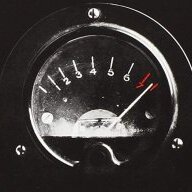
It is an Analog VM Meter. Analog Voltage Unit Meter Pedal (Analog-VUMP) – Joyemusic.com

I use it when I build my patches on the HS Stomp to help get them equalized. It also helps me to know how much signal that I am sending to the main board. It is passive and doesn't do anything to the signal. They have three models. Two variants of the analog, one with only 1/4" and one with both 1/4" and XLR. They also have a digital version that is smaller.


The YouTube shows an older version with a level knob that adjusts the level of the meter. The newer version that I have just has a 3-way switch that is 0db, -10db, and -20db. I think mine has a calibration pot inside if I wanted to calibrate it to a known signal, but I really don't need that. I just want to compare different patches to make sure they are roughly equal. Calibrating patches to a meter doesn't tell the full story, even patches that seems to be the same volume can sound to my ears louder or quieter, but the VUMP gets me really close quickly.

And the pedal looks cool.
 
It is an Analog VM Meter. Analog Voltage Unit Meter Pedal (Analog-VUMP) – Joyemusic.com

I use it when I build my patches on the HS Stomp to help get them equalized. It also helps me to know how much signal that I am sending to the main board. It is passive and doesn't do anything to the signal. They have three models. Two variants of the analog, one with only 1/4" and one with both 1/4" and XLR. They also have a digital version that is smaller.


The YouTube shows an older version with a level knob that adjusts the level of the meter. The newer version that I have just has a 3-way switch that is 0db, -10db, and -20db. I think mine has a calibration pot inside if I wanted to calibrate it to a known signal, but I really don't need that. I just want to compare different patches to make sure they are roughly equal. Calibrating patches to a meter doesn't tell the full story, even patches that seems to be the same volume can sound to my ears louder or quieter, but the VUMP gets me really close quickly.

And the pedal looks cool.

...it would be awesome to build one of these into a DI box - I've just sent the youtube link to my electronics amp/pedal building friend with the challenge...
 
What I meant is, since I have the ParaEQ Delux, would I be better of just getting a straight Drive pedal with no EQ since I have a pedal that can already do that in spades?
I don't think so. Nearly all drive pedals have some sort of EQ control: often a LPF for the treble or a tilt-style, but sometimes a 2- or 3-band EQ. The DCX Bass has the latter, which just means you have a bit more control when it comes to tone shaping if you want it.
 
It is an Analog VM Meter. Analog Voltage Unit Meter Pedal (Analog-VUMP) – Joyemusic.com

I use it when I build my patches on the HS Stomp to help get them equalized. It also helps me to know how much signal that I am sending to the main board. It is passive and doesn't do anything to the signal. They have three models. Two variants of the analog, one with only 1/4" and one with both 1/4" and XLR. They also have a digital version that is smaller.


The YouTube shows an older version with a level knob that adjusts the level of the meter. The newer version that I have just has a 3-way switch that is 0db, -10db, and -20db. I think mine has a calibration pot inside if I wanted to calibrate it to a known signal, but I really don't need that. I just want to compare different patches to make sure they are roughly equal. Calibrating patches to a meter doesn't tell the full story, even patches that seems to be the same volume can sound to my ears louder or quieter, but the VUMP gets me really close quickly.

And the pedal looks cool.

So here's a technical question. Once I get my Mini-Vump wired in, what sort of level are you looking for to send to FOH? Is there a certain target VU level you shoot for as your standard level? Like -4 or -6 or 0 or something? Thanks.