There is already a club or two for the Johnny-come-(relatively)-lately coffee tables with aircraft carrier flight decks for fretboards  that many people commonly think of first when they see or hear the term six string bass.
But this club is for the original six-string bass guitar concept, short scale (approximately 30 inches), tuned EADGBE, like a standard guitar but an octave lower (i.e., like a standard four-string bass + two bonus higher strings). I dont claim to be an expert on this subject (although my love for the instrument surely makes up for that), so I welcome any factual corrections, suggestions, etc.
The original six-string electric bass was first introduced by Danelectro in 1956 and followed by others like Fender (in 1961 with their [in]famous Bass VI), Gibson, Burns, Teisco, and a bunch more over the years. The early six-string basses were often used as tick-tack basses in the recording studio, where picked bass lines would be recorded to double the recorded lines of the upright bass, giving a unique full sound when combined (I believe the Four Seasons original version of Big Girls Dont Cry is an example most people have heard). Aside from tick tack bass, the short-scale six-string basses could usually also perform the traditional twangy baritone guitar role well
This club is not for instruments that are dedicated baritone guitars (i.e., instruments with a shorter scale than short-scale bass and greater than that of standard guitar, designed to be tuned A to A, B to B, or some other range where the lowest string is higher than the low E string of bass, but lower than the low E string of standard guitar). Baritones are fun and lovely instruments, but this club is for the E-to-E, 30-inch-scale instruments. Short-scale six string basses are often equipped with choke or baritone switches for use in the baritone role (some short scale four-string basses have such a baritone switch too, e.g., the Epiphone Rivoli).
Early bass amplification combined with the guitar pickups of many of the early six-string basses meant that it wasnt always easy to get a lot of low-end from the instruments. But in the late 1960s, the Fender Bass VI and similar instruments started to be used in the traditional bass role by a few brave souls to good effect (Jack Bruce of Cream, the Beatles on some tracks, and others.)
Toward the tail end of the 1970s, the short-scale six-string found another role, that of a lead instrument in its baritone range, but not necessarily in the twangy fashion traditional associated with baritone guitar. Harry Nilssons 1977 album Knnillssonn featured six-string bass as a lead instrument, adding some haunting beauty to the music. But Peter Hook of Joy Division famously used a Shergold Marathon 6, often with heavy chorus, for relatively simple but distinctive and melodic leads played in the upper register, which contributed a great deal to the sound of New Order through the 1980s and beyond, and inspired others to explore such a role.
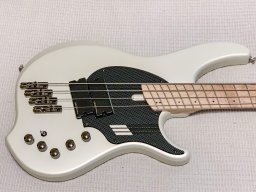
Today, with modern amplification and instruments, the short-scale six-string bass can easily perform the traditional bass role along with the other more-unique roles that its more famous for. This club is dedicated to those instruments and those who play and love them. The short-scale six-string is often regarded as a black sheep of the bass family by some, but there are enough fanciers of the instrument to ensure its continued existence and contributions to music for a long time to come. So if you are a proud owner of one of these instruments, post pictures and get counted!!
One of the other purposes of this club is also to keep a running list of the various makes and models of short-scale six-strings out there. I only know of a handful of them, so I welcome and encourage contributions by others. Post photos, stats, info, anecdotes, etc. I personally own a Schecter Hellcat VI, which I currently use as my main bass. I love the wide variety of tones this thing possesses. It can do traditional bass stuff just fine, and it can do all the other things normally associated with Bass VI-type instruments. It has three humbucking pickups, plus a coil tap switch which is great for baritone guitar stuff. I highly recommend this bass for anyone who wants a Bass VI-type instrument but cant afford the enormous sum that the Fender commands. Ive tried out my bandmates Bass VI, and I definitely like the feel of the Hellcat VI better.
that many people commonly think of first when they see or hear the term six string bass. But this club is for the original six-string bass guitar concept, short scale (approximately 30 inches), tuned EADGBE, like a standard guitar but an octave lower (i.e., like a standard four-string bass + two bonus higher strings). I dont claim to be an expert on this subject (although my love for the instrument surely makes up for that
), so I welcome any factual corrections, suggestions, etc. The original six-string electric bass was first introduced by Danelectro in 1956 and followed by others like Fender (in 1961 with their [in]famous Bass VI), Gibson, Burns, Teisco, and a bunch more over the years. The early six-string basses were often used as tick-tack basses in the recording studio, where picked bass lines would be recorded to double the recorded lines of the upright bass, giving a unique full sound when combined (I believe the Four Seasons original version of Big Girls Dont Cry is an example most people have heard). Aside from tick tack bass, the short-scale six-string basses could usually also perform the traditional twangy baritone guitar role well
This club is not for instruments that are dedicated baritone guitars (i.e., instruments with a shorter scale than short-scale bass and greater than that of standard guitar, designed to be tuned A to A, B to B, or some other range where the lowest string is higher than the low E string of bass, but lower than the low E string of standard guitar). Baritones are fun and lovely instruments, but this club is for the E-to-E, 30-inch-scale instruments. Short-scale six string basses are often equipped with choke or baritone switches for use in the baritone role (some short scale four-string basses have such a baritone switch too, e.g., the Epiphone Rivoli).
Early bass amplification combined with the guitar pickups of many of the early six-string basses meant that it wasnt always easy to get a lot of low-end from the instruments. But in the late 1960s, the Fender Bass VI and similar instruments started to be used in the traditional bass role by a few brave souls to good effect (Jack Bruce of Cream, the Beatles on some tracks, and others.)
Toward the tail end of the 1970s, the short-scale six-string found another role, that of a lead instrument in its baritone range, but not necessarily in the twangy fashion traditional associated with baritone guitar. Harry Nilssons 1977 album Knnillssonn featured six-string bass as a lead instrument, adding some haunting beauty to the music. But Peter Hook of Joy Division famously used a Shergold Marathon 6, often with heavy chorus, for relatively simple but distinctive and melodic leads played in the upper register, which contributed a great deal to the sound of New Order through the 1980s and beyond, and inspired others to explore such a role.
Today, with modern amplification and instruments, the short-scale six-string bass can easily perform the traditional bass role along with the other more-unique roles that its more famous for. This club is dedicated to those instruments and those who play and love them. The short-scale six-string is often regarded as a black sheep of the bass family by some, but there are enough fanciers of the instrument to ensure its continued existence and contributions to music for a long time to come. So if you are a proud owner of one of these instruments, post pictures and get counted!!
One of the other purposes of this club is also to keep a running list of the various makes and models of short-scale six-strings out there. I only know of a handful of them, so I welcome and encourage contributions by others. Post photos, stats, info, anecdotes, etc. I personally own a Schecter Hellcat VI, which I currently use as my main bass. I love the wide variety of tones this thing possesses. It can do traditional bass stuff just fine, and it can do all the other things normally associated with Bass VI-type instruments. It has three humbucking pickups, plus a coil tap switch which is great for baritone guitar stuff. I highly recommend this bass for anyone who wants a Bass VI-type instrument but cant afford the enormous sum that the Fender commands. Ive tried out my bandmates Bass VI, and I definitely like the feel of the Hellcat VI better.