• TalkBass has been independent since 1998. Add your voice.
    Create a free account to reply to discussions, view embedded media, and browse with fewer display ads.
    Join freeLog in
    Want zero display ads or expanded classifieds tools? Compare plans.

1x15 too bassy?

I think they do.


The 2-10-2 flat on a Fender EQ refers to 2 out of ten not 2 o clock. Old fender amps had numbers on the knobs.
 
  • Like
Reactions: rodl2005
The 2-10-2 flat on a Fender EQ refers to 2 out of ten not 2 o clock. Old fender amps had numbers on the knobs.

Here is a Fender TMB tonestack model people can play around with.


IME Flat with a real Fender usually seems to be closer to Treble off, Bass open a hair, Mid about 8.

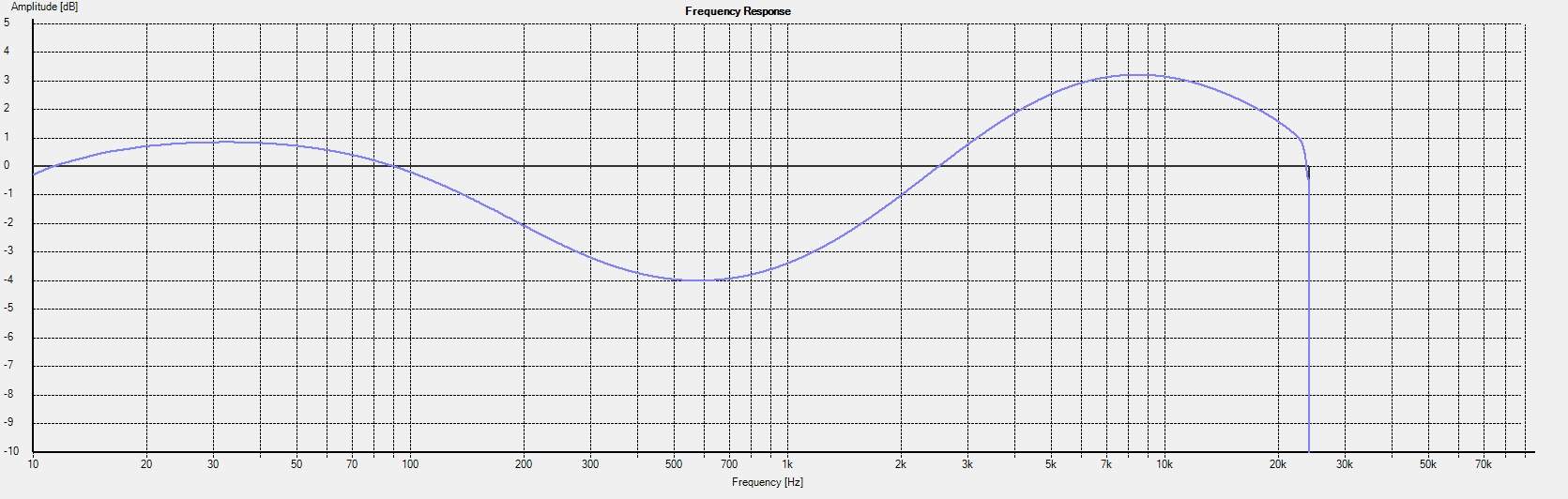
The tone stack in many bass amps is based on the same design. The component values are often different, which changes the voicing and how the tone controls respond to adjustment. The amps also frequently have extra components that allow the user to select different sets of response curves.

FYI, Even Fender varied the component values somewhat. I.E. flat can vary from one Fender to the next.

My understanding is Rumbles have sort of a fixed voicing filter that is based on a Fender tone stack. However the actual tone controls use a different type of circuit. This may vary somewhat across the range of Rumbles. Or I may be totally wrong :laugh:. Maybe someone who actually knows will comment ;).
 
  • Like
Reactions: waveman
First and foremostly, find the cab’s sweet spot. It’s going to be in the mids. I find that a lot of poor sound is rooted in overemphasizing the lowest frequencies, because, well, bass. The real business is somewhere in the mids. The lowest frequencies belong to the bass drum. It’ll always win that competition.

I invariably cut the lows at least some, and I usually boost the low mids at least some (unless I’m playing at a very low volume). When the tone jumps through the mix, big, bouncy, and chromatic (and not way loud), that’s how I like it.

Doubling down on the lowest lows can trap you in those subsonic frequencies that come through so deep that it’s hard to tell the notes apart. Not enough texture.

That’s all I got.
 
If you can’t hear definition and others are saying too loud.

1. Get the cab up off the floor. Especially if it is a riser or stage. Touching the floor will cause the floor to amplify the mud.
2. Check the position in the room. Bass wavelengths are measured in feet, so if you are near a corner or wall you could be dealing with interference. Try a different location and point it at your head. Also try to get a bit of distance from your cab and move around a bit to see if you are in a spot with interference. You might find a location for either the cab or you to help yourself hear.
3. It’s probably the boomy voicing of the preamp or cabinet. Could also be the room. As mentioned above, trim bass and treble and boost the mids.
4. If the room is still boomy a high pass filter set between 30 and as high as 80 might make a big difference.
5. Many amateur musicians aren’t used to hearing anyone else play and feel like they need to only hear themselves. It could be that your volume is just fine to them, but they still don’t like it. Again, point your amp at your head.

If all of the above don’t work, I’m not convinced a 10” speaker set will help, though maybe a separate preamp pedal sent in through the effects loop return (if available) could help. Worth trying instead of getting an alternate amp to try.
 
Last edited:
Get the cab up off the floor. Especially if it is a riser or stage. Touching the floor will cause the floor to amplify the mud.

I've had this Gator stand for 15 years with my Roland keyboard amp. Given the location of my Ampeg 50w bass combo's AC plug the adjustments are more curtailed because in some positions it covers the top bar, so maybe the low-pofile stand would be better, I'm not sure. Regardless, when aimed more toward my ears the clarity of the amp does seem better.
 
As an Amazon Associate, TalkBass may receive commissions from qualifying purchases made via links on this site.
I’ve always found every 15” I’ve ever tried to be muddy and inarticulate.


A couple I have tried that I thought were clear and articulate are GK RBH115 and Mesa PH115.

I own a Greenboy Dually loaded with Faital 15PR400. This cab is intentionally designed to be "vintagey." Seems fairly dark and bloomy to me (meh). I thought it sounded good as a woofer in a biamp rig I experimented with. I pull the Dually out every now and then just for something different :bag: .
 
Here is a Fender TMB tonestack model people can play around with.

https://www.guitarscience.net/tsc/f... someone who actually knows will comment ;).

The various (mostly older) Rumbles with four band active EQ that I’ve seen schematics for have nothing in common with the old passive tone stack topology. Some are Baxandall (boost/cut shelving) based for Bass and Treble, some are bandpass format for all four bands. I haven’t analyzed any of the contour or other addtional voicing filters, but it wouldn’t be surprising if they mimicked the classic Fender midscoop thing.
 
  • Like
Reactions: Wasnex
The various (mostly older) Rumbles with four band active EQ that I’ve seen schematics for have nothing in common with the old passive tone stack topology. Some are Baxandall (boost/cut shelving) based for Bass and Treble, some are bandpass format for all four bands. I haven’t analyzed any of the contour or other addtional voicing filters, but it wouldn’t be surprising if they mimicked the classic Fender midscoop thing.


Here's an example:

On the left: Fender TMB tone stack from AB763 schematic

On the right is from the Rumble 100V3 schematic: https://www.fmicassets.com/Damroot/Original/10002/Rumble 100 V3 Schematics-Diagrams.pdf

1758511027496.png

The circuit on the right certainly bears a strong resemblance to the circuit on the left.

The actual tone stack from the Rumble 100 V3
1758511206839.png

Does not look Fenderish to me.
 
  • Like
Reactions: Passinwind
Here's an example:

On the left: Fender TMB tone stack from AB763 schematic

On the right is from the Rumble 100V3 schematic: https://www.fmicassets.com/Damroot/Original/10002/Rumble 100 V3 Schematics-Diagrams.pdf

View attachment 7327089
The circuit on the right certainly bears a strong resemblance to the circuit on the left.

The actual tone stack from the Rumble 100 V3
View attachment 7327090
Does not look Fenderish to me.
Fender has actually been doing it in a pretty similar way for at least over two decades though…;)
 
  • Like
Reactions: Wasnex