• TalkBass has been independent since 1998. Add your voice.
    Create a free account to reply to discussions, view embedded media, and browse with fewer display ads.
    Join freeLog in
    Want zero display ads or expanded classifieds tools? Compare plans.

Amps without cooling fan?

Though some people haven't experienced it, fans really are sometimes an annoyance. I often play in mixed acoustic and electric recording settings with wide dynamic range and depending on the situation my Ashdown ABM's fan noise gets picked up by the mics. I like the amp, but I don't bother with it in certain recording settings because of that. I'd try to replace it with a quieter one but as agedhorse says, care must be taken to match it right.

Just a good excuse to have more than one amp
 
Though some people haven't experienced it, fans really are sometimes an annoyance. I often play in mixed acoustic and electric recording settings with wide dynamic range and depending on the situation my Ashdown ABM's fan noise gets picked up by the mics. I like the amp, but I don't bother with it in certain recording settings because of that. I'd try to replace it with a quieter one but as agedhorse says, care must be taken to match it right.

Just a good excuse to have more than one amp
Always record loud.
 
my TB500 has a loud fan.....fine when out jamming, annoying when playing in the family room for practice...I have removed the fan , cleaned and reinstalled and it seemed to make an improvement...maybe tightening things up helped

I returned the Eden E300 head because it has 2 fans!... really noisy...killer amp though, really powerful
 
  • Like
Reactions: Poke
Define small gig. House party? Coffee house? Small bar? How loud the drummer is can also be an important factor.

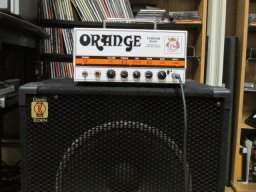
My Orange TB1000 has a cooling fan, that if I am in my practice area, the room is dead quiet, no one else is home, dog is out for a walk, cats are sleeping, FedEx and UPS have all gone home and the drivers all tucked in for the night, etc., etc., I can maybe barely hear the fan. Perhaps the fans you have heard are poor design or have worn out or dirty/dry bearings.

I have the TB500....I find the description of your fan hard to believe IMHO, YMMV etc etc
 
I guess so, but then if you're not micing up the fan isn't a problem. How do you spell micing? Sounds like mice. Mic-ing? I've never known :)
Relicing too, spelling is confusing. Back on topic, sorry
I have a SS Lab Series 4 (200W) that has a huge fan on one of the sides of the case. It was kind of weird in that it has a two prong electrical cord that you have to plug into an outlet on the back of the amp. It was very noisy. It was a very loud amplifier though. It's demise came when I had the fan unplugged for practicing at home and forgot to plug it back in for a rehearsal. For a while if you just hit it with your hand on the top of the case it would be OK. For a while. Maybe I'll get it fixed maybe not. But I sure learned about fans.
 
  • Like
Reactions: bobyoung53
I have an SWR SM400s that I gigged four and five nights a week for 15 years. It has no fan. The chassis is aluminum, including the face plate, which acts as its heat sink. The face of the amp gets far too hot to touch during the course of a four-hour gig, but the amp has never failed. I stopped using a bass amp on stage regularly years ago, but still have this head for the few times each year when I need one. Best part? You can pick these reliable workhorses up for a song now. Worst part? The pre-amp voicing isn't for everyone.

[QUOTE=" The chassis is aluminum, including the face plate, which acts as its heat sink. The face of the amp gets far too hot to touch during the course of a four-hour gig, .


that is some messed up engineering... at the very least it should have been the back panel getting hot , but ...wow[/QUOTE]
Nah, awesome amp!
 
I have a 1991 Trace Elliot 1225V 2x10x2x5 combo that has a heat sink. I also have a 1993 Trace Elliot GP12 AH250SMX head that also has a heat sink. For small rooms, studio and at home rehearsals, I can't imagine life without them. They are worth owning, if yiu can find a clean one, but parts are becoming scarce.

You can also check out some of the older SWR heads like the SM400. They just got REALLY hot.
 
Fans became necessary when size shrunk AND power levels increased. I have designed many amps without fans, but all below 400 watts/4 ohms.

I hear ya, I'm surprised that a lot these lower power (200-300 watts) class D amps have fans though. Are heat sinks impractical with these for some reason or is it just the enclosure is too small? My TC BH-250 is admittedly even smaller than my 450W Walter Woods which has no fan just heatsink fins and a "beer intake port" top vent.
 
  • Like
Reactions: Alan Ace Cooper
[QUOTE=" The chassis is aluminum, including the face plate, which acts as its heat sink. The face of the amp gets far too hot to touch during the course of a four-hour gig, .


that is some messed up engineering... at the very least it should have been the back panel getting hot , but ...wow[/QUOTE]
Actually, it's the entire case of the amp that gets extremely hot when run for hours at very high volume. And no, it isn't messed up engineering; in fact, it's brilliant. Using the entire case as a heat sink eliminates the need for a noisy fan in what at the time it was designed was a high power amp head. Once the head is in a rack, there's no need to touch the case. The knobs and switches don't get hot. There are many other options now, but this particular design has proven exceptionally durable.
 
My B-15 does not have a fan, just a cage. I have used it for small to medium sized gigs.

B-15's get cool by convection, heat gets transferred to the surrounding air and it rises with an open chassis like they have the and surrounding components stay cool. Most amps are in a box which impedes convection cooling. I like having a fan, cooler means components last longer. I think one of the reasons for SVTs' longevity is that they have a fan that blows directly on the power transformer. I have two 40 year old SVT's and they still run great and don't break down.
 
I hear ya, I'm surprised that a lot these lower power (200-300 watts) class D amps have fans though. Are heat sinks impractical with these for some reason or is it just the enclosure is too small? My TC BH-250 is admittedly even smaller than my 450W Walter Woods which has no fan just heatsink fins and a "beer intake port" top vent.

Yeah but you can't find the volume control:D.
 
  • Like
Reactions: J-Bassomatic
You got to play pretty quiet or the cooling fan has to be extremely loud to the point that I believe it might be faulty for it to be a problem, only ever where noticeable for me when practicing alone in my apartment, and even then, even if you definitely could hear it, the noise coming from it was no way a big annoyance factor.

My Dynacord Bass King 50W all tube amp from '63 doesn't have a cooling fan, as most tube amps doesn't, to my knowledge, and is surprisingly quiet as well, considering it's age and the fact that it runs on tubes, as far as I recall dead quiet in fact (it had been totally renovated just before I bought it some months ago, which probably explains it).

As far as I remember my Ampeg B-15S (the 1969 model) 60W all tube amp did emit a tiny amount of unwanted noise.

My Trace Elliot GP75SM 130W SS combo would be dead quiet as well were it not indeed for the fact that it got a fairly loud cooling fan installed.

No big problem though at rehearsal levels with a drummer and guitarist playing as well, not at all audioable even if you try hard to focus on it at that volume.

And if I had to record with it miked up at some point, the issue could be solved by either just using my the tube amp part of my setup or unplugging the build in speaker unit from the "speaker in" connection on my combo and use an extension cab instead with a speaker cord of sufficient length to place the extension cab far enough from the amp for the mics not to pick up the fan noise.

I realize not all combos have this option, mine does though fortunately.
 
Last edited:
There was a time when no amps had fans.
Many of those got pretty loud, too.
Those that had higher power either had big heat sinks
or a reputation for unreliability.

When we started looking for more power in a smaller package,
then fans became a thing.
You can't have a small size and a big heat sink.

If you really need the quiet of a no fan amp,
find an older one with no fan.
Any lack of power should be unimportant at any volume low enough to hear a fan.
 
I have an SWR SM400s that I gigged four and five nights a week for 15 years. It has no fan. The chassis is aluminum, including the face plate, which acts as its heat sink. The face of the amp gets far too hot to touch during the course of a four-hour gig, but the amp has never failed. I stopped using a bass amp on stage regularly years ago, but still have this head for the few times each year when I need one. Best part? You can pick these reliable workhorses up for a song now. Worst part? The pre-amp voicing isn't for everyone.

No, that was relatively revolutionary engineering for the time. There were very few rack-mount amps putting out 400W without any active cooling in the 80's. The SM400s was compact and light weight compared to most other amps at the time, so dissipating that much heat in a small, compact, light weight amp without using a fan was pretty darn cool.

30 years later it doesn't seem so great, but for it's time, it was kind of a big deal.

Actually, it's the entire case of the amp that gets extremely hot when run for hours at very high volume. And no, it isn't messed up engineering; in fact, it's brilliant. Using the entire case as a heat sink eliminates the need for a noisy fan in what at the time it was designed was a high power amp head. Once the head is in a rack, there's no need to touch the case. The knobs and switches don't get hot. There are many other options now, but this particular design has proven exceptionally durable.
The SWR SM400S does have a fan that blows across the heat sinks. It is just not externally visible except through the top slots of the amp. Even my old Bass 350 had a fan in it. SWR amps still got really hot, my guess being the fans were not effective enough.