
Enjoy the benefits of a premium membership!
Upgrade Account
-
TalkBass has been independent since 1998. Add your voice.
Create a free account to reply to discussions, view embedded media, and browse with fewer display ads.
Join free Log in
Want zero display ads or expanded classifieds tools? Compare plans.
You are using an out of date browser. It may not display this or other websites correctly.
You should upgrade or use an alternative browser.
You should upgrade or use an alternative browser.
Are jazz musicians musical elitists?
- Thread starter Jean Rodriguez
- Start date
More options
Who Replied?


For real? Something doesn't add up there. A classically trained musician who couldn't reproduce something taught on day 1 of any intro to harmony class?
My thoughts exactly. Either he wasn't paying attention to the lessons, or the teacher was teaching the wrong skills.
And yes, I took piano for six years, and chord structure is basic stuff.

Well, what does it mean to be a jazz bassist? To me, it means being able to play every standard ever written, in any key. It means having formidable technique to call on while playing with a lot of soulfulness, a lot of heart, and with a lot of musical poetry. If I could do that, damn right I'd be an Elitist.

Musical literacy and theory is helpful to every genre. I love jazz (especially straight ahead) and rock, R&B, gospel, latin, classical etc. Just do not be overly aggressive, or dumb things down or over produce things to appeal to mass markets. I think Ellington once said there are 2 varieties of music, good and bad.

You should probably listen to some earlier jazz, like from the '20's, '30's and '40's -- before bebop came along. There was plenty of dancing going on.I'm a rock elitist, because at least people can dance to rock.
I can appreciate jazz, but to me, it's a more intellectual form of music. In that sense, it's akin to technical death metal. Both make me feel musically inadequate.



Of course they're not, nor are classical musicians, but I'll tell you something; I put them far above myself. Most of the stuff I play is easy as hell to learn; the only difference between awful and great being mostly subjective on the part of the audience. I mean, yeah, you can play rock, blues and pop badly, and you can play it amazingly well, but most people fall somewhere in the middle, and all they need is to have a bit of talent and some time spent playing.
No offense.
No offense.

kellogc
Kello Bass Extravaganza!
- Apr 3, 2003
- 108
- 49
- 48
- Disclosures
- Endorsing Artist: Aguilar Amplification, Line6, Kings Of Groove
The thing with Jazz players (and I agree there are few exceptions) is that they measure everyone's capacity to theirs. They also spend so much learning their stuff that they can't cope with the idea o any other musician not dedicating this time to their instrument. Their patience towards having to explain theory to a "mortal" is Zero, as is their tolerance to playing notes "out of key or scale". It's a matter of perspective... "You wouldn't understand what I'm playing"...
Whatever genre you play, it's hard to be the best. And I think most of us would like to play at least OUR best most of the time. I started out a rock player and morphed into a jazzer, but I'll play what I'm asked, as long as it doesn't damage my ears or my soul. I've had enough of that.
To play anything well requires a great deal of commitment, whatever the tradition you play in. In jazz, I think, this commitment is greater than for other genres: fewer listeners, higher standards among the musicians about what's a really musical statement.
I like to play jazz with musicians who treat playing a jazz tune like a conversation among friends, who are including the audience in the conversation. Just as no one wants to be trapped in a conversation with someone who can't stick to the topic, or who blurts out malapropisms, jazz musicians prefer the company of like-minded "conversationalists."
Given the wide range of styles within jazz, that's still going to allow for a lot of variation in what kind of a musical conversation is being created: funk, Latin, swing, bebop, free, gospel...
Most of the jazz players I hang out with, who let me sit in, and who play on my gigs, are very relaxed, generous and kind people. If they are elitist, it's not about whether jazz is "best," it's about they're own standard of playing well. And I think we can all agree that whatever style you're into, playing your best and being your most authentic self while doing it, is very, very difficult.
To play anything well requires a great deal of commitment, whatever the tradition you play in. In jazz, I think, this commitment is greater than for other genres: fewer listeners, higher standards among the musicians about what's a really musical statement.
I like to play jazz with musicians who treat playing a jazz tune like a conversation among friends, who are including the audience in the conversation. Just as no one wants to be trapped in a conversation with someone who can't stick to the topic, or who blurts out malapropisms, jazz musicians prefer the company of like-minded "conversationalists."
Given the wide range of styles within jazz, that's still going to allow for a lot of variation in what kind of a musical conversation is being created: funk, Latin, swing, bebop, free, gospel...
Most of the jazz players I hang out with, who let me sit in, and who play on my gigs, are very relaxed, generous and kind people. If they are elitist, it's not about whether jazz is "best," it's about they're own standard of playing well. And I think we can all agree that whatever style you're into, playing your best and being your most authentic self while doing it, is very, very difficult.

I agree with this. Time is definitely on Jazz's side. It would also help if OP could further elaborate on type of 'Rock' or 'Rock artists' he is into.You should probably listen to some earlier jazz, like from the '20's, '30's and '40's -- before bebop came along. There was plenty of dancing going on.
I got into Jazz or Jazz musicians in general after reading many of my rock heroes past & present citing 'IT' as major influence.

How can you tell if someone is a Berklee grad?....They tell you! Hey, it's just a joke.
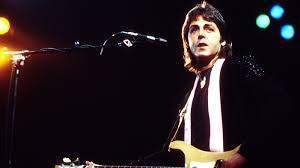
Oh, that's easy. My tastes in rock have evolved since I started playing, but some have stayed as staples of my tastes both from a listening and playing influence standpoint. First off, my favorite "rock" group are The Beatles. I started listening to the The Beatles in 2009 when their video game came out and I am still hooked on their music, today. Second to The Beatles is Led Zeppelin. Jimmy Page is my biggest guitar influence and even today I receive comments and compliments saying that my solos and playing style sound close to his when I pick up a guitar. After Zeppelin come The Red Hot Chili Peppers. John Frusciante's guitar parts and Flea's bass lines make splurge on my pants (sorry for the vulgar remark). I got into Green Day for a while and am now listening to a lot of Weezer (Pinkerton is becoming one of my favorite albums). Listening to all these different bands (even though they're rock, they're a different kind of rock) has helped my playing, improvisation and composing skills. Out of all of them, studying Paul McCartney's bass lines and Jimmy Page's guitar work are what have helped me the most both technically and theoretically.I agree with this. Time is definitely on Jazz's side. It would also help if OP could further elaborate on type of 'Rock' or 'Rock artists' he is into.
I got into Jazz or Jazz musicians in general after reading many of my rock heroes past & present citing 'IT' as major influence.

Admittedly limited, but the Jazz that I've heard sounds like 4 musicians playing 5 different tunes - I never quite understood it. To each his own, I guess....The thing with Jazz players (and I agree there are few exceptions) is that they measure everyone's capacity to theirs. They also spend so much learning their stuff that they can't cope with the idea o any other musician not dedicating this time to their instrument. Their patience towards having to explain theory to a "mortal" is Zero, as is their tolerance to playing notes "out of key or scale". It's a matter of perspective... "You wouldn't understand what I'm playing"...
Cheers,
Neither engage in snobbery like Classical musicians. I always get a kick out of those fogheads who are so proud of their reading skills, but when you take their chart away from them, they go catatonic. It doesn't matter that they've played the same score 1000 times, they still need their blankie.
This is soooooo true!! I work with over 30 "classically" trained musicians, and even the best jazz players dont hold a candle to the snobbery"classical" players exhibit, they'll laugh you outta the room if your not squared away on classical dynamic/tempo markings!! But, most also cant memorize *anything* to save their lives!!

The best jazz players ive heard/played with are ones who actually have standards memorized and *dont* rely on the Real Books, I believe this will free you up to take real chances musically!! Unfortunately music school's give the impression that being buried in your music stand is totally acceptable.....who wants to see that??

Hey!You talkin' 'bout me??.......Fusion Psychos,.........they're all out there. I think you're going to run into these types no matter what musical genre you involve yourself with.

I'm in the camp of there are elitists in every genre, but jazz and classical seem to attract the most because of the perceived (and actual) intellectual learning required for those genres. But my rule of thumb is to just stay away from jerks. I've met so many nice, kind players, and I believe communication is the only way to great musical expression. Why go for that with jerks?

But it is a hell of a lot more fun than playing the same standards from the real book or transcribing a solo from whichever obscure player existed during the 20th century. Wow, it's really easy to get carried away and start ranting about this
So many flavors out there, thankfully you can choose to play what you like.
From jazz to head bangers and all in between.
Be yourself, be happy and try not to get upset about what others like.

Not in my experience. I've found metal heads to be at least as elitist.Yet, I've noticed that they tend to be more open about it (at least, in the musical settings that I have been in)....

I've found that elitists are the ones who've sequestered themselves from the rest of world. "It's [insert genre here] or nothin'!"
For me, I've found that true musicians are those who can play and enjoy most any style of music. It just so happens that all the best musicians know and can play jazz. There's something to be said for that.
For me, I've found that true musicians are those who can play and enjoy most any style of music. It just so happens that all the best musicians know and can play jazz. There's something to be said for that.

The whole point behind jazz music is interaction, listening, having enough mastery of your ear and instrument that you can create music on the spot that could go anywhere. All 12 notes from the bottom to the top of your instrument are fair game, and there are endless feels and interpretations of any song ever written, or not yet written. Tunes are not as bound by tonality and don't have simplicity or meter requirements like pop music. And just like any genre, it nods to tradition, and to function fully you have to have a LOT OF the repertoire in your head. I used to be more snobby about it, and have relaxed a lot lately. I love playing all styles. It takes a lot of work. And mastery of theory and your instrument and the vocabulary and the push to expand on all that pushes one to be able to function in other genres. Or at least in theory enables one to be open minded enough to cop other genres more easily. That doesn't mean anything is better or worse. It's just deep skill that supposedly has less limits.


