
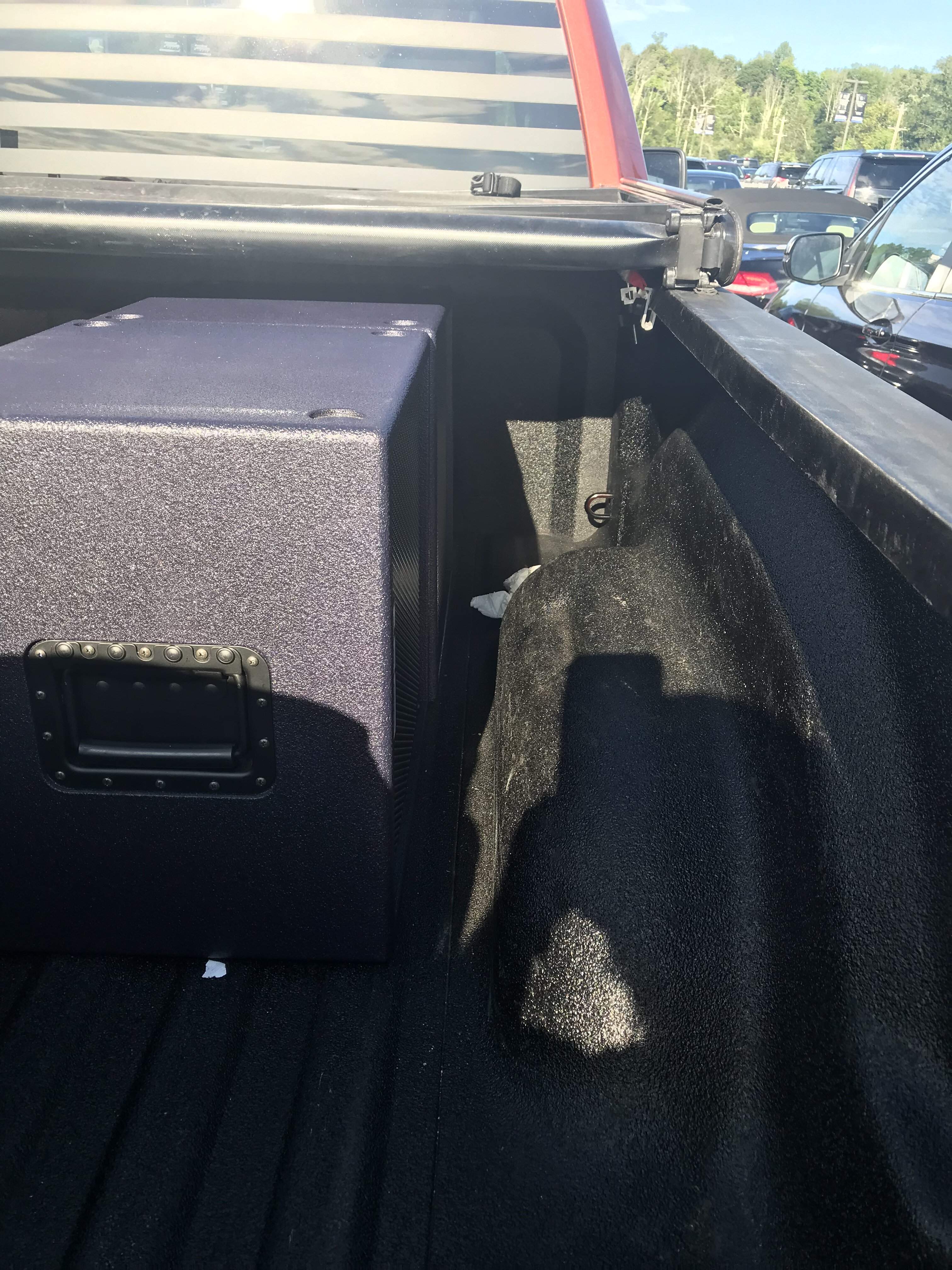
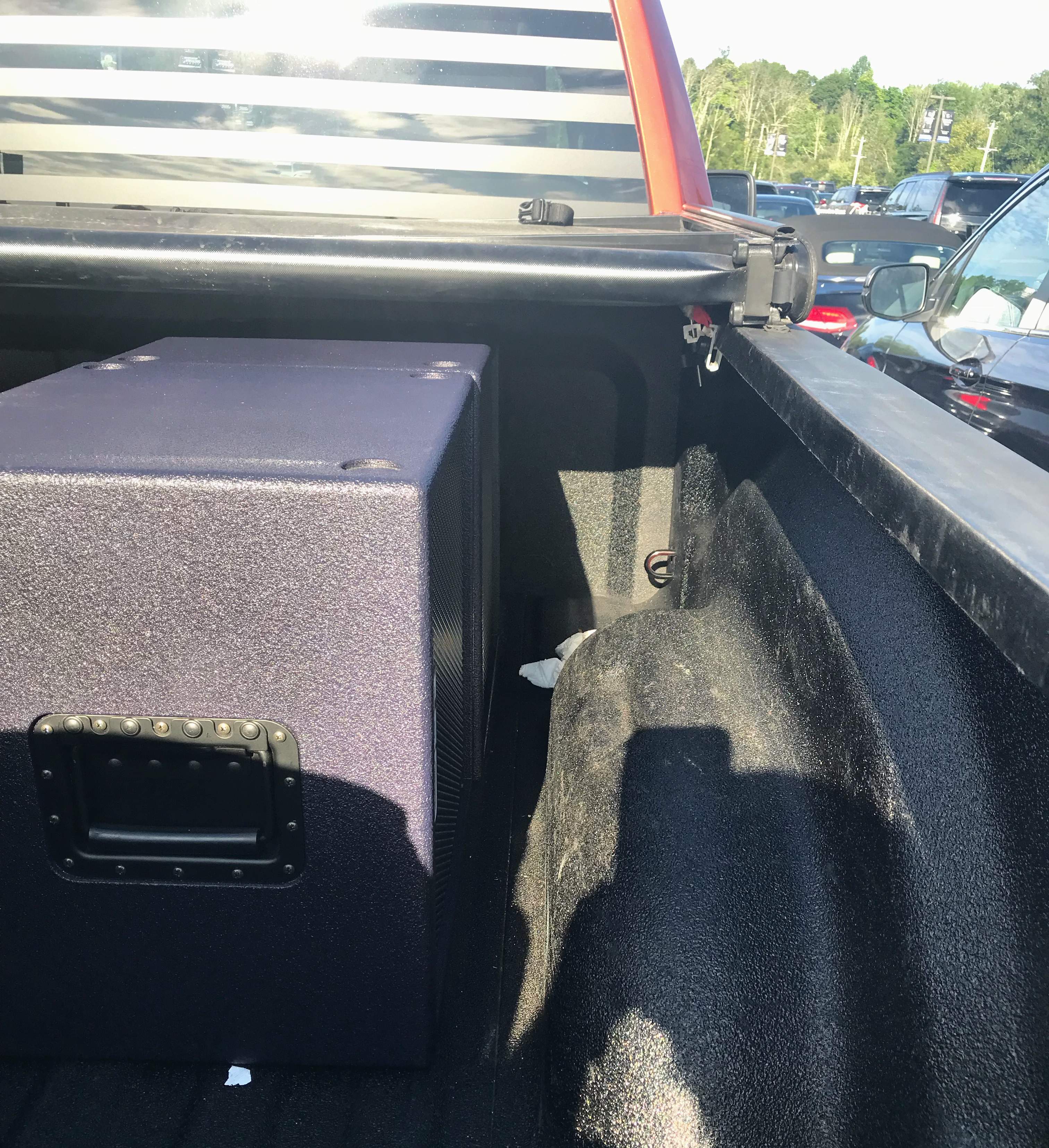
Anyone curious about the finish on the Bag End Nebula cabinets.. it’s very similar to that of a truck bed. Here’s one cab in the back of my friends pickup yesterday.

TalkBass has been independent since 1998. Add your voice.
Create a free account to reply to discussions, view embedded media, and browse with fewer display ads.
Join free Log in
Want zero display ads or expanded classifieds tools? Compare plans.
After reading the specs on the INFRA processor, it looks to me like a glorified active crossover and would be totally overkill in your application.(jmho) I've owned the F1-X (should have never sold it) and used it in a bi-amp configuration back in the 90's with a Hartke 4.5XL on the top and a 1x15XL on the bottom. I used a QSC USA 850 to power both. A F1-X with a class D stereo power amp would be killer with the 2 Bag End speakers you are considering. Also, there are many power amps with a built in crossover that will let you bi-amp with any pre-amp. You can, of course, run both cabs full range but you'll need a separate amp for each cab because of the impedance mismatch.
It depends on what you want to do. If you are going to run in stereo from bass to speaker (separate outputs for each speaker), you'll need the F-2B or two CTPs, but otherwise, one preamp channel is fine. With 2 speakers that are not identical, a stereo power amp is crucial to controlling your sound, though.So is the main diff between the F-2b and the SMS CTP that the latter has only 1 channel compared with two for the Alembic? If I'm running say a 1x18 and a 2x10, do I need two channels?

I think the INFRA processor boosts response down to 18hz !!!!!. That kind of low end is for room shaking home theater applications and not bass guitar. I run a bi-amp rig using a BFM Simplexx 1x15 3015LF 4ohm crossed over at 250hz and a Rumble 500C for the top end. The 500C is self-powered and the sub with a Rumble 500 head. I also run a HP set to 40HZ to keep down the rumble on stage. It is far from boutique but the sound is clean, rich, and full frequency.It's more than an active crossover. It's also got equalization components to compensate for the driver being in a very small box. Essentially, it is something like a 6db per octave boost below a certain frequency and then a sharp high pass filter below a frequency deemed to be subsonic. That means that in the lowest frequencies, there's quite a huge boost. As noted before, this leads to a rig that can really deliver the low end, but if you try to drive it loud, you'll run out of headroom quickly. In this day and age, there are a lot of other cabinets that are lighter, louder, and will cost less while delivering perfectly excellent low end. If the huge massive low end is the desired result, save up for a Meyer rig. It will be far more effective.
But, consider the fact that this is all for a bass amp on stage. For just about every gig I've played in the last 25+ years, the PA has done the heavy lifting and having a lot of low end energy on stage just ends up muddying the overall mix as it not only creates boominess in the room, it bleeds into just about every mic. If your rig goes down to 50-60hz reasonably well, the whole band will be far better off than having the 18hz the Infra systems will do flying around.
I think the INFRA processor boosts response down to 18hz !!!!!. That kind of low end is for room shaking home theater applications and not bass guitar. I run a bi-amp rig using a BFM Simplexx 1x15 3015LF 4ohm crossed over at 250hz and a Rumble 500C for the top end. The 500C is self-powered and the sub with a Rumble 500 head. I also run a HP set to 40HZ to keep down the rumble on stage. It is far from boutique but the sound is clean, rich, and full frequency.
What other cabinets would you suggest that are lighter, louder etc? Have you played through a RevSound cab? They have a 2x15 for $1,200. A few folks on here suggested that brand.It's more than an active crossover. It's also got equalization components to compensate for the driver being in a very small box. Essentially, it is something like a 6db per octave boost below a certain frequency and then a sharp high pass filter below a frequency deemed to be subsonic. That means that in the lowest frequencies, there's quite a huge boost. As noted before, this leads to a rig that can really deliver the low end, but if you try to drive it loud, you'll run out of headroom quickly. In this day and age, there are a lot of other cabinets that are lighter, louder, and will cost less while delivering perfectly excellent low end. If the huge massive low end is the desired result, save up for a Meyer rig. It will be far more effective.
But, consider the fact that this is all for a bass amp on stage. For just about every gig I've played in the last 25+ years, the PA has done the heavy lifting and having a lot of low end energy on stage just ends up muddying the overall mix as it not only creates boominess in the room, it bleeds into just about every mic. If your rig goes down to 50-60hz reasonably well, the whole band will be far better off than having the 18hz the Infra systems will do flying around.
What other cabinets would you suggest that are lighter, louder etc? Have you played through a RevSound cab? They have a 2x15 for $1,200. A few folks on here suggested that brand.
Would this be a good preamp to use with my rig? I've given up on the Alembic preamps for now since there are no used ones I can find. I like Groove Tubes so hoping this is a good preamp!
Groove Tubes GT Electronics Studio Series Tube Preamp For Bass 1990s Brown | Atomic Music | Reverb
Would this be a good preamp to use with my rig? I've given up on the Alembic preamps for now since there are no used ones I can find. I like Groove Tubes so hoping this is a good preamp!
Groove Tubes GT Electronics Studio Series Tube Preamp For Bass 1990s Brown | Atomic Music | Reverb
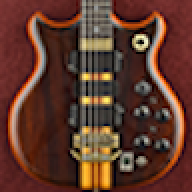
AFAIK the GT Preamp was almost identical to the early the preamps in early SWR heads.
GT Electronics (Groove Tubes) Bass preamp (old SWR)
I use this preamp at least 50% of the time these days. I like it a lot. It's got a particular tone (think Phil Lesh in the 1980s and 90s). It's also flat to 10hz, so I added a micro-Thumpinator between it and the power amp to reduce subsonics to my speaker (although the send to the FOH is still full range. I'll let the sound person deal with it as they wish). Never any complaints about my tone with this one!
Can I make a suggestion? The idea of a 2x10” on top of a 1x18” sounds like it should work great on paper. In real life, there’s usually not much to be gained by mixing-and-matching cabinets.I'm open to suggestions! Give me some stuff to look into!


I've secured an F-2b preamp, it should arrive in the next few days. I'm now leaning toward a RevSound cab, probably a 410. I like the vertical alignment. Anyways, I'm struggling now with what power amp I should be looking for. Any suggestions?
Crest are great. Some of the later QSC (pre-Quilter) amps are great as well, and similarly lightweight.My favorite for good clean, clear power is the Crest Prolite 3.0. I've tried a lot of power amps over the years from all the major companies and it sounds the best to me (next to a McIntosh, which is seriously impractical). However, because my rack became filled up with other stuff, I've been using a Quilter Bass Block 800 for power. It's crazy how light and powerful it is. I bought both used, so they can be had for not crazy $$$.
QSC has been Quilter from the very beginning.(History of QSC Audio Products, Inc. – FundingUniverse). I've played a several of them and the only ones that I have found that have been really good are the professional touring amps. I bought one (CX1202v: CX1202V) at a yard sale for $150 about 10 years ago. It was an install amp with all binding posts for inputs and outputs, so I had to modify the connections to handle 1/4" inputs and speakon outputs. It was something like 700 wpc at 8 ohms and full bandwidth with very low distortion figures. Insanely powerful and really good sounding. I made the mistake once of running it bridged (2200 watts at low distortion and full bandwidth) and I wasn't paying attention and my fEARful cabinet literally burst into flames. It was a serious beast. The guy selling had a gig installing PAs in stadiums and it was left over from a job (and was coincidentally the father of one of my law school classmates). I haven't liked their prosumer amps nearly as well.Crest are great. Some of the later QSC (pre-Quilter) amps are great as well, and similarly lightweight.




