• TalkBass has been independent since 1998. Add your voice.
    Create a free account to reply to discussions, view embedded media, and browse with fewer display ads.
    Join freeLog in
    Want zero display ads or expanded classifieds tools? Compare plans.

basses for newbies (SX batch build thread)

Status
Not open for further replies.
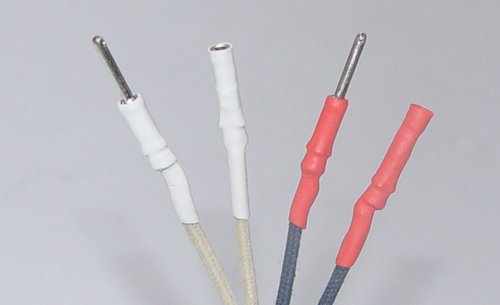
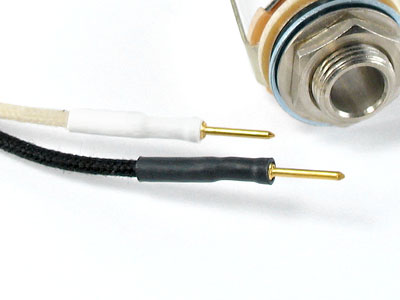
I'm checking to see if anyone knows what these are and how I might be able to get some. I'm interested for a couple of reasons. For jazz basses, I now have a few pickup options available that have very different voicings, and it would be nice if during setup, I had the option of relatively quickly swapping pickups out to optimize for the basses. Also, this would allow for faster pickup swapping for test sessions. That way, I can continue to test pickups on the same bass so the only variable people hear is the pickup.

p961787822.jpg


p647239774.jpg

I see no one has apparently answered your question. (I see the guys in Pickups forum told you to learn how to solder! :D ...temp controlled iron is good, however)

Bottom connectors are known as "phone tip plugs" They are used on test instrument leads and in the old days (1930) on headphones. They are NOT a "phone plug" which is on the end of your guitar cord. Will do an excellent job electrically but problem is the female side is usually large and designed to bolt into a panel.

Invalid Link Removed

The upper group are the innards from Molex power connectors (Now called Waldom, I believe) covered with shrink tube. These are the cheapest piece of crap connectors on the planet...wait for it... THAT REALLY WORK! To eliminate the junk plastic housing they are meant to go in, they were simply stuck in some shrink tube. Hey. The pickups in the Les Paul I built from a kit came outfitted with these (and a piece of shrink tube to finish the job.) They work EXCELLENT. In spite of the fact they are cheap as dirt. They come in different sizes like .062", .084" and .093". Any will work fine. Work like a champ in my guitar. Just what you want for pickup quick change. Search Digi-key or places like that for them. You only need the pins not the plastic housings.

Invalid Link Removed

Invalid Link Removed

Unlike many connectors these fit tight enough that they deal VERY well with vibration!

OK? :bassist:
 
Spoke briefly with my factory contact today. . . they are still in an oversold situation with long lead times.

He is going to China in October for a series of meetings as well as to check in on the factory. I will have better timeline and logistical information a that point, and I will most likely place my order late October, and production on my batch will be January at earliest.

I have used my time to think over the specs, and have come to a few conclusions:

I will go for 3 piece laminated quartersawn maple necks to improve on stability and resistance to movement over the SX's I'm working with. Graphite reinforcement rods will be my next inquiry.

I will be going for chambered bodies as lightweight Alder is becoming very difficult to source, and one strong driving factor in the professional and premium grade basses is that they are light (with the sole exception right now of #16 which is extremely heavy).

Lots of groundwork to do prior to that, so I'd better get busy getting it done.
 
What about Invalid Link Removed and Invalid Link Removed?

Invalid Link Removed is not a "take apart" connector but thing you shove two wires in (one from each end) and crimp it down to make a quick connection. Yeah fast, but you have to cut it off each time.

Invalid Link Removed I think are phone tips but I can't quite tell the size. Radio shack does have phone tip plugs and sometimes even the jacks, though as I said they are rather largish.

They also may have take apart connectors similar to the first That crimp on wires. They usually are for autos etc. One side has sort of a flat spade lug and the other has a slot you slide it into. They come both insulated (don't need shrink tube) and plain (do need shrink tube except for grounds) But are much larger than Molex pins.
 
Just what you want for pickup quick change. Search Digi-key or places like that for them. You only need the pins not the plastic housings.

Invalid Link Removed

Invalid Link Removed

Unlike many connectors these fit tight enough that they deal VERY well with vibration!

I forgot to mention that a FREE source of these pins is found in any junk computer. Many power connectors there are molex. Quick and dirty are disk and floppy drive extension power cables that will have both male and female connectors. Getting the pins out of the plastic is a trick (there are tiny ears you have to push down that grab the plastic ) But if the cables are junk you can just crunch up the plastic anyway.
 
I forgot to mention that a FREE source of these pins is found in any junk computer. Many power connectors there are molex. Quick and dirty are disk and floppy drive extension power cables that will have both male and female connectors. Getting the pins out of the plastic is a trick (there are tiny ears you have to push down that grab the plastic ) But if the cables are junk you can just crunch up the plastic anyway.

awesome. . . This de-mystifies things a lot. The cheapest I've seen on these Molex connectors so far is $0.016-ish but I'd have to buy them 6000 minimum quantity :rollno: Maybe I'll pilfer an old computer and see how they work out first. I wonder if anyone else might be interested in buying these at reasonable quantities if I start using them with success and bought a pile. The prices that some folks charge though (musical instrument folks) individually is straight usury on these types of connectors.
 
Invalid Link Removed is not a "take apart" connector but thing you shove two wires in (one from each end) and crimp it down to make a quick connection. Yeah fast, but you have to cut it off each time.

Invalid Link Removed I think are phone tips but I can't quite tell the size. Radio shack does have phone tip plugs and sometimes even the jacks, though as I said they are rather largish.

They also may have take apart connectors similar to the first That crimp on wires. They usually are for autos etc. One side has sort of a flat spade lug and the other has a slot you slide it into. They come both insulated (don't need shrink tube) and plain (do need shrink tube except for grounds) But are much larger than Molex pins.
So because of their size, the Radio Shack ones aren't so good for wiring in the confines of a guitar cavity, then?
 
So because of their size, the Radio Shack ones aren't so good for wiring in the confines of a guitar cavity, then?

to be useful to me, it has to be small enough to fit through the pickup route "tunnel" to the control cavity without being removed. Otherwise, you can't swap pickups, and if that's the case I'd rather just solder everything like normal.
 
awesome. . . This de-mystifies things a lot. The cheapest I've seen on these Molex connectors so far is $0.016-ish but I'd have to buy them 6000 minimum quantity :rollno: Maybe I'll pilfer an old computer and see how they work out first. I wonder if anyone else might be interested in buying these at reasonable quantities if I start using them with success and bought a pile. The prices that some folks charge though (musical instrument folks) individually is straight usury on these types of connectors.

If you dig around Digikey or even look closely at the link I gave, you'll notice that the 6000 minimum is for pins on a roll of tape for machine insertion. (you'll need two rolls) and they they are little over a penny a piece. However you can also buy in bulk, with 10 as a minimum at about 16 cents each. And if you dig around (I was there but didn't save the link) there is also a price break on on bulk ones at various quantities like 100 etc. Digikey isn't a big pain like some places that demand minimum orders and the like.

These things are supposed to be crimp-on but I just solder them to make them more reliable. With shrink tube on them they are not much fatter than the wires (as in your picture) which is why they are popular for pickup connectors.
 
Here is a place with great prices on those connectors: http://www.surplussales.com/ComputerAccess/PinsPowerInterconnect.html

Whoa! For a minute there I thought I was in heaven, but no such luck. Let me say that what you'd REALLY like to use for pickup connectors is things like the molex pins only gold plated. The Molex (being el cheapo) are tin plated. And tin will corrode with air and time. They are still quite reliable, but gold plated pins would be MUCH better long term. And this place had a bunch of gold pins but somehow nothing seems to match anything else!


And let me add I just read this entire thread (!!!) and of course got hyped to start to "Cungerize" my basses! Starting with my 5 (count em) SXs. So I began digging into this and since chunger and you guys like feed back here is some!

At first the inserts were a problem to buy but lo they are for sale on Amazon.com of all places! I got 8-32s and 4-40s (brass). I also found some 8-32 inserts at Ace hardware...thanks guys! And the feedback is that I carefully took one of my SX basses apart to look at the neck joint and after trying a bunch of different size bolts of various head sizes decided that 8-32 is the exact size you need to use! (Right-on Chunger!)

But I don't want to use the phillips head screws Chunger is using. They look beautiful, especially in oval head which you CAN buy. BUT my experience with phillips neck screws or phillips for ANY bass screws for that matter is that the screw driver eventually chews the head and there are then these sharp burrs sticking out and both the head AND the screwdriver look like crap when you've used the bolts a few times. Hence I decided that the only neck bolts I want are either allen socket or Torx.

Flat heads are available in both, oval head are not. And now let's get high-end picky! Stainless steel bolts do not have the same color as chrome plated ones! Chrome plated bolts ARE available in oval head that may be an answer here but they are phillips <sigh>

http://www.jamestowndistributors.com/userportal/show_product.do?pid=12038&SHOPPING

Have to cut them though.
So probably it will be SS flathead allen or Torx.

Which leads me to my other peeve which has to do with panel screws on low end basses (You know like my SX or G&L basses!) They always use tiny wood screws on all panels EVEN when there is a battery under there. EVERY ONE of my SX jazz basses has at least ONE screw striped out of the control plate mounting screws. This is NO way to maintain contact with the copper foil underneath. Hence after a careful examination I decided that 4-40 flat head screws with an allen socket are the answer together with the 4-40 EZ-LOK inserts. Nice tight hold-down. No buggered up heads, no stripped out wood, and to my eyes if you get black flat head screws they still even look great on the chrome control plate. Hence the order for 4-40 inserts from Amazon. I can't quite decide between Torx or Allen, but I like the idea of just buying a cheap but nice allen wrench for each bass case, rather than a larger and more expensive torx driver. That way each bass can have a little envelope for allen wrenches for truss rod, saddles, neck screws, and plate screws. I'm even thinking that inserts on the pickguard is a great idea too, though perhaps just a BIT over-kill. But hey, can't a pickguard get loose and vibrate and suck tone too?

So that's about where I am right now. Next I'm looking at the bridge mount on my G&Ls. I mean that "fix" with 6-32 screws through the through-body string holes is hosed! I'm thinking EZ-Lok inserts and some largish bolts (two) to hold down the bridge. Not to mention the need for brass inserts on the battery/control plate.

Like everybody else here I'm LOVING this thread. And like most here it has been a huge inspiration too. But to get down to earth for a second, I love Chunger's idea of introducing students to quality bassology. And I love what he's done so far except for a couple things. We all don't have the same views as Chunger. For example I was so stoked at his development of the killer pickup...until I remembered that all his basses are missing a string or two! Even if he sold me a pickup it wouldn't work on any of my SX basses! And I'm not the kind of guy who worships low action either. When I get a bass where I "let the amp do the work" the next thing that happens is I'm really getting "into" it and I'm way overloading the bass action. It just happens.

I did however, plek my 7 string conklin as well as have a hand fret job on my Ken Smith. Both created magnificent playing basses. Chunger's description of the Pleking was excellent, and the one thing I learned about mine (by the way a 7 string is at the absolute limit of what a plek machine can do! We had to finish the last couple of frets by hand) was that the machine doesn't do it. THE OPERATOR does. The operator has to look at the plek measurements and then make an interpretation of what to tell the machine to do. Hence the job is not "automatic" and is every bit as luthier-dependent as hand-leveled frets. The steam drill has not quite replaced John Henry yet.

And so that's where I am and where I'm going. I'm pretty happy with my SX pickups though I may buy those Hippo 6 string pickups to check them out. I only have had the SX-effect on one bass. It was my alder fretless 5 string. I lived with it for quite a while until one day I got torqued and started doing a whole setup and voila, I lowered the pickups and it all went away and the bass came to life! So to me there is a question if a Chungerized pickup is needed or will even help on 5 string. I am pondering trying NJ5SE (is that right?) Anyway the 5 string version of the NJ4SE. I would LOVE to get my hands on a "Chungerized" 5 string pickup! So many basses! So little time!

So that's my comments for now. More later. And hey, I really have to hand it to Chunger for all those photographs of what he's doing. THAT is what makes this thread a true classic!
 
I'm checking to see if anyone knows what these are and how I might be able to get some.

p961787822.jpg

I've used those connectors a lot when working on Caterpillar diesel engine electronics. The brand and common name (at least among the big truck industry) is Deutsch connector. Have a look at this page:
[Invalid or Expired Link Removed]
Ignore the plug housings and scroll down to the terminals themselves. They crimp or solder easily to wires, are very small in diameter, available for various sizes of wire and make a very good electrical connection. The page doesn't show it but the max diameter of the body 'ring' is about .095 inch for use with 20ga wire. You can get these in small quantities from a Caterpillar equipment dealer or Kenworth or Peterbilt truck dealer if you have one in your area. The page also displays various other items that are used with this type of connector (removal tool, crimper) but you do not need any of them to use just the terminals.
 
Jasaman wants to try #11 at a gig. . . . THIS is why I can't have nice things. The vultures circle every time they smell a premium grade come down the pipeline.

Instead of him coming out of his way to come get it, I figured I'd take a night to do some R&D. I had a few things I wanted to test. The Genz Benz Shuttle 6.0 in the real world, #14 (premium grade silver p-bass) that Jasaman already has in hand. . . it is now running DR low riders which he put on and i wanted to hear. . . however, he tweaked with the truss rod when he should have tweaked with the saddles and now the bass isn't running correctly and he feels a bit lost as to what adjustments to make to bring it back. And, of course, #11, the new "wow" bass and as a matter of fact, the first P/J configured build.

So, off to Madrone in San Francisco for some funk with "Steppin'".

p236896580-5.jpg


OK. . . more details in the amp thread, but the Genz Benz only lasted 2 songs before got swapped out with the Walter Woods. . . and that's that. #11. . . Jasaman was itching to play it, so it came out for the first 2 songs. Smooth as expected with a ballsy low end. Just enough edge to keep it interesting, and the bass plays maniacally fast. I set to work wrestling #14 back into shape as the set began which is not an easy task in an almost black club with music blaring. I couldn't hear the strings at the buzz points nor could I see my action gauge very well, but luckily I had a flashlight on me in my camera bag. So, I set the neck back to where I remembered the relief being and put the action at .085 --> .080 . Something I knew this bass could run with a little room to spare (dig in). . . I also set the intonation because the DR's operate a different tension than the Rotosounds that were originally on this bass.

After noodling around on the bass a little bit (blindly because I couldn't hear anything), I handed #14 back at a song break, how lucky, a bass solo came up. It was great seeing Jasaman be able to just pick up the bass and start going for crazy stuff with confidence without any familiarization whatsoever with the new setup. He also didn't have any time to familiarize with #11, but was able to just hop on and go for it from the 1st bar. This speaks to the consistency of the PLEK and the importance of dialing in a good setup to put a player at ease.

To my surprise, for this evening, I think #14 had the edge in the tone department. The band and the audience seemed to respond better to the silver p-bass over the P/J for this gig in this room. It can get a lot more forward and "nasty". . . has way more bite and growl. Through the octave and envelope filter pedals, it really reached out and moved. Both sounded great. . . premium in fact. These are the kinds of choices (#14 vs. #11) where you can't go wrong either way.

I learned a few things though tonight. The P/J cannot sound like a P-bass even with the bridge pickup turned off. Whether it's the magnetic drag of the other pickup, or the extra pot in the signal chain, the 2 pickups seem to be acting in tandem even when one is soloed. The tonal and harmonic signature of the P/J is unique. Even with identical woods, very similar instrument weight, and identical neck pickup, the P/J couldn't growl and grind like the P-bass, and naturally, the p-bass could not get as round, deep, and glassy as the P/J which is just HUGE sounding. If you need to sound like P-bass, there is only one tool for the job.

All in all, I got some great information tonight, and it was time well spent. I was also able to meet Willie for the first time. He's the older gentleman who is one of Jasaman's favorite students. I fixed his p-bass for him on this thread several months back (post #471), and he's happy as could be with that Mexican p-bass. Jasaman has since put some flatwounds on that bass, and it's running really well. Things like this remind me of what this project is about at the core. Willie will most probably never develop into a phenomenal bass player, but he is enjoying the process and VERY into it, and obviously dedicated to applying himself. He comes out to Madrone often and likes hang out and hear the funk. Now, he has a capable tool in his hands that will not hold him back. It was very nice meeting and chatting with him about his bass, the project, and music in general.

Well, tonight was fun. . . tomorrow will be right on top of me soon, so I'd better sign off.
 
Status
Not open for further replies.