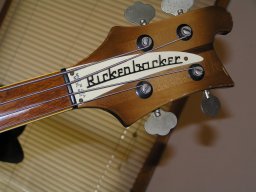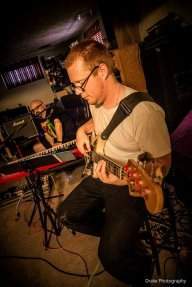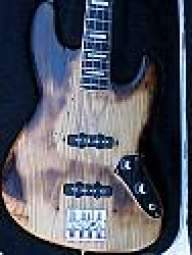
At church, I play bass sometimes (and love it). But overall I run sound a lot more of the time.
We have a rotation of players who all have their own basses. One thing I have noticed is that bass players who bring a bass with two pickups.......99% of them crank both pickup volumes (or have the blend knob dead center).
From my perspective as a soundguy, this creates a challenge. Depending on the player and the bass they are using, the phase cancellation and midrange reduction from that can reduce their sound to largely an atonal rumble. What's even worse is folks with active basses tend to crank their bass EQ. It gets to the point where it's hard to fix with EQ at the mixing board. Sound people aren't magicians: poo in = poo out. We can only polish it so much.
Two questions:
1. Why do an overwhelming majority of people crank both pickups, crank bass EQ, etc.? I will admit that both pickups all the way up can sound pretty good while playing at home, but I NEVER do that when playing live for the reasons mentioned above. Even backing off one pickup a little can help immensely.
2. Do you folks who run sound consider both pickups cranked an issue and what do you do to address it? Or how do you address players who otherwise have subpar tone coming into the mixing board? It seems like every week there are conversations over the talkback mic with me asking them to adjust the controls on their bass. I feel somewhat invasive doing that, but ya gotta do what ya gotta do. One thing I may try in the future is to talk to bass players before practice starts, but there are often time constraints that can make anything but quick small talk a challenge.
Note: all bass players run straight into a DI.
Edit: In hindsight, this thread/post wasn't as well thought out or well worded as I'd like, so I just wanted to add in this post that I typed later in the thread that helps clarify where I'm coming from. Especially for those who don't read the whole thread:
No matter how poorly worded my OP was, my goal is to help players sound as good as possible in our sanctuary. I've only been running sound a couple years and no doubt have a lot to learn, but I am sharing what experiences I've had and what my ears have heard. Running sound is not an easy job especially in a church with so many variables, rotations of players, different levels of talent, etc. It would be easy to just do the minimal amount of work to get through each service (I've seen that with other sound people), but I truly have a heart for wanting it to sound good. And that sometimes means trying to fix things at the source.....especially with new players with little experience. But this thread has been enlightening as to how dangerous that ground is and is certainly causing me to rethink when and what to say to those on stage, and when to just deal with what I am given and try to do my best with it.
We have a rotation of players who all have their own basses. One thing I have noticed is that bass players who bring a bass with two pickups.......99% of them crank both pickup volumes (or have the blend knob dead center).
From my perspective as a soundguy, this creates a challenge. Depending on the player and the bass they are using, the phase cancellation and midrange reduction from that can reduce their sound to largely an atonal rumble. What's even worse is folks with active basses tend to crank their bass EQ. It gets to the point where it's hard to fix with EQ at the mixing board. Sound people aren't magicians: poo in = poo out. We can only polish it so much.
Two questions:
1. Why do an overwhelming majority of people crank both pickups, crank bass EQ, etc.? I will admit that both pickups all the way up can sound pretty good while playing at home, but I NEVER do that when playing live for the reasons mentioned above. Even backing off one pickup a little can help immensely.
2. Do you folks who run sound consider both pickups cranked an issue and what do you do to address it? Or how do you address players who otherwise have subpar tone coming into the mixing board? It seems like every week there are conversations over the talkback mic with me asking them to adjust the controls on their bass. I feel somewhat invasive doing that, but ya gotta do what ya gotta do. One thing I may try in the future is to talk to bass players before practice starts, but there are often time constraints that can make anything but quick small talk a challenge.
Note: all bass players run straight into a DI.
Edit: In hindsight, this thread/post wasn't as well thought out or well worded as I'd like, so I just wanted to add in this post that I typed later in the thread that helps clarify where I'm coming from. Especially for those who don't read the whole thread:
No matter how poorly worded my OP was, my goal is to help players sound as good as possible in our sanctuary. I've only been running sound a couple years and no doubt have a lot to learn, but I am sharing what experiences I've had and what my ears have heard. Running sound is not an easy job especially in a church with so many variables, rotations of players, different levels of talent, etc. It would be easy to just do the minimal amount of work to get through each service (I've seen that with other sound people), but I truly have a heart for wanting it to sound good. And that sometimes means trying to fix things at the source.....especially with new players with little experience. But this thread has been enlightening as to how dangerous that ground is and is certainly causing me to rethink when and what to say to those on stage, and when to just deal with what I am given and try to do my best with it.
Last edited: