
There, I fixed it for you. I stand corrected. I guess anything is debatable...however, that doesn't mean that all sides of the debate have merit.Wood affects tone. It is absolutely not deniable. Not deniable. How much it matters is where opinion steps in. Some folks need to stop telling other folks that they must back up their opinions with scientific studies, without which their opinions are ridiculous or unfounded.

Enjoy the benefits of a premium membership!
Upgrade Account
-
TalkBass has been independent since 1998. Add your voice.
Create a free account to reply to discussions, view embedded media, and browse with fewer display ads.
Join free Log in
Want zero display ads or expanded classifieds tools? Compare plans.
You are using an out of date browser. It may not display this or other websites correctly.
You should upgrade or use an alternative browser.
You should upgrade or use an alternative browser.
Best wood for bass?
- Thread starter Aidan Engel
- Start date
More options
Who Replied?Sure they are.You are talking about the acoustic qualities of a slab of wood and completely ignoring the fact that those qualities are not being converted to signal by pickups.

Hopkins
Commercial User
With all due respect Hopkins, average listeners (even double blind) did in fact hear the difference in neck woods as I outlined in detail in post #186.
Did the setup change at all when you swapped out the necks? If the pickup height was lower on the rosewood board that could contribute to it being less bright and more warm sounding as well. I am not saying the rosewood board didn't have anything to do with it, just that it could have been the combination of a few different variables. Fretboard wood is by far the biggest contributor as far as instrument wood goes, but I still wouldn't put it on the same level as strings, pickups and electronics as far as tonal contributors.
Hopkins
Commercial User
Sure they are.
No, sound waves traveling through the wood do not get picked up by the pickups, unless those pickups are microphonic which is a bad thing.

@Hopkins,... like the guy before me already said,... these are SUBTRACTIVE elements caused by the instruments foundation. the sub-woofer at my house sounds different based on its foundation and location. your bass sounds different based on the wood(foundation) and pick-up location. and isn't pup location all about string sweet spots?!!

Tuhnedr - first of all, my apologies. I'm sure I came off as twice the ********* as you did! I get overly defensive on this topic because I've had multiple discussions on it over the years and there's always a select few that flat out tell me I didn't experience what I experienced, in essence calling me out on a public forum as a liar or some hallucinating punk kid.
Fact is I'm a retired engineer and very inclined to want proof before just blindly believing something. Largely because of the sound logic and lack of scientific proof constantly echoed here on TB, I was a complete skeptic of wood impacting tone on a solid body bass. That all changed when I built my first bass and has been reinforced on several builds since then.
So in a not so short story, here's the experience I personally had that changed my mind...
Got tired of carrying two basses to a gig (p bass and Stingray) to cover the types of music I was playing back in 2007. Decided to build my own Warmoth creation that had both a p bass and stingray pickup and preamps in it. They had a good cheap unfinished black limba (been told that's basically African mahogany) body with a stingray route already in it and rear routed for an active preamp. Note: someone who believes in tone wood would never spec a mahogany body for either a p bass or a stingray.
Bought the unfinished body but couldn't decide if I wanted to finish it in gloss black or aged white. So I bought two necks to the exact same spec with the exception of one being maple/maple (which would look hot with the black body) and one rosewood/rosewood (which would look hot with the white body). Note: a solid rosewood neck would be the last thing a tone wood believer would spec for a p bass or a stingray. As a side note, I was also very concerned the weight of the rosewood neck would make the bass a real neck diver.
So at this point I think we've established that I clearly was NOT considering any impact the different woods could have on the tone of a solid body bass. I bought what I bought because of how I wanted it to look in the end. After all, the pickups, preamps and strings where going to get me the sound I wanted, not the wood.
The maple neck came in the mail first so I installed it on the bass and over the next couple of days completed the build, with the exception of the body paint, which because of costs (the warmoth method isn't cheap) I had planned on having done a month or two after the initial build. With the now substantially completed and playable (but unpainted) bass I set all the tone knobs to their center detents, switched both pickups on and turned both volume knobs halfway up. Recorded each of the five strings open and let them ring out for a few seconds, then did the same thing at the 12th fret. After that I recorded a simple walking bass line. Everything sounded fantastic, nice and punchy, crisp top end, good bottom end, well defined mids. I was a little bummed that when I soloed the stingray pickup it didn't sound exactly like my preEB stingray but it did have the same general flavor and I figured I could probably EQ it at the amp if really needed. I attributed the difference to the Bartolini Stingray pickup and placement along with the custom John East MM preamp. Similar results for the p bass pickup soloed - not an exact match but still really sweet sounding (again, at the time differences were attributed to the Bart p bass pickup and custom East P Bass preamp).
Went on a business trip for a few weeks and when I got back the rosewood neck was there waiting for me. First thing I noticed was it wasn't as heavy as I thought it was going to be, in fact there was less than an ounce difference between the two necks. So that was a relief on the neck dive issue since the current set up with the maple neck wasn't divey at all. Thought, what the heck, lets give the rosewood neck a spin. So I removed the maple neck and all its hardware and strings and installed them on the rosewood neck and then set up the bass to the exact same specs (3/32 clearance at the 12th fret and 1/4 inch clearance between the pickups and strings). Played each note open, at the 12th and a the same walking bass line recorded to the same cd as before. It also sounded fantastic but different than my other p basses or stingray. Keep in mind I hadn't played the maple neck for a few weeks while I was on my business trip, so I didn't immediately spot any difference in tone between the two necks - they both sounded fantastic.
It wasn't until I played the recording back that I actually heard the two basses back to back. The difference was night and day! The maple neck had more definition, crisper highs and slightly more high mid focused. The rosewood neck had much deeper lows, was more low mid focused and had a smooth top end. My first thought was crap, I must have mucked up my strings when I changed necks ($120 gold optima 5 string set). So being the engineer that I am, I thought *** lets put the maple neck back on and record it again to see if the removal and reinstall of the strings messed them up somehow.
So, maple neck back on, same set of strings now moved back to the maple neck, all set up and ready to record. Recorded the same routine (open, 12th and walking bass line) on the same CD. Because it had only been a couple of hours between playing the different necks I could clearly hear the difference. However, as an engineer who designed triangular testing of consumer products for years I was also very aware of how biased opinions and psychoacoustics can come into pay. Again, at this time I still hadn't attributed the difference to the different woods. I just wasn't sure what was going on because now it appeared that my assumption about the strings being mucked up wasn't the case.
So I played the recording back to my wife. As a little background, my wife is pretty much tone deaf when it comes to bass notes. She rarely can pick the bass line out in a mix and frequently confuses it with the kick drum. Not exactly what I'd call a bass expert. I asked her to tell me which two tracks sounded the same and which one sounded different. She was able to pick them out correctly the first time and correctly indicated that the first and third recordings sounded brighter and crisper and the one in the middle sounded deeper and darker (I didn't give her those descriptions she came up with them). So I thought, interesting - she's hearing the same thing I'm hearing but its really only one data point and not an expert at that, besides she knew two of the three matched and i might have influenced her unknowingly in the single blind test, I needed better data to confirm my ears weren't playing tricks on me.
I passed the recording on to one of the guys at work and told him I was interested in finding out if any one could tell me if there was any difference in the recording from track to track. He passed it around the office for a few days and got back to me. Of the dozen or so people there were only one or two that didn't pick out the correct responses and all of those who did cited similar reasons - #1 was brighter than #2 which was darker or deeper than #3. A large percentage of the people that got it correct also questioned or stated that they thought #1 and #3 might even be the same recording but weren't completely positive. Only a couple of people admitted that they had to guess and one of those was one that got it wrong. Overall, this was an adequate double blind test and put my curiosity to rest.
It was at that point that I came to the realization that the two necks sounded different. It wasn't the strings, or the pickups or my ears or some suggestion I planted with the listeners. It was the necks. So how identical were the necks? Both weighed virtually the same, both had the same size and type of frets, both had the same brand of nut and were grooved by the same luthier for the set up I wanted, both had the same type of truss and stiffening rods, both were manufactured by the same company within days of each other, both shared the exact same tuners, both shared the exact same strings, both shared the exact same neck plate and screws, both fit in the neck pocket equally tight, and both were set up to the exact same specs. The only notable difference was the wood.
The logical conclusion - these different neck woods did impact the tone of a my bass. That cannot be refuted. A logical assumption based on this particular anecdotal experience is that different woods can impact the tone of a solid body bass.
And now you have roughly the same data set I have. Of course someone will want to hear the recording for themselves, good luck, it was recorded over years ago. Someone else will want to personally interview the participants, good luck, I don't share personal names on public forums on the Internet. Someone else will want to see a formal full blown scientific experiment outlined and corroborated with other results from identical tests, good luck, I wasn't on a quest to prove wood matters so I didn't design an experiment. Bottom line is, this is concrete anecdotal evidence that points to a relationship between woods and tone. It meets my needs, if it doesn't meet yours then design your own experiment and before you actually carry it out be sure to run it past the pseudo scientific community here at TB. You'll get lots of suggestions and virtually no consensus.
Wood matters to me, it may not to anyone else and that's ok. But no one can tell me I didn't experience what I did or my conclusion is wrong unless they have a very clear explanation of what happened in my case.
EDIT: I also wanted to apologize as well, I was genuinely quite rude in my response to you, and I don't think that my poor manners had any place in a serious discussion.
First of all thanks a lot for typing all that up, I greatly appreciate it. And I do agree that you have a case for the assertion that tonewoods affect the electric tone of the guitar. The painful thing is that there is no way for me, or realistically anyone here to meet your conclusion based on your findings without an outlined and structured study (thats not me saying you aren't right, I just simply can't conclude either way.) Anecdotal evidence simply just isn't enough for me to fully agree with you without scientific skepticism; I think there is always the case for disparity between the theoretical physics of the instrument and the results that individual players experience and I would love to see the argument explored seriously at a professional level. The only university study I have ever heard of didn't include any data in any of the articles I read about it (I believe the fellow was named Matthew or something for LaTrobe University. You can look it up if you want, but it just states that the wood doesn't matter and really nothing else. So I wouldn't take it seriously.)
Perhaps one day I will do my own study, but really not a lot of people have the money to buy and set up exactly the same bass but with one spec difference (at least I can't.)
All I can say is, out of all my guitars, I bring along and play the heaviest one (maple-body) the least.

Hopkins
Commercial User
@Hopkins,... like the guy before me already said,... these are SUBTRACTIVE elements caused by the instruments foundation. the sub-woofer at my house sounds different based on its foundation and location. your bass sounds different based on the wood(foundation) and pick-up location. and isn't pup location all about string sweet spots?!!
What does pickup location have to do with wood? There are minor subtractive elements involved with the wood, but those are very minor, especially where body wood is concerned
Did the setup change at all when you swapped out the necks? If the pickup height was lower on the rosewood board that could contribute to it being less bright and more warm sounding as well. I am not saying the rosewood board didn't have anything to do with it, just that it could have been the combination of a few different variables. Fretboard wood is by far the biggest contributor as far as instrument wood goes, but I still wouldn't put it on the same level as strings, pickups and electronics as far as tonal contributors.
Its a long post but the answer to your question was already given in that post. Yes both necks were set to the same action at the 12th fret AND over the pickups (3/32 and 1/4" respectfully). Believe me, I pulled my hair out trying to pin the tonal difference on everything except the wood, at the end of the day the only significant difference between the two necks was the wood.
I can be my own devils advocate (which I was for a while) and claim...
- the neck screws weren't torqued to the exact same spec (they were tightened as much as I would tighten any neck that I didn't want to strip out or drastically deform the neck plate of or possibly seriously concave the body wood).
- the neck heel didn't fit the pocket exactly identical between the two basses (visually they did, no gaps, completely set, nice tight fit, Warmoth CNCs these things so I wouldn't expect drastic differences from neck to neck when made just days apart)
- right hand placement wasn't exactly the same (actually I have a nasty habit of resting my thumb on the top corner of the P bass pickup, so although I didn't pull out a micrometer to mark the plucking area I'm positive I hit the strings at the same spot with each neck + or - maybe 1/8 inch)
- right hand aggressiveness (I certainly didn't video tape it for a later viewing but to the best of my knowledge I didn't dig in any further on one recording than the other, my playing is rather consistent and boring hat way)
- different fingers causing different attack angles (nope, I'm pretty much a one finger player on simple notes and riffs like I recorded in the test)
- maybe Warmoth routed the inside of each neck differently for the truss rod and stiffening rods or used graphite in one and steel in another (I didn't do any destructive testing to determine I received exactly what I ordered, both necks were ordered with steel rods and the only truss rod they offer, I have to assume the routing for those pieces is done with a CNC and probably has very little variation from neck to neck)
That's all I got, can't think of anything else to blame it on other than the wood. Can you?
What does pickup location have to do with wood? There are minor subtractive elements involved with the wood, but those are very minor, especially where body wood is concerned
Of course "minor" is relative and is a matter of opinion. But wood DOES affect tone even in solid body electric guitars. The physics is simple. You have strings that vibrate. they vibrate in a host of frequencies (harmonics) that gives them the tone in the pickup(s). At each end the strings are sort of clamped down to create witness points that more or less create a "node" on the string right there. But the key is in the "more or less". When the nut and bridge can vibrate and sympathetically resonate with the body of the instrument, then those resonances induce energy loss or gain into the string through the witness points. This changes the ratio of various harmonics and may even add or subtract frequencies. All of this is plainly visible using laser technology to reveal vibrations in the instrument body. Legend has it that Leo once built a marble guitar in order to get a handle on what strings sound like when ends are REALLY not allowed to vibrate.
Hollow body instruments clearly show this effect in spades, but solid body ones show it as well. The worst solid body offender is doubtless the neck wood. You have a long twangy cantilever that is the neck just made for resonance. And it does resonate with the most common effect being the dreaded "dead spot". This as above is a matter of the resonance of the neck wood coupling into the strings through the nut and changing frequency response. Obviously there are minor effects too like the maple/rosewood thing. Or why graphite neck instrument sound/feel so different. The same thing goes for the body too though to a lesser degree. It is a MUCH less degree if bridge is massive and wood is heavy.
So does tonewood "matter"? Can't say. That's your opinion. But does tonewood make a difference? You bet. And it covers a range from totally minor all the way to the clear tone effects of hollow body instruments. It's just a matter of what wood and how you build the instrument.
Hey everybody - I need to bug out of this discussion for the rest of the day and maybe tomorrow as well. Regardless of your thoughts on tone wood - wishing everyone here a very Merry Christmas if you celebrate it, or a wonderful holiday if you get the day off, or just an all around great day if that fits you better. I'll be back before the new year but just in case I forget to say it - Have a healthy, safe and prosperous New Year!

Time of day.That's all I got, can't think of anything else to blame it on other than the wood. Can you?
Weather conditions.
Phase of the Moon.
High/low tide.
Was the refrigerator running at the same time these recording were made or not?
Etc.
Well, you get the idea, there are always lots of variables that come into play that we don't even think about or consider while conducting scientific test procedures.


The average listener I don't believe is as educated as an experienced bass player. I believe you are speaking to experienced bass players here so that is your audience. People that actually play and feel these bass tones. Please tell me your experience? What is your main bass? Why? What Genre of music do you play? Why? How many years have you played? How many years have you been in a band?Well, my argument hasn't changed at all, so you lumping me into that scenario doesn't mean anything. Secondly, an average non musician would easily hear a difference between a soloed bridge pickup and a soloed neck pickup, he/she would also easily hear the difference between a set of rounds and a set of flats.
Do you really think they would be able to hear the difference between an alder and ash body? I would bet my last dollar they wouldn't, in the mix or otherwise.
That's all I got, can't think of anything else to blame it on other than the wood. Can you?
I guess recording technique? Whether or not the microphone could pick up the acoustic sound of the bass, or whether or not you recorded direct input etc. but I think that covers most things without getting too ridiculous.
Hey everybody - I need to bug out of this discussion for the rest of the day and maybe tomorrow as well. Regardless of your thoughts on tone wood - wishing everyone here a very Merry Christmas if you celebrate it, or a wonderful holiday if you get the day off, or just an all around great day if that fits you better. I'll be back before the new year but just in case I forget to say it - Have a healthy, safe and prosperous New Year!
Have a good one man, Merry Christmas to all who celebrate it and happy holidays!
Of course "minor" is relative and is a matter of opinion. But wood DOES affect tone even in solid body electric guitars. The physics is simple. You have strings that vibrate. they vibrate in a host of frequencies (harmonics) that gives them the tone in the pickup(s). At each end the strings are sort of clamped down to create witness points that more or less create a "node" on the string right there. But the key is in the "more or less". When the nut and bridge can vibrate and sympathetically resonate with the body of the instrument, then those resonances induce energy loss or gain into the string through the witness points. This changes the ratio of various harmonics and may even add or subtract frequencies. All of this is plainly visible using laser technology to reveal vibrations in the instrument body. Legend has it that Leo once built a marble guitar in order to get a handle on what strings sound like when ends are REALLY not allowed to vibrate.
Hollow body instruments clearly show this effect in spades, but solid body ones show it as well. The worst solid body offender is doubtless the neck wood. You have a long twangy cantilever that is the neck just made for resonance. And it does resonate with the most common effect being the dreaded "dead spot". This as above is a matter of the resonance of the neck wood coupling into the strings through the nut and changing frequency response. Obviously there are minor effects too like the maple/rosewood thing. Or why graphite neck instrument sound/feel so different. The same thing goes for the body too though to a lesser degree. It is a MUCH less degree if bridge is massive and wood is heavy.
So does tonewood "matter"? Can't say. That's your opinion. But does tonewood make a difference? You bet. And it covers a range from totally minor all the way to the clear tone effects of hollow body instruments. It's just a matter of what wood and how you build the instrument.
My understanding of physics is that the vibrations are reflected backwards through the string if the boundary materials (nut and bridge) aren't the same resonating frequency. Whenever I play my P-bass and feel the contact point between the string and the boundary material I can't even feel it vibrate while the string ocillates. Am I wrong? Also this laser technology sounds interesting, link?
Hopkins
Commercial User
Of course "minor" is relative and is a matter of opinion. But wood DOES affect tone even in solid body electric guitars. The physics is simple. You have strings that vibrate. they vibrate in a host of frequencies (harmonics) that gives them the tone in the pickup(s). At each end the strings are sort of clamped down to create witness points that more or less create a "node" on the string right there. But the key is in the "more or less". When the nut and bridge can vibrate and sympathetically resonate with the body of the instrument, then those resonances induce energy loss or gain into the string through the witness points. This changes the ratio of various harmonics and may even add or subtract frequencies. All of this is plainly visible using laser technology to reveal vibrations in the instrument body. Legend has it that Leo once built a marble guitar in order to get a handle on what strings sound like when ends are REALLY not allowed to vibrate.
Hollow body instruments clearly show this effect in spades, but solid body ones show it as well. The worst solid body offender is doubtless the neck wood. You have a long twangy cantilever that is the neck just made for resonance. And it does resonate with the most common effect being the dreaded "dead spot". This as above is a matter of the resonance of the neck wood coupling into the strings through the nut and changing frequency response. Obviously there are minor effects too like the maple/rosewood thing. Or why graphite neck instrument sound/feel so different. The same thing goes for the body too though to a lesser degree. It is a MUCH less degree if bridge is massive and wood is heavy.
So does tonewood "matter"? Can't say. That's your opinion. But does tonewood make a difference? You bet. And it covers a range from totally minor all the way to the clear tone effects of hollow body instruments. It's just a matter of what wood and how you build the instrument.
You can always argue that some peoples idea of a minor difference can differ from other peoples. What you cannot argue is the degree of difference that wood impacts on tone vs what other components impact on tone. Considering that switching between 250k to 500k pots can inflict a larger tonal difference than swapping between an ash or alder body, I would consider body wood to be a very minor difference. Fretboard wood plays a much bigger role than body wood, but still very minor compared to pickups, their location, and strings.
Hopkins
Commercial User
The average listener I don't believe is as educated as an experienced bass player. I believe you are speaking to experienced bass players here so that is your audience. People that actually play and feel these bass tones. Please tell me your experience? What is your main bass? Why? What Genre of music do you play? Why? How many years have you played? How many years have you been in a band?
Which is exactly my point, if it takes a trained ear to hear a difference, then the difference is minor. If a layman can clearly hear a difference then that is a pretty major difference.
My experience is that I am a bass and guitar builder and tech. I'm not currently in a band and haven't been for years. I play everything from hard rock to country, and play every bass from a Padauk/wenge/ebony 5 string to a basswood bodied, maple necked P bass
My understanding of physics is that the vibrations are reflected backwards through the string if the boundary materials (nut and bridge) aren't the same resonating frequency. Whenever I play my P-bass and feel the contact point between the string and the boundary material I can't even feel it vibrate while the string ocillates. Am I wrong? Also this laser technology sounds interesting, link?
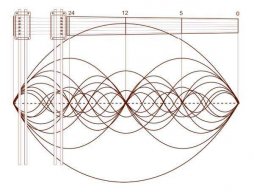
What you are thinking about is the idea that there are standing waves on the strings. This is a valid way to think about it too. Standing waves consist of waves traveling both directions at once that create a series of nodes and anti-nodes that are not moving but stationary (hence "standing") on the strings. These waves are as you say reflected by the boundary conditions which then alters the amount of various waves reflected back and forth. The catch in all this is that the boundary condition is at a node which means it's a spot where the string is not supposed to move at all. For that reason even tiny motions are able to induce changes in the harmonics of the string even if you can't feel the vibrations. Which leads to another argument, namely does a "high mass" bridge make a difference on a solid body bass? As you can see this is essentially the SAME argument as "does tonewood matter".
I don't have a link to the laser thing but it was posted here in TB some time back. Basically they shine a laser on the instrument and if it moves as little as a fraction of a wavelength of light (which is REALLY small!) you can see the stripes from that on the body of the instrument. So you may think your solid body isn't vibrating, but it really is and that combined with the increasing effect of the boundary conditions makes tonewood have an affect. Nevertheless as others have noted the effect in solid body instruments is really minor and certainly less than that of strings, pickups and what have you. But then having the "perfect" instrument for you isn't just about fixing the major problems, but fixing ALL the problems so they are the best they can be (in your opinion).

The ironwood is heavy particularly combined with ebony, but coupled to a somewhat heavy alder body it still balances ok. I initially put ultralite tuners on it which helped a lot but eventually went back to mid 70's vintage tuners. There is no truss rod so that may change the weight some. The whole bass is about 9.5 lbs.How heavy would ironwood be? Would its density make it so heavy it would neck dive all the time or too heavy to gig with. Thinking about it again..... If the neck was super short to balance out the weight then the strings wouldn't be tight so they could sound very ominous.

First off are you going to actually perform professionally with the bass or just hobby with it; Example eye-candy verses having to have the thing strapped over your shoulder for numerous sets/hours.
The two have totally different applications. Instrument weight being a big factor for a working piece, if you value your spinal posture and future dollars spent on a chiropractor to restore pain free mobility!
Wood stability and subjected climatic conditions for those who tour or have to live in a cardboard box because they are trying to make a living out of playing music!
Don't forget, exotic woods and certain finishes require routine maintenance if you want to keep your instruments playability and value.
I've found, keeping it simple, as opposed to multitudes of crazy laminates (hippy sandwiches) keeps thing in perspective on what to expect sonically.
Consider ergonomics first; bolt-on verses neck through, scale length, bridge mass, fret size, pick-up location, body contouring etc.
These factors will greatly effect both accommodation of playing style and the baseline sonic character; Feel and tone of the bass, they are related!
Then you can get into your Pick-up manufacture and pre-amp/electronics, these have built in/designed established sonic specifications.
Your "tone-woods" selection characteristics will be, for the most part, preempted, overwhelmed by the above combined factors.
The trick is finding that magic combination, balance between all of the above!
Which is in the end, is totally subjective to both the player and the listener as well!
So, the moral of the story is: Just make sure you use an inherently stable wood and good wood glue and have at it!
The two have totally different applications. Instrument weight being a big factor for a working piece, if you value your spinal posture and future dollars spent on a chiropractor to restore pain free mobility!
Wood stability and subjected climatic conditions for those who tour or have to live in a cardboard box because they are trying to make a living out of playing music!
Don't forget, exotic woods and certain finishes require routine maintenance if you want to keep your instruments playability and value.
I've found, keeping it simple, as opposed to multitudes of crazy laminates (hippy sandwiches) keeps thing in perspective on what to expect sonically.
Consider ergonomics first; bolt-on verses neck through, scale length, bridge mass, fret size, pick-up location, body contouring etc.
These factors will greatly effect both accommodation of playing style and the baseline sonic character; Feel and tone of the bass, they are related!
Then you can get into your Pick-up manufacture and pre-amp/electronics, these have built in/designed established sonic specifications.
Your "tone-woods" selection characteristics will be, for the most part, preempted, overwhelmed by the above combined factors.
The trick is finding that magic combination, balance between all of the above!
Which is in the end, is totally subjective to both the player and the listener as well!
So, the moral of the story is: Just make sure you use an inherently stable wood and good wood glue and have at it!

I disagree with this. I have a bubinga neck with wenge fretboard on my avatar bass (I love that tonewood combination, btw), and one of the great features of it is it requires virtually no maintenance at all. Nothing more than the wipedown you would give any other wood on any other bass.Don't forget, exotic woods and certain finishes require routine maintenance if you want to keep your instruments playability and value.


