
Enjoy the benefits of a premium membership!
Upgrade Account
-
TalkBass has been independent since 1998. Add your voice.
Create a free account to reply to discussions, view embedded media, and browse with fewer display ads.
Join free Log in
Want zero display ads or expanded classifieds tools? Compare plans.
You are using an out of date browser. It may not display this or other websites correctly.
You should upgrade or use an alternative browser.
You should upgrade or use an alternative browser.
Big E Speakers Part 4 - Quadraphenia
- Thread starter kesslari
- Start date
More options
Who Replied?


Im thinking tuxedo white (and black) for my next.
Y'know, that could be pretty hip... But I'm gonna stay with black.
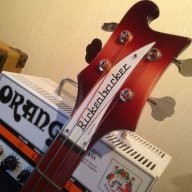
Insides of black, white, red.....I'm waiting for the request of the top bell in red, the baffle in white, and the bottom bell in blue. Gonna drive Mike nuts!
He has suggested keeping the exterior black to help mask gigging scuffs & scrapes, beer & wine spills, muck & mire, etc., etc. Makes sense to me.
He has suggested keeping the exterior black to help mask gigging scuffs & scrapes, beer & wine spills, muck & mire, etc., etc. Makes sense to me.

- Apr 29, 2003
- 9,078
- 9,800
- Disclosures
- Contributor- Bass Musician Magazine | Marketing Manager- Trickfish Amplification
I'm thinking about a 112 with a mural on the side of a unicorn riding a cloud, over a rainbow, to match the back of my conversion van
I'm thinking about a 112 with a mural on the side of a unicorn riding a cloud, over a rainbow, to match the back of my conversion van
- Apr 29, 2003
- 9,078
- 9,800
- Disclosures
- Contributor- Bass Musician Magazine | Marketing Manager- Trickfish Amplification


- Dec 21, 2007
- 15,233
- 45,121
- Disclosures
- Lark in the Morning Instructional Videos; Audix Microphones
I hear Mike sources his components from Marie Laveaux in Congo square..."I might be superstitious but there's really somethin goin on down there"
- Dec 21, 2007
- 15,233
- 45,121
- Disclosures
- Lark in the Morning Instructional Videos; Audix Microphones
Being ridden by a monkey in a bacon tuxedo!I'm thinking about a 112 with a mural on the side of a unicorn riding a cloud, over a rainbow, to match the back of my conversion van
Remember those furry red cabs Murph and the Magic Tones had?
Being ridden by a monkey in a bacon tuxedo!
Bacon: Is there nothing it can't do?
(HT to Glenn Reynolds for the quip.)
- Apr 29, 2003
- 9,078
- 9,800
- Disclosures
- Contributor- Bass Musician Magazine | Marketing Manager- Trickfish Amplification
What have I done...
...Uh, mentioned somethin' about your conversion van..?
- Apr 29, 2003
- 9,078
- 9,800
- Disclosures
- Contributor- Bass Musician Magazine | Marketing Manager- Trickfish Amplification
- Apr 29, 2003
- 9,078
- 9,800
- Disclosures
- Contributor- Bass Musician Magazine | Marketing Manager- Trickfish Amplification
But I digress...
On a more serious note, I have a question for mike, steve et al:
When I show people my rig and try to explain it, they often think it is a variant on a folded horn design, that was popular back in the day. Now I know that this design is different than the old folded horns based on talking with you guys, but could you briefly explain how the MVW is different from folded horn so I can speak a little more intelligently when approached about my flex cab? Thanks
On a more serious note, I have a question for mike, steve et al:
When I show people my rig and try to explain it, they often think it is a variant on a folded horn design, that was popular back in the day. Now I know that this design is different than the old folded horns based on talking with you guys, but could you briefly explain how the MVW is different from folded horn so I can speak a little more intelligently when approached about my flex cab? Thanks

Stephen Regier
Commercial User
- Apr 11, 2014
- 78
- 131
- Disclosures
- Co-Inventer and Co-Owner of Big E Loudspeakers Technology
But I digress...
On a more serious note, I have a question for mike, steve et al:
When I show people my rig and try to explain it, they often think it is a variant on a folded horn design, that was popular back in the day. Now I know that this design is different than the old folded horns based on talking with you guys, but could you briefly explain how the MVW is different from folded horn so I can speak a little more intelligently when approached about my flex cab? Thanks
Would Frequency Independent Virtual Compression Labyrinth Horn help any?
Seriously I think Duke may explain it best: "We're used to nice smooth laminar flow of our backwave energy, in a ported box, backloaded horn, or transmission line. Nothing wrong with that, but it's not the way of the vortex. Vortex = turbulence, and turbulence = de-correlation. If the energy coming from the bells was nice and laminar, the speaker wouldn't go down very deep because the path length isn't long enough to support low bass - we'd get cancellation instead of reinforcement down low. But instead the energy that emerges from the bells is de-correlated, emerging in quasi-random phase, so its net effect is to reinforce the energy off the front of the cone, but not perfectly so. In practice we get roughly +3 dB from the de-correlated vortex energy, instead of the theoretical +6 dB we'd get from a back-loaded horn at the frequency where its output is in-phase with the front of the cone - but then our back-loaded horn would also have a very deep null where the backwave energy emerges 180 degrees out-of-phase.
Why doesn't this de-correlated sound from the bells screw up the clarity? Well, we get our timing cues from the first-arrival sound, and then the de-correlated later-arriving energy is conceptually consistent. Just as, counter-intuitively, extra scrambled-up (de-correlated) reverberant energy actually improves the clarity and three-dimensionality of the presentation, likewise the delayed & de-correlated energy emerging from the bells actually improves the clarity and three-dimensionality of the MVW system. It's like we're using the inside of the box for our turbulent path-length-induced time delay.
Okay, so we have the extra energy from the vortex adding to the energy from the front of the cones, and this effect roughly doubles the air-moving capability of the speaker. In the bass guitar world, Mike Arnopol's MVW cabs behave as if they have twice as much displacement (woofer cone area x linear excursion) as they really do.
Since the enclosure isn't relying on resonant characteristics for its low end (as do sealed and especially vented boxes), there is no overhang added to the tail ends of the waveforms. The result is great clarity, even down through the bass region. The de-correlation characteristic that I mentioned earlier accomplishes pretty much the same thing that I aim for with my distributed multi-sub Swarm system, which is to get the in-room bass energy combing in quasi-random phase, resulting in a net smoothing effect."
Thanks, Duke
So, In short: The energy from the back of the transducer cone is sent through a carefully designed waveguide that induces vorticity. This fractures the sound and adds DESIRED artifacts or harmonic echoes of the original signal. The resultant sounds are complied, compressed, time shifted, and ejected through the Output Flares or Bells. The process is bidirectional causing a similar result in the driver chamber. This driver chamber air mass becomes momentarily supercharged providing enhanced transducer motor cooling and short cone start to stop event times. (This has been verified in square wave testing) The entire system runs in an unbalanced state rather than balanced (resonant) thus allowing a quick return to the non-energized state.
Last edited:

Dominick C.
Guest
Would Frequency Independent Virtual Compression Labyrinth Horn help any?
Just your regular ol' FIVCLH.
Boy oh boy does MVW ever sound and look better.
FIVCLH sounds like something you'd catch from a groupie.
Somebody a few days back mentioned something about Reading, PA. Did that happen already? Is it like a GTG or something where I attend?
Been lurking on this thread for a loooooooong time, I always though more surface area was the key to the promised land, but this stuff intrigues me to no end
Been lurking on this thread for a loooooooong time, I always though more surface area was the key to the promised land, but this stuff intrigues me to no end


