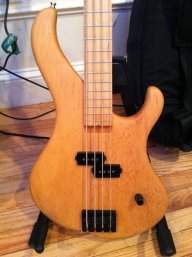
No difference, and I'm having a bass built for me with roswood because the builder told me rosewood is warmer. I'm thinking of giving him a call now. I prefer the look of maple.

TalkBass has been independent since 1998. Add your voice.
Create a free account to reply to discussions, view embedded media, and browse with fewer display ads.
Join free Log in
Want zero display ads or expanded classifieds tools? Compare plans.

No difference, and I'm having a bass built for me with roswood because the builder told me rosewood is warmer. I'm thinking of giving him a call now. I prefer the look of maple.

I would definitely encourage you to get a maple if you like that look. I don't think you are going to find them that disparate that you couldn't use EQ to obtain the sound you were after if you got a maple and wanted to take some of the "snap" out of it. (Assuming the particular neck you ended up was necessarily snappy sounding.)

danclaro said:Maple vs Rosewood is a question that I find perplexing because of the conventional wisdom (that they are very different) vs my own experience with different basses and different strings... I chose 1 for maple because it seemed a bit brighter and snappier right from the start. However, 2 is also bright, so if I was choosing between these two P-basses I'd have to go by looks and feel.
Dan - What P-pickups are these?


Actually, I find it much easier to tell a difference in fretboard wood than body wood.
Agreed! So in other words, things like body wood and fretboard wood are actually small contributors to the overall tone, and it's more about the sum of all parts?

Now what we need is a test with identical necks except for reinforcing bar content. One with none, then one with graphite and one with steel.
Except you're not actually telling the difference between fretboard wood per se.
The fretboard wood is attached to the main neck wood which also contributes to the tone. What you're "telling" is the difference between two necks, not specifically fretboards.


Every component is a contributor to the tone and tone is always the result of the interactions of the parts.
It's not as simple as what a component is or what it's made of, it's the interaction of all of them that determines the result.
And I've learned that bassists (including myself) can get their panties in a wad WAAAY too easily - but this last one could apply to people in general.


 )
)


