• TalkBass has been independent since 1998. Add your voice.
    Create a free account to reply to discussions, view embedded media, and browse with fewer display ads.
    Join freeLog in
    Want zero display ads or expanded classifieds tools? Compare plans.

Class D amps sound inferior?

I started studying electronic circuits in 1960 and I started playing electric instruments in the mid-1960s. I learned in the 1970s that people never fail to hear differences. Those differences need not exist. They ascribe the “clearly-heard” differences to vocabulary they know nothing about.

YMMV. Theirs certainly does.
 
Opinions are subjective in all matters

482904000000000-00-290x290.jpg


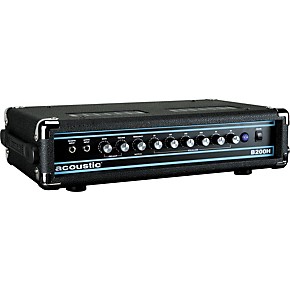
Here is a Gorgeous little Chinese Acoustic B200H
Ask talk bass how this amp sounds ? LOL

Most people haven't even heard one.
But will tell you how " bad" it is.

Reality it sounds like a bunch of other amps.
But the internet will say its bad because of its affiliation.

Now lets say Geddy Lee or James Jamerson did a Youtube demo with a B200H
within the first minute a lot of B200H would be sold.

Some people might have great advice, or strong opinions.
but yet they probably dont even know a minor or major scale.
So what is good or bad is always subjective.

I, sir, happen to OWN one of those LOL!
 
Sounds like it worked well, but my first thought when I looked at the picture was "very tidy design, exceptional workmanship". IME that would be top tier work in any industry.
My customer was a micro-miniature wire harness supplier to the military, mostly the AF, used in air frames.. This was done to emulate closely the quality of work that he expected to see. It's actually fairly painless to do a premium job when you put your mind to it, it's harder to make mistakes too.
 
  • Like
Reactions: Al Kraft and DrMole
Class D amps are small and light, there is no way they can be as powerful as a lead sled, right? Neither the class D amp nor the lead sled do anything on their own. It's the electricity from the wall doing the work of moving the speakers. So, you can do that efficiently or you can make a lot of excess heat doing it. It's up to you. Some lead sleds sound great, some not so great. Some early class D was so-so, now they are fantastic.
 
If you can tinker and copy paste code. buy an Arduino Uno and a TI based class-D amplifier module, a cheap speaker, a breadboard and a few lead wires under 40 bucks. This will help understand class D operation amp amd PWM. You will be surprised how a small USB powered device ( much less then .5 amp the max USB 2.0 output ) can amplify. I actually blew a small speaker that was part of the kit. The 40$ parts list won't play MP3s or WAVs you probably need an MP3 decoder shield
 
I think the WD-800 sounds better than any amp made to date, Class D or not. Of course everyone has their own tastes. I finally got to the point that aside from something like a Dumble or some ridiculous vintage piece, I can afford whatever I want, the WD-800 is where it's at. I don't think I'm giving up anything with Class D personally. If someone wants to drag an SVT around to every gig though, more power to them.
I have to agree. WD 800 is the pinnacle for me !
 
  • Like
Reactions: Al Kraft
I'm playing a show Saturday where there are three bands .. We go on first. The last band is offering their cabs for us to use. Just bring your own head they said. I have no idea what cabs they are providing but I'm bringing my WD800 and my bass to the gig and not worried one bit what type of cabs will be provided because I'm confided the WD800 will drive any or all of them. I'm hoping it's an Ampeg 4x10 or a twin 4x12 since they are a metal band. I cant wait to blow the roof off. ;)
 
This is a total troll topic.

The term “Digital” may have various definitions in the OED; but, it generally means information in the form of 1’s and 0’s; which can be stored in digital devices, and upon which arithmetic operations can be performed. Light switches don’t qualify.

Digital circuits are used in certain amplification chains, especially those performing DSP. Having a DSP circuit does not make an amplifier to be Class D. The D in the classification scheme was merely chosen because it was the next letter in the alphabet. I happen to think that amplifiers using DSP sound just fine for bass amplification, and suffer zero effect to “fidelity” when designed correctly. Statements to the contrary should show data for every single DSP circuit out there to refute this statement. So, “Digital” does not equal “bad;” BUT, D in Class D also does not even mean “Digital.”

Switch mode power supplies used in the Class D amplifiers are simply a method of efficient energy delivery. The switching frequency is so far above the response time of the electromagnetic motors used to drive conversion to acoustic projection, that the influence is negligible to the human ear. Thus, zero impact on “fidelity,” when the amplifier design is correct.

Can we please stop feeding this troll discussion?
 
If you take that same light and flash it in a time varying sequence, the resulting signal is non-linear analog.

Binary state is different than digital as well. Just because a signal has 2 states does not make it digital,

Another example of a non-linear analog signal is the information contained within quadrature, though this could also be considered linear as well.

As always, it depends on the context.

My comment was meant to show how absurd some of the believes are of what is digital.
 
  • Like
Reactions: agedhorse
Agreed.


I don't know if that's true or not. If it is, it would explain the careful tiptoeing around the word "digital".

Then again, several here have compared light switches to a digital signal, so there are some that "get it".
Sorry, I don't think that Class D amps are digital or that light switches are. Like @agedhorse said it has a binary state, but that does not make it digital. Not everything in this world that has only two states is digital - they just have two states. Some things are just what they are. Just because a computer was invented does not mean that they all of a sudden became digital.
 
  • Like
Reactions: agedhorse
I owned some Class D amps when they first came out and didn't care for the tone at all.
The logical conclusion (at least in my mind) was that Class D wasn't as good.

Then I used a tube pre into the effects return of a GK MBF800. It sounds great and I don't think I could tell the difference between it and my Class AB 1600 watt lead sled.

Before you crucify Class D power amps, you owe it to yourself to connect your favorite pre-amp (effects send out of a integrated bass amp) into a Class D amp.
IMO, this is a valid test that can be done at home quickly.
Yes, I run all my amps with my Mesa subway DI.
 
  • Like
Reactions: agedhorse
To carry on my criticism of not understanding technology and drawing incorrect conclusions, Carver never offered a class D amplifier, therefore your amp couldn’t possibly be class D. In fact, the Carver amps were either class AB or class G/H (depending on rated output), exactly the same as the Crest CA amplifiers.

The difference is that the Carver used a phase controlled line frequency power supply which shrank it’s size.
They had a few models with an early switching supply too, but the audio sections were still class H.
 
  • Like
Reactions: agedhorse