Here is something I found and posted in the First Alleva thread:
"Rosewood (Dalbergia …who, what…

Rosewood is one hell of a broad description. Over the years, I have heard all kinds of substances being referred to as Rosewood. Legally you can just about call anything Rosewood including your uncle. I have seen Bubinga being sold as African Rosewood, which is nonsense. Even though this is an exceedingly fine species, it is not even related. True Rosewood is always called a Dalbergia…something or other. For instance:
Honduras Rosewood.........Dalbergia Stevensonii
Brazilian Rosewood.............Dalbergia Negra
Cocobolo…...........................Dalbergia Retusa
East Indian Rosewood....... Dalbergia Latifolia
To further confuse you African Blackwood is really...Dalbergia Melanoxylon and there are many more.
All this sounds a little like a petty political correctness issue. However, I assure you that it is not.
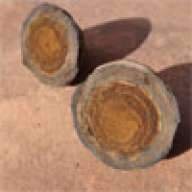
The reason why the botanists have assigned these names to this family of wood is that they are all related. Even though they grow in different parts of the World, they are brothers, sisters, cousins, aunties and uncles to one another. They share certain and very specific properties that only exist within in the Dalbergia family of timber species. Despite their diverse appearance, the expert can clearly recognize the grain patterns and pore structures that constitute genuine Rosewood. From experience or with the aid of a simple magnifying glass, it is possible for us to distinguish true Rosewood from your uncle. However, the most important property that we are interested in is the sonic response that is unique to Dalbergias. That is because nothing sounds like Rosewood. True Rosewood has been for hundreds of years the ultimate choice for instrument builders/ luthiers.
Its uncanny ability to represent all the highs, midrange and bass frequencies in balance is well documented. Because of its inherent stiffness, it facilitates tons of projection. Furthermore, it is sensitive to the lightest touch. For the reason, the use of Brazilian Rosewood for instance elevates the worth of a good Guitar by the thousands. Through my work with string instruments, I have become well aware of its aptitudes. Nevertheless, I had some initial reservations about the use of such a pricey material in the construction of a snare drum as I feared that it would provide diminishing marginal returns, “this being only a " Drum”. A snare uses at least 3 times the amount of material that is required for a Guitar’s Back and Sides. That is frequently expensive, often protected/restricted, and difficult Material to obtain. To add to the fun, this wood is tricky and unpredictable to work with. To fabricate this instrument with genuine Rosewood to the same scantlings requires a good 15 hrs more than any other Lunar shell. The challenge is that the Wood is too stiff to bend at the preferred thickness that is required for the 4 piece lay up. If sized thinner, I end up with more layers. That would translate into highly undesirable higher glue to wood ratio with less solid meat to shape the instrument for response. Eventually, we worked out the details of laying this very stiff and brittle timber in the 4 piece lay up with out changing the physics of the Lunar shell construction. This required a lot of forethought, serious retooling, and the extra time, however the playability of this Snare drum is, in my opinion unsurpassed. This is a sonic powerhouse. The Snare is exceptionally crisp, sensitive, and articulate.
The Balance between highs, lows and midrange is amazing. In many ways, it shares the same acoustic properties that high-end Rosewood guitars are prized for. Only one of these snares exists presently, located in Hawaii and owned by the person that commissioned me to build it. The expense of the material and the added time were reflected in the price. Unfortunately, I am only able to provide a quote for the Rosewood Lunar shells on an individual bases. In part, because there are so many Rosewoods and the cost and availability varies amongst them. Despite the challenges, I look forward to building many more of them and will continue to take chances, seek, and learn. All of these woods produce distinctively different Snare Drums. Nonetheless, all of them share the Lunar concept of design, construction, and craftsmanship. What they also have in common is that they all speak clearly in their own voices. It would be unjust to deem one snare better or worse than another. Only the individual player can make those choices based on his or her preferences."
END of the Article----
The main point here is that there are a LOT of "Rosewoods" out there but there really is ONLY 1 Dalbergia Negra which is the species name for "Brazillian" Rosewood. What this means is that ONLY Dalbergia Negra is real Brazillian Rosewood and you can't legally cut that anymore. Any other type of Rosewood is NOT Brazilian but some other species of Rosewood which is not necessarily an "inferior" rosewood it is just not true "Brazillian" Rosewood but some other species that has been labled "Brazilliian" at some point in the process.
To me the Dalbergia Negra feels softer, sounds warmer, and mine definitely has a chocolaty smell to it. My daughter was here when I opened the case and she said "Daddy your bass smells like a candy bar". As you can see in the pics the color is a real rich Dark Chocolate color and is absolutely beautiful. I compared it to the Sadowsky I have and the Brazillian on the Sadowsky is much Redder than the Alleva. The Brazillian on my Nordy is browner than the Alleva. Both appear drier. The Sadowsky sounds nothing like the Alleva when you tap the wood (both have maple necks and Alder bodies so I don't think that is the difference). If I had to guess I would say that the "Brazilian" Rosewood on all 3 are different species of wood and thus 2 of them are not Dalbergia Negra but some other species of Rosewood. The bottom line is that the ONLY Brazilliian Rosewood is Dalbergia Negra.
Hope that helps!
Peace,
T

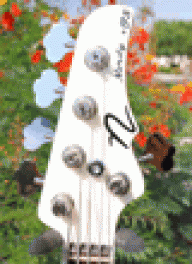


 Basically, I think I want your exact AC LG4 in an LG5. Exactly. But I am choking on the cost of the Dalbergia Negra. (Which is what I believe would sound best?)