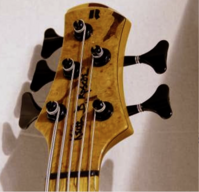
I ain't allowed to use no straight blade no more... uh huh... some folks call it a sling blade... uh huh... mmm hmmm... yep...I use a right angle straight blade on those...

TalkBass has been independent since 1998. Add your voice.
Create a free account to reply to discussions, view embedded media, and browse with fewer display ads.
Join free Log in
Want zero display ads or expanded classifieds tools? Compare plans.
I ain't allowed to use no straight blade no more... uh huh... some folks call it a sling blade... uh huh... mmm hmmm... yep...I use a right angle straight blade on those...

True... I just don't like how the flathead adjustment style can "pop off" while you're trying to turn it if you're not careful. The allen key is just so much easier to use IMHO.
Well, there's that, too... Jimmy's neck stability definitely does kinda' render the issue almost moot for AC basses anyway. Probably why I'm not gonna' bother swapping this one out for hex (or spoke)
I call it a Kaiser Blade.
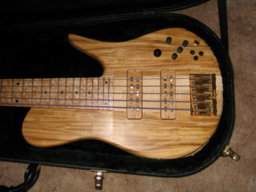
I really prefer the flat head over almost everything now. NO way it will ever pop out on the Alleva with the curved shank screwdriver. There is no way to get an Allen Wrench as heavy duty as the bent screwdriver. Allows for very smooth, very even adjustment. My LM is totally stable, so zero issue. My LG needed the normal 2-4 a year adjustment.
Using a standard straight screwdriver, +1... sucks. The WORST I ever had was the Fodera, where you had to use that long Allen wrench sort of thing that had ZERO torque. Awful design. That tool would just give and give before the rod would move.
Best design ever (besides the Sadowsky wheel) IMO, the original MTD design that for some reason he moved away from years ago. It was a 'reverse Allen wrench sort of thing, where the 'male' was on the bass, and the female socket was on the tool, with a nice small phillips on the other end. One tool that fit literally everything on the bass... rod, bridge, battery compartment, etc. Very nice! Of course, if you lost that tool, you were kind of screwed!
Wow, we absolutely differ on this.I really prefer the flat head over almost everything now.
How heavy duty does it have to be? My gosh, if it's more than an allen key style can deal with there's a serious problem somewhere! And smooth is on both sides of the fence IME. No diff there.There is no way to get an Allen Wrench as heavy duty as the bent screwdriver. Allows for very smooth, very even adjustment.
Interesting. Well, maybe I should feel lucky then I guess, 'cause my LG is also that stable. It's really cool. I can pull it out of "storage" and not only will the relief still be perfect, but the damn thing is still in tune. Way cool.My LM is totally stable, so zero issue. My LG needed the normal 2-4 a year adjustment.
I've never been able to get a regular screwdriver on one of these, so I guess I can't comment on that... I've always had to use the bent tool.Using a standard straight screwdriver, +1... sucks.

My LM5 is also sturdy as a rock. I've maybe had to adjust it twice since I got it and that was only to accommodate string sets with different tensions.
My Fodera Imperial moves a lot. Even with the same strings on it all the time. I probably have to adjust it 4-5 times a year, especially if I travel with it internationally.
Initial string report...
Roto steels... ICKY!!! Worst steel strings I've ever felt. Man, gimme DR's ANY day over these. Dark alloy, and just "stiff" sounding, extra "sticky", low strings almost seem so stiff they lack life. I may still try a set of their nickels (again) someday, but they drop to the bottom of my list currently.
Went ahead and put the DA XL's on there and it's much better. Unfortunately, the B string windings are just a small tad loose, so I get a tiny bit of rattle on it, but it's not bad enough for me to rip the strings off. I'll play'em for a while and see how it goes.
Dunlop nickels will be next... whenever that is. We'll see how the XL's fare, but so far, I can see these as being pretty good strings for this bass... feel great, great tone.
+1 And the Rotos will be dead within a week. They were the only strings I used for most of the '70s on my '64 Jazz. As Ken said they were the only good roundwounds around back then. Switched to my first set of XLs in'78 and never went back. The Rotos were like useing a metal file on my frets every time I played.Initial string report...
Roto steels... ICKY!!! Worst steel strings I've ever felt. Man, gimme DR's ANY day over these. Dark alloy, and just "stiff" sounding, extra "sticky", low strings almost seem so stiff they lack life. I may still try a set of their nickels (again) someday, but they drop to the bottom of my list currently.
Went ahead and put the DA XL's on there and it's much better. Unfortunately, the B string windings are just a small tad loose, so I get a tiny bit of rattle on it, but it's not bad enough for me to rip the strings off. I'll play'em for a while and see how it goes.
Dunlop nickels will be next... whenever that is. We'll see how the XL's fare, but so far, I can see these as being pretty good strings for this bass... feel great, great tone.
 Jim
Jim

My LM5 is also sturdy as a rock. I've maybe had to adjust it twice since I got it and that was only to accommodate string sets with different tensions.
My Fodera Imperial moves a lot. Even with the same strings on it all the time. I probably have to adjust it 4-5 times a year, especially if I travel with it internationally.
Well, at least back in the day, the RS66's I remember playing were nickel, and while my "acid grip" did kill them pretty quick, I figured that was mostly just a nickel thing, and they definitely weren't "bad" strings (though I do recall eventually liking DA's better).+1 And the Rotos will be dead within a week. They were the only strings I used for most of the '70s on my '64 Jazz. As Ken said they were the only good roundwounds around back then. Switched to my first set of XLs in'78 and never went back. The Rotos were like useing a metal file on my frets every time I played.
I've been bouncing in/out of the DA's for years myself... my interest got rekindled recently as a result of them shipping on my new Lull J bass. Funny thing tho, I took them off because the B was rattling on it, too (tho much worse)... I mainly figured it was because of the sharp break angle due to thru-body stringing, but I wonder if DA actually has a bit of a QC issue on B strings? We'll see. I pretty much always have at least one set on the shelf for whatever. Great that they come in sealed plastic bags so you don't have to worry about them going dead in the string set box.I switched to DA XL in 1980
They came on my G&L I bought back then.
A few months ago, I noticed a nice little crack running from the first fret block inlay to the nut, and right up to "the bullet". You could also physically feel a bump in the center of the first fret inlay. Sent the neck back to Jimmy and he's been fixing it for a couple months now. He told me he was more comfortable with building the heel-access truss and would be changing my neck from a bullet truss to that design like the older Fenders had. My two other Allevas were heel-access truss rods and they were amazing, too. So far, my experience has been the opposite haha

Of course, this would also beg the question, why did Jimmy move to the bullet type if they were known problematic in the first place, and, why are they still shipping with them? Are you going to have to remove your neck now every time you want to make an adjustment???
i think the issue could be at least somewhat prevented depending on the thickness of the block thats used. theres a lot of wood removed from the fingerboard in fenders when block inlays are used. check out some of these x rays
http://timeelect.com/54-neck.htm
its also not really just a bullet truss rod issue. ive seen old stingrays with headstock neck adjustment with cracks at the first fret from over tightening the rod. ive also seen it happen at the heel as well on old fenders. and oddly enough, my 74 jazz with heel adjustment and block inlays, had a small crack at the first fret and thats at the anchor end of the rod. imo, if the neck constantly needed to be tightened to correct forward bow to the point the nut is sinking into the access hole and compressing the wood than the issue was more in the neck than the style of truss rod nut.