

Enjoy the benefits of a premium membership!
Upgrade Account
-
TalkBass has been independent since 1998. Add your voice.
Create a free account to reply to discussions, view embedded media, and browse with fewer display ads.
Join free Log in
Want zero display ads or expanded classifieds tools? Compare plans.
You are using an out of date browser. It may not display this or other websites correctly.
You should upgrade or use an alternative browser.
You should upgrade or use an alternative browser.
More options
Who Replied?
Goes the Sadowsky when you plug it in and hit that first note !booom.


Just stopped into Club Bass to see Dave .View attachment 3130407
This was related to my earlier post regarding string life. Dave at Club Bass is saying three months is two months longer than I should have gotten with this hot sweaty summer and amount of gigs I have on my current set Blue Steels. Anybody else shares this opinion?

Go to flats and you'll measure string life in years!

Apologies if all of this has been covered before but if you would answer a few questions I would very much appreciate it 
What is the difference between the Metro’s, Metrolines, Satins, & NYCs? I know Metros/Metrolines (Same?) are made in Japan- not routed, 19mm string spacing... and preamps are not wired by hand... I think. Are those the only differences? Do they sound/feel the same? Shipped with hum canceling pups?
Are the NYCs still standard with chambers and 20mm bridges as standard? Are there many 19mm out there or are they custom ordered? Shipped with single coils?
Thanks in advance! Anything else I should know that would distinguish all of the lines apart?
What is the difference between the Metro’s, Metrolines, Satins, & NYCs? I know Metros/Metrolines (Same?) are made in Japan- not routed, 19mm string spacing... and preamps are not wired by hand... I think. Are those the only differences? Do they sound/feel the same? Shipped with hum canceling pups?
Are the NYCs still standard with chambers and 20mm bridges as standard? Are there many 19mm out there or are they custom ordered? Shipped with single coils?
Thanks in advance! Anything else I should know that would distinguish all of the lines apart?
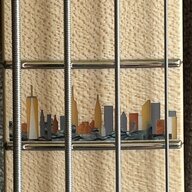
[Invalid or Expired Link Removed]Apologies if all of this has been covered before but if you would answer a few questions I would very much appreciate it
What is the difference between the Metro’s, Metrolines, Satins, & NYCs? I know Metros/Metrolines (Same?) are made in Japan- not routed, 19mm string spacing... and preamps are not wired by hand... I think. Are those the only differences? Do they sound/feel the same? Shipped with hum canceling pups?
Are the NYCs still standard with chambers and 20mm bridges as standard? Are there many 19mm out there or are they custom ordered? Shipped with single coils?
Thanks in advance! Anything else I should know that would distinguish all of the lines apart?

I have a question about the wiring used in the "Universal Route" style Sadowskys:
I have a NYC Satin PJ5. This instrument began life as a regular J-style Satin, and the previous owner had it converted to PJ (with a P/J route in the neck position) by Pat Wilkins. Details here
My question is: Do Sadowskys with swappable pickups have some kind of solder-free connectors? I would imagine that Roger and crew have come up with something more elegant than pulling out the soldering iron any time I want to swap pickups.
So, those of you with original-equipment Sadowsky pickups, what procedure do you need to follow when it comes time to go from P to J, or vice-versa? I'd like to emulate whatever the Sadowsky solution is, even if mine P/J option was added after the fact.
I have a NYC Satin PJ5. This instrument began life as a regular J-style Satin, and the previous owner had it converted to PJ (with a P/J route in the neck position) by Pat Wilkins. Details here
My question is: Do Sadowskys with swappable pickups have some kind of solder-free connectors? I would imagine that Roger and crew have come up with something more elegant than pulling out the soldering iron any time I want to swap pickups.
So, those of you with original-equipment Sadowsky pickups, what procedure do you need to follow when it comes time to go from P to J, or vice-versa? I'd like to emulate whatever the Sadowsky solution is, even if mine P/J option was added after the fact.
Last edited:
[Invalid or Expired Link Removed]
Thanks TedH- I’ve read that before- Looked around on the website a bunch and most of my questions are answered.
Looks like 20mm standard now on all of the 4 strings...
Last edited:
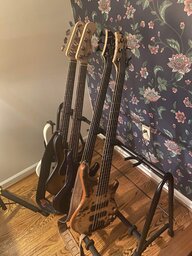
I have a question about the wiring used in the "Universal Route" style Sadowskys:
I have a NYC Satin PJ5. This instrument began life as a regular J-style Satin, and the previous owner had it converted to PJ (with a P/J route in the neck position) by Pat Wilkins. Details here
My question is: Do Sadowskys with swappable pickups have some of solder-free connectors? I would imagine that Roger and crew have come up with something more elegant than pulling out the soldering iron any time I want to swap pickups.
So, those of you with original-equipment Sadowsky pickups, what procedure do you need to follow when it comes time to go from P to J, or vice-versa? I'd like to emulate whatever the Sadowsky solution is, even if mine P/J potion was added after the fact.

This was related to my earlier post regarding string life. Dave at Club Bass is saying three months is two months longer than I should have gotten with this hot sweaty summer and amount of gigs I have on my current set Blue Steels. Anybody else shares this opinion?
I would agree with Dave (and I will add that it applies to any brand of uncoated rounds). That said: YMMV depending on how much you sweat, and how fussy you are about fresh sounding strings.
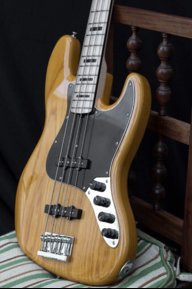
Apologies if all of this has been covered before but if you would answer a few questions I would very much appreciate it
What is the difference between the Metro’s, Metrolines, Satins, & NYCs? I know Metros/Metrolines (Same?) are made in Japan- not routed, 19mm string spacing... and preamps are not wired by hand... I think. Are those the only differences? Do they sound/feel the same? Shipped with hum canceling pups?
Are the NYCs still standard with chambers and 20mm bridges as standard? Are there many 19mm out there or are they custom ordered? Shipped with single coils?
Thanks in advance! Anything else I should know that would distinguish all of the lines apart?
One thing that I think is not mentioned on the page but Roger stated on this formus is a small difference on the necks
The MetroExpress necks are cut direct from my NYC CNC programming. The MetroLine and TYO necks are not (but they are close).

This was related to my earlier post regarding string life. Dave at Club Bass is saying three months is two months longer than I should have gotten with this hot sweaty summer and amount of gigs I have on my current set Blue Steels. Anybody else shares this opinion?
They're expensive... I try and make do, as long as possible, no matter which strings I'm using.
I usually change them when I start seeing blood...
Does anyone know if there is a sonic difference in the NYC and MetroExpress preamps other than one being hand wired and the other not? Does this affect anything other than the time that it takes to assemble?

This was related to my earlier post regarding string life. Dave at Club Bass is saying three months is two months longer than I should have gotten with this hot sweaty summer and amount of gigs I have on my current set Blue Steels. Anybody else shares this opinion?
I think it depends on the individual. In my younger days I could kill a brand new set of strings within a couple of sets on the first night. My body chemistry would just destroy strings to the point that I was soaking them in isopropyl alcohol on a daily basis. I would have several sets in rotation at any given time.
When DRs came out, they were first string I could get a weekend of playing out of before they would go completely dead. These days I can get 6 months out of a set of Dunlop SB steels no problems. The Sad strings are great as well, just not as easy or advcheap to purchase in these parts.
Cheers,
LR

This was related to my earlier post regarding string life. Dave at Club Bass is saying three months is two months longer than I should have gotten with this hot sweaty summer and amount of gigs I have on my current set Blue Steels. Anybody else shares this opinion?
I get three passes out of a set of strings with the alcohol soak trick, to clean them: new, soaked once, soaked twice.

I do not; but, it has become a somewhat tedious discussion.This was related to my earlier post regarding string life. Dave at Club Bass is saying three months is two months longer than I should have gotten with this hot sweaty summer and amount of gigs I have on my current set Blue Steels. Anybody else shares this opinion?
You should definitely keep your strings clean. Unless you want the funk, of course.
But, what kills strings is the deformation that happens at the bridge saddle. The core is hardened steel. Permanent deformation of hardened steel not only weakens it, but creates structural defects in the crystal structure which absorb energy, i.e. “dead strings.” Repairing that kind of damage would require metallurgical heat treating that is impractical; to say the least.
Each player needs to understand how much loss of brightness is acceptable for the particular gig. Some gigs are perfectly great with “dead” strings. But, you can also go too far; because the damage I mentioned is progressive and keeps going once started. The eventual thing that happens is the string can no longer be intonated. And, of course, that’s a stopper.
The best you can do is set up your instrument so it has the shallowest break angle over the saddle. That will give you the longest string life. That and know your limits. And, get out on the gig and don’t think about it.
But, what kills strings is the deformation that happens at the bridge saddle. The core is hardened steel. Permanent deformation of hardened steel not only weakens it, but creates structural defects in the crystal structure which absorb energy, i.e. “dead strings.” Repairing that kind of damage would require metallurgical heat treating that is impractical; to say the least.
Each player needs to understand how much loss of brightness is acceptable for the particular gig. Some gigs are perfectly great with “dead” strings. But, you can also go too far; because the damage I mentioned is progressive and keeps going once started. The eventual thing that happens is the string can no longer be intonated. And, of course, that’s a stopper.
The best you can do is set up your instrument so it has the shallowest break angle over the saddle. That will give you the longest string life. That and know your limits. And, get out on the gig and don’t think about it.

Joeykun
pronounced ジョーイくん
- Jun 22, 2007
- 4,200
- 16,150
- Disclosures
- Endorsing: LAKLAND SADOWSKY GENZLER DARKGLASS NORDSTRAND TEMPLEBOARD KIRLIN DRSTRINGS ACCESS
Rockin’ my Standard 4. It still blows me away after all these years!

Repairing that kind of damage would require metallurgical heat treating that is impractical; to say the least.
What if I play, extra fast?
All spideys do, right?What if I play, extra fast?
Where the playing comes into it is when you use that arachnid proportional strength in your right hand attack. Where do the lower strings always break? Hint: you get three guesses and the last two don’t count.


