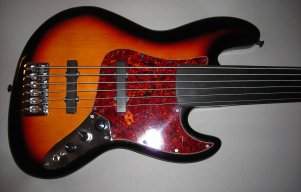
Well, if that body is make out of wood that is *that* soft, I'd say that you're better off without it. Get a new one from Warmoth.

TalkBass has been independent since 1998. Add your voice.
Create a free account to reply to discussions, view embedded media, and browse with fewer display ads.
Join free Log in
Want zero display ads or expanded classifieds tools? Compare plans.

I wouldn't say it's ruined, but you certainly didn't help it out for sure. Obviously you know you used a harmful method. Chances are that Squier body is Basswood, which is awfully soft wood. There are several options for "fixing" this. How much work do you want to do? You could try steaming those dents out, doubt that will be all that effective though. Could use a larger plate that is linked above. That will hide the damage. You could route out and replace the damage, more work than a Squier body is worth if you are paying for it, and I kind of suspect you aren't a woodworker...
If I was looking for a quick and easy fix for damage like that, and it were mine... I would...
#1. Sand the finish off the damaged area.
#2. Fill the damaged area with compatible wood filler. (Elmers, Minwax etc... will work fine.
#3. Sand the repair smooth, and reprime / repaint the damaged area. Fender / Squier tends to use automotive colors, you should be able to find a good color match pretty easily...
#4. Source up and install a good oversized neck plate.
#5. HAND tighten the screws. No NOT use a power driver for working on a musical instrument. They are good for furniture, great for houses, terrible for instruments.

The only suggestion/edit I would make is to change the materials in #2 to super glue or epoxy. Build it up slowly, in steps, so it doesn't get into the holes. Then sand flush. I'd see beforehand if some of the paint/sealer in the damaged area would flake off- that'll give whatever filler something to grip onto, as you can't really sand something that's sunken below the plane of a smooth surface. I'd still use the fat plate and the plastic gasket mention a post or so ago.

Looks like I over tightened the screws when I was reattaching my neck. I didn't notice until I just pulled the neck off again last night. Seems it actually caved in the wood a bit. It's a Squire body, so I assume part of it is due to cheap wood. Is this now ruined or should it be fine moving forward?
View attachment 1052084
Everything I know I learned buy making mistakes... thank god I never took flying lessons.Everyday we aim to learn something new. Sometimes it happens though accidents and sometimes thats the more valuable lesson. A Squier is the best way to learn this lesson!

Look at the depth of the indentations. First is the deepest, second is second deepest then third and last.How in the world could you possibly tell in what order he tightened the screws?

I just like the look but I don't think anything other than the simple job of the typical neck plateWhat do these bigger neck plates do?

..... Looks like this one was tightened so much, it left waves in the paint!it's all I use


I did that once but to a lesser degree. It will be fine, cosmetic damage only.Looks like I over tightened the screws when I was reattaching my neck. I didn't notice until I just pulled the neck off again last night. Seems it actually caved in the wood a bit. It's a Squire body, so I assume part of it is due to cheap wood. Is this now ruined or should it be fine moving forward?
View attachment 1052084

Yes to power drill and bent plate. Stupid move on my part. You know when you know you're doing something wrong, but like an ass you do it anyway? Yup, that's me.