• TalkBass has been independent since 1998. Add your voice.
    Create a free account to reply to discussions, view embedded media, and browse with fewer display ads.
    Join freeLog in
    Want zero display ads or expanded classifieds tools? Compare plans.

Dingwall Owners Club

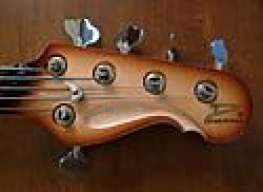
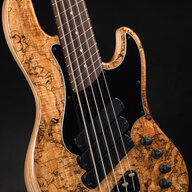
FYI if anyone is looking for a new NG3 five string, I have an incoming one available

View attachment 3137828

Bought it! Whoo-hoo! :woot: Counting the moments :bookworm: :nailbiting: :bookworm: to my gateway Dingwall. drool Good way to celebrate 10 years on TalkBass. Thanks to seller @Maiden Bass and belated thanks to the random guy at the Victor Wooten clinic last November who pulled out a Combustion and let me play it for three minutes. You got me into this mess! :roflmao:
 
The newest member of the family arrived yesterday! Combustion 4 in satin black and it compliments my NG2 5'er perfectly :)


20180907_211136.jpg
20180907_211149.jpg
20180907_211200.jpg
 
Bought it! Whoo-hoo! :woot: Counting the moments :bookworm: :nailbiting: :bookworm: to my gateway Dingwall. drool Good way to celebrate 10 years on TalkBass. Thanks to seller @Maiden Bass and belated thanks to the random guy at the Victor Wooten clinic last November who pulled out a Combustion and let me play it for three minutes. You got me into this mess! :roflmao:

Abandon all hope of being satisfied with monoscale basses again, brother! After trying a NG for a few minutes a couple of years ago at a guitar show, I have a four-string (2016) NG-2 in the same color with a gloss finish. Dingwall basses will spoil you, dude - enjoy the experience! :cool:
 
Hello! First time Dingwall owner here. My NG-3 arrived yesterday. I wanted to tweak the setup to my taste a bit so I watched @Sheldon D. 's YouTube vids. One thing I was still unsure of are the screw adjustments on the bridge. I'm assuming the two in each front corner are for height adjustment, but there's a third, is that a lateral adjustment? I just wanted to make sure I fully understand everything before I start mucking about.

Thanks all, and I'm really loving my new bass!

20180909_124236.jpg
 
Hello! First time Dingwall owner here. My NG-3 arrived yesterday. I wanted to tweak the setup to my taste a bit so I watched @Sheldon D. 's YouTube vids. One thing I was still unsure of are the screw adjustments on the bridge. I'm assuming the two in each front corner are for height adjustment, but there's a third, is that a lateral adjustment? I just wanted to make sure I fully understand everything before I start mucking about.

Thanks all, and I'm really loving my new bass!

View attachment 3144303
Congrats on your new NG3! The third allen screw needs to be loosened before making any lateral adjustments with the other two screws, then re-tighted when you finish your adjustment. It just holds the adjustable bridge piece securely in place. This mainly comes in handy when you are changing strings...so the piece doesn't fall out.
 
Congrats on your new NG3! The third allen screw needs to be loosened before making any lateral adjustments with the other two screws, then re-tighted when you finish your adjustment. It just holds the adjustable bridge piece securely in place. This mainly comes in handy when you are changing strings...so the piece doesn't fall out.
If the bass is brand new, I would encourage you to first dial the truss rod in perfectly to your taste and your climate before messing with the saddles. The saddles are probably already pretty good from the factory. Of course, nothing wrong with you dialing them in exactly as you want them if they are too high or too low for your playing style. But the truss rod needs to be set correctly first, or you will be chasing your tail.

The most valuable lesson I learned in doing setups is:

1. Tune the bass to playing pitch.

2. Adjust the truss rod, so that the relief (i.e., amount of bow in the neck) is correct for the string tension. In general, you should be able to just barely slide a business card or a thin guitar pick under the lowest string at the 7th fret without deflecting the string while you (and/or a capo or a second person) are fretting the string at the 1st and 13th frets, holding the bass in playing position (not lying on a bench). If you are buzzing anywhere below the 5th fret, the neck is too flat and the truss rod must be loosened a little. If you are buzzing up above the 12th fret, that has nothing to do with the truss rod. Keep reading.

3. After every truss rod adjustment, no matter how small, start at Step 1 again. (Don't forget this important step!)

4. Now that the truss rod is set correctly, adjust each saddle so that you just barely start buzzing when playing at your normal playing strength above the 12th fret, then raise the saddle just a hair at a time (a half turn or less) to make the buzzing stop when you are playing as aggressively as you foresee yourself playing. Of course, individual tolerance for buzzing may vary, so adjust to you personal tolerance level. Note that if there are two saddle height screws, they should be adjusted in unison by the same amount so that the saddle remains level, parallel with the body of the bass and bridge.

5. If you find yourself buzzing below the 5th fret, check the neck relief again and adjust the truss rod as needed. A humidity change may have caused the neck to move.

6. Once your saddles are set correctly on a given bass, you most likely will never have to touch them again, ever, unless your playing style changes or you make a radical change in string gauges.

7. If despite correct neck relief you are still buzzing on the low frets, the nut slots may have been filed too deep. Consult a knowledgeable luthier to build up the slots or replace the nut.

8. If your relief is different between the low strings and the high strings, your neck is twisted. Raise the action enough to compensate, and if it's playable, then play it anyway. If it's not, then consult a knowledgeable luthier or replace the neck or bass. (Chances of this happening on a Dingwall are probably near zero. Every one I've seen has been dead perfect.)
 
Last edited:
Congrats on your new NG3! The third allen screw needs to be loosened before making any lateral adjustments with the other two screws, then re-tighted when you finish your adjustment. It just holds the adjustable bridge piece securely in place. This mainly comes in handy when you are changing strings...so the piece doesn't fall out.
Just to make sure, when I say lateral, I mean from side to side. Like the Hipshot bridge. I made a slight adjustment of the D and G saddle height without loosening the set screw.
 
If the bass is brand new, I would encourage you to first dial the truss rod in perfectly to your taste and your climate before messing with the saddles. The saddles are probably already pretty good from the factory. Of course, nothing wrong with you dialing them in exactly as you want them if they are too high or too low for your playing style. But the truss rod needs to be set correctly first, or you will be chasing your tail.

The most valuable lesson I learned in doing setups is:

1. Tune the bass to playing pitch.

2. Adjust the truss rod, so that the relief (i.e., amount of bow in the neck) is correct for the string tension. In general, you should be able to just barely slide a business card or a thin guitar pick under the lowest string at the 7th fret without deflecting the string while you (and/or a capo or a second person) are fretting the string at the 1st and 13th frets, holding the bass in playing position (not lying on a bench). If you are buzzing anywhere below the 5th fret, the neck is too flat and the truss rod must be loosened a little. If you are buzzing up above the 12th fret, that has nothing to do with the truss rod. Keep reading.

3. After every truss rod adjustment, no matter how small, start at Step 1 again. (Don't forget this important step!)

4. Now that the truss rod is set correctly, adjust each saddle so that you just barely start buzzing when playing at your normal playing strength above the 12th fret, then raise the saddle just a hair at a time (a half turn or less) to make the buzzing stop when you are playing as aggressively as you foresee yourself playing. Of course, individual tolerance for buzzing may vary, so adjust to you personal tolerance level. Note that if there are two saddle height screws, they should be adjusted in unison by the same amount so that the saddle remains level, parallel with the body of the bass and bridge.

5. If you find yourself buzzing below the 5th fret, check the neck relief again and adjust the truss rod as needed. A humidity change may have caused the neck to move.

6. Once your saddles are set correctly on a given bass, you most likely will never have to touch them again, ever, unless your playing style changes or you make a radical change in string gauges.

7. If despite correct neck relief you are still buzzing on the low frets, the nut slots may have been filed too deep. Consult a knowledgeable luthier to build up the slots or replace the nut.

8. If your relief is different between the low strings and the high strings, your neck is twisted. Raise the action enough to compensate, and if it's playable, then play it anyway. If it's not, then consult a knowledgeable luthier or replace the neck or bass. (Chances of this happening on a Dingwall are probably near zero. Every one I've seen has been dead perfect.)
Thanks for the info. I did a slight adjustment to the truss rod first to add just a touch more relief for my more aggressive style of playing.
 
Thanks for the info. I did a slight adjustment to the truss rod first to add just a touch more relief for my more aggressive style of playing.

Congrats! I’m super curious to hear your thoughts on the Dingwall and how it compares to some of your Spectors. You are definitely a “go to” guy when it come to Spectors, so your thoughts on how they compare will be very interesting. :thumbsup:
 
Congrats! I’m super curious to hear your thoughts on the Dingwall and how it compares to some of your Spectors. You are definitely a “go to” guy when it come to Spectors, so your thoughts on how they compare will be very interesting. :thumbsup:
Right off? Two different beasts, but then, that's what I was after. I'm starting over. Set everything flat, try the different pickup configs to get the feel of the sounds of the bass and just work from there. I've put the Spectors away for the moment so I can immerse myself in the Dingwall. I was told by a Spector/Dingwall playing friend not to expect the Spector tone so I'm letting go of that to find the "Dingwall Tone". ;) Or at least my version of it.
 
Right off? Two different beasts, but then, that's what I was after. I'm starting over. Set everything flat, try the different pickup configs to get the feel of the sounds of the bass and just work from there. I've put the Spectors away for the moment so I can immerse myself in the Dingwall. I was told by a Spector/Dingwall playing friend not to expect the Spector tone so I'm letting go of that to find the "Dingwall Tone". ;) Or at least my version of it.

Hey Jeff, glad it arrived and you’re beginning your journey. As great as DWs (in general) sound solo, IMHO, they really accel in the band context when volume/frequencies and duress are flying around. They have an amazing ability to support yet cut and thrust with ease. It’s hard to explain until you feel it in that scenario.
 
Hey Jeff, glad it arrived and you’re beginning your journey. As great as DWs (in general) sound solo, IMHO, they really accel in the band context when volume/frequencies and duress are flying around. They have an amazing ability to support yet cut and thrust with ease. It’s hard to explain until you feel it in that scenario.
Absolutely Lee. I have band rehearsal next Saturday and I'm really looking forward to it since we rehearse at full volume. Right now, I have my MP3 Tascam Trainer played through my TCE RH450 and headphones (you saw that setup at the hang) to mess with until then.
 
Right off? Two different beasts, but then, that's what I was after. I'm starting over. Set everything flat, try the different pickup configs to get the feel of the sounds of the bass and just work from there. I've put the Spectors away for the moment so I can immerse myself in the Dingwall. I was told by a Spector/Dingwall playing friend not to expect the Spector tone so I'm letting go of that to find the "Dingwall Tone". ;) Or at least my version of it.
What sets the long scale Dingwalls apart from all other basses is the extra string lengths on the lower strings and the multiscale. Preamps and pickups are secondary IMO.
 
What sets the long scale Dingwalls apart from all other basses is the extra string lengths on the lower strings and the multiscale. Preamps and pickups are secondary IMO.
That certainly is the first thing you notice. :thumbsup: But in the case of the NG-3, the three pickups all grouped together, and the pickup selector with its various ways of picking/combining them is unique too.
 
Mine came with nickel strings, but I've ordered stainless as it's my preference.

I also have a SS preference. My SJ I prefer nickels currently but the long scales are all dressed in payson SS

That certainly is the first thing you notice. :thumbsup: But in the case of the NG-3, the three pickups all grouped together, and the pickup selector with its various ways of picking/combining them is unique too.

Do you know what selector switch came in your NG? The d bird or 3x
 

Latest posts