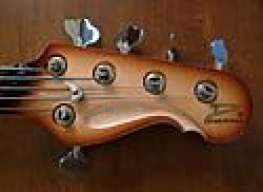
Stewart McDonald is the vendor for the switch. The install was done @ Mo's Shop. I don't have a link for you...

TalkBass has been independent since 1998. Add your voice.
Create a free account to reply to discussions, view embedded media, and browse with fewer display ads.
Join free Log in
Want zero display ads or expanded classifieds tools? Compare plans.
I already want to move to Canada
absolutely... I can SO relate.



As much as I love Dingwall basses, that’s not why I envy our friends to the north.You guys know that would NEVER work out, not even sorta'...We'd all move within a few blocks...
I believe the switch was probably one of these:I'm curious about this too.

You guys know that would NEVER work out, not even sorta'...We'd all move within a few blocks of the shop, we'd be there all the time, we'd never get anything else done, Sheldon would be like, "Seriously?! You guys are here again? Don't you have families or jobs, or SOMETHING else to do?" We'd all be like "Nope." Then the RCMP would get involved and restraining orders and stalking charges...Probably best to stay where we're at.

Well, when I solo my neck pup on my two AB1s, they have a P-ish tone also, as even Jazz bass neck pups do, but what is the difference between a P tone, and a P-ish tone? Whatever it is, it is not a P tone I suspect,but something more remote.When I solo my neck pup (FDV) and it's set to series, I get a very P-ish tone. Sounds great.

I'm already used to the fact that the pickups in my ABHS give less output in parallel. Is the volume difference with the P-tone even bigger (i.e. lower)? Regardless I'd still run it in series, I just want to know if the parallel output is on par with the FD3 pickups in this regard.It's not that it won't work at all, it just won't sound much like the P tone when in parallel internally. Actual split coil P bass pups are normally in series internally, which is part of how it sounds like a P.

I'm already used to the fact that the pickups in my ABHS give less output in parallel. Is the volume difference with the P-tone even bigger (i.e. lower)? Regardless I'd still run it in series, I just want to know if the parallel output is on par with the FD3 pickups in this regard.


My experience is not as good as one who actually has a switch to alter the internal wiring between series and parallel. I installed a P-tone into a previously owned ABZ and it made a big difference. The P character was strong. On the other hand, it was way louder than the bridge (which was still in parallel) and I felt that there was little difference between soloing the P tone and putting the two together (especially the parallel jazz setting).I'm already used to the fact that the pickups in my ABHS give less output in parallel. Is the volume difference with the P-tone even bigger (i.e. lower)? Regardless I'd still run it in series, I just want to know if the parallel output is on par with the FD3 pickups in this regard.
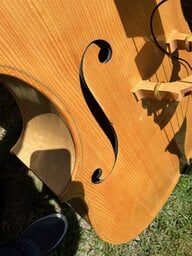
Guys I'm officially a Dingwall owner. People without fan-frets, plebs am I right you guyz?!
I like that.just consider them future Dingwall owners.

You will be assimilated. Resistence is futile.just consider them future Dingwall owners.

Your experience is clearly different from mine. I had a P-Tone in an AB with S/P switches for a short time, and I found that when putting the P-Tone (solo) in Parallel mode, the volume dropped by at least 50% on half of the strings. I emailed Dingwall Tech Support and they said that this was expected behavior and that the P-Tone is intended to be used only in Series. So if you have one that works in parallel, something must be different between your pickup and mine.My experience is not as good as one who actually has a switch to alter the internal wiring between series and parallel. I installed a P-tone into a previously owned ABZ and it made a big difference. The P character was strong. On the other hand, it was way louder than the bridge (which was still in parallel) and I felt that there was little difference between soloing the P tone and putting the two together (especially the parallel jazz setting).
There is also a significantly more P character to the P tone because it is overlapped like a normal split coil. So even if you place your regular FD3 or FDV in series, it gets closer to a P sound, but still not as good as the P-tone. Frankly, I wish I had switches on the ABZ, as I would have liked to try the P tone in parallel, because even though it is best in series when solo'd, it might have been more balanced for combining it with the bridge. On the other hand, if I had switches, I might have also tried putting the bridge in series in the jazz parallel setting.
In any event, for the best P tone, it should be in series. But I'm sure the tone is very useful in parallel as well.
I'm not sure from where you have drawn the conclusion in from my post, unless it is confusion with parallel internally vs parallel with other pickups. The original discussion was prompted by a question of whether the P-tone needs to be in series to work, which is not the case. But I indeed stated that to get the most effective P tone from the P-toneYour experience is clearly different from mine. I had a P-Tone in an AB with S/P switches for a short time, and I found that when putting the P-Tone (solo) in Parallel mode, the volume dropped by at least 50% on half of the strings. I emailed Dingwall Tech Support and they said that this was expected behavior and that the P-Tone is intended to be used only in Series. So if you have one that works in parallel, something must be different between your pickup and mine.
I would think the main use of the P-Tone would be solo, and in series mode (of course).
Since it's louder than the others, you'd want to either remember to roll off the volume a little when using it, or wire a small resistance (or a trim pot) in series with it to even the volume.
 it should be in series internally. I also mentioned that I did not have switches, so the P-tone I installed in the ABZ was in series by default and over-powered my bridge pickup. Thus, my ABZ was pretty much a defacto solo'd neck even when the bridge pup was switched in. I then mentioned that I would have liked to have the switches, so that I could have dropped the P-tone output by putting it in parallel mode internally when trying to configure the bridge pickup in, especially in the jazz parallel configuration (that is neck in parallel with bridge, it was overpowered by the P-tone when the p-tone is internally in series).
I like that.
So far I dig it. The triple pickup system is wild. My only complaint so far is that if you're used to anchoring on an orthogonally mounted pickup, the angled ones feel weird. Doesn't bother me or affect my playing. Something kind of like sleeping on the wrong side of the bed at night.
 Okay, you have three of Sheldon's fine pickups, but what would they be mounted on? Curious minds, you know...
I'm sorry, I was not paying close enough attention to notice that you said you did not have series parallel switches. And when you said ptone in series, I assumed that meant ptone coils in series with each other. That is what you are calling ptone in series internally. I did not think you meant ptone in series with another pickup, because I figured if you meant that, you would have said that. (Also, why do that, because it defeats the purpose of the P-Tone.) Sorry for the confusion. That will teach me to not respond to talkbass emails when I am in a meeting at work. The perils of multitasking.I'm not sure from where you have drawn the conclusion in from my post, unless it is confusion with parallel internally vs parallel with other pickups. The original discussion was prompted by a question of whether the P-tone needs to be in series to work, which is not the case. But I indeed stated that to get the most effective P tone from the P-tone
So, not sure where from that you would get that I found the P-tone NOT louder when in series, but hopefully that clears up my intent..
Awesome, congrats!


