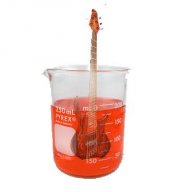
Vinyl can be made in many thicknesses.
Sure, but from the pictures it clearly isn't very thick.

TalkBass has been independent since 1998. Add your voice.
Create a free account to reply to discussions, view embedded media, and browse with fewer display ads.
Join free Log in
Want zero display ads or expanded classifieds tools? Compare plans.
Vinyl can be made in many thicknesses.

I didn't read Jakka1's post properly this morning, I thought they were asking if it was wood (doh!). It's definitely a vinyl sticker type thing.Vinyl can be made in many thicknesses.

I am flying to saskatoon tomorrow for work its -28...brrr


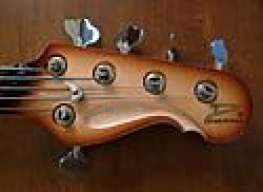
So, yeah. Things happened. Won't be getting another bass. Reason will be obvious later tomorrow...
We have a winner!I'm guessing the mysterious Owl has upgraded his rig?
Hi guys, a new happy ABII owner here
What could be the solution? Only non-tapered strings? Would the bridge adjustment length be enough? Is there recomendation on which non-taper strings to use? I was thinking to try Ernie Balls. Or maybe you can advise something with Dingwall strings? Otherwise I really love the sound and would regret to avoid using Dingwall strings.
Or is it better to open a new thread for this question? thanks in advance)
It is possible that it was a faulty string, but you can also ruin a good string if you cut it before doing the 90 degree bend at the end. It is not guaranteed that this will ruin the string, but there is a decent chance it will. So always do the 90 degree bend with needle-nose pliers at the tuner end before cutting the string, then cut so that you leave about three quarters of an inch after the bend, or whatever is the appropriate length to stick down in the hole of your tuner.So it was a production faulty Dingwall B string. I ordered an extra Dingwall B single string, and it was perfect from the start. Kalium as well after a bit settling in became totally OK. Thanks for everyone for feedback)))

It is possible that it was a faulty string, but you can also ruin a good string if you cut it before doing the 90 degree bend at the end. It is not guaranteed that this will ruin the string, but there is a decent chance it will. So always do the 90 degree bend with needle-nose pliers at the tuner end before cutting the string, then cut so that you leave about three quarters of an inch after the bend, or whatever is the appropriate length to stick down in the hole of your tuner.
It is possible that it was a faulty string, but you can also ruin a good string if you cut it before doing the 90 degree bend at the end. It is not guaranteed that this will ruin the string, but there is a decent chance it will. So always do the 90 degree bend with needle-nose pliers at the tuner end before cutting the string, then cut so that you leave about three quarters of an inch after the bend, or whatever is the appropriate length to stick down in the hole of your tuner.
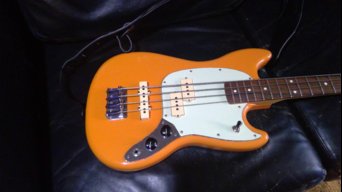

how does one go about ordering one of these even (not that i'm ready to buy one just curious)? I checked their website and the only option seems to be to email them?
So what would i do just email them like "can you put me on the waitlist for an orange NG2 6 string" or what?
Understood. Just so you are aware of what happens if you cut before bending, the winding becomes free floating and disconnected from the core, and so the whole thing slides and loosens a little bit. So you will most likely notice the effect at the bridge end, although it can manifest anywhere along the length of the string. Just wanted you to be aware that the symptom you experienced definitely could be caused by cutting before bending. I'm not saying I guarantee that it was, but it could have been. There will never be any way to know for sure. At least you hopefully didn't waste too much time before discovering the problem and remedying it.Good point here, I will keep that in mind. Yet I am sure in my case the problem was on the bridge side (where taper is). Why I think so: 1 - the rattling was still heard when fretting 2 - rattling almost disappeared when I moved bridge block as much towards the taper as I could, revealing that the rattling source was somewhere where taper ends.
Understood. Just so you are aware of what happens if you cut before bending, the winding becomes free floating and disconnected from the core, and so the whole thing slides and loosens a little bit. So you will most likely notice the effect at the bridge end, although it can manifest anywhere along the length of the string. Just wanted you to be aware that the symptom you experienced definitely could be caused by cutting before bending. I'm not saying I guarantee that it was, but it could have been. There will never be any way to know for sure. At least you hopefully didn't waste too much time before discovering the problem and remedying it.

whyyy would they discontinue the green orange and yellow lamborgini colors? they are beyond cool