
Hmm. That's so crazy it just might work!Congrats!
perhaps try a different string?

TalkBass has been independent since 1998. Add your voice.
Create a free account to reply to discussions, view embedded media, and browse with fewer display ads.
Join free Log in
Want zero display ads or expanded classifieds tools? Compare plans.
Hmm. That's so crazy it just might work!Congrats!
perhaps try a different string?
I should have said that I’ve never had a Dingwall that wouldn’t set up super low before I ran out of adjustment room between the truss rod and the excellent bridge hardware. Some basses, at that point, would need a shim under the heel of the neck to improve the angles.
Like you, I expect a Dingwall to show up with a great set up, ready for my personal string selections and tweaks.
Sheldon has an excellent video tutorial on set up posted on YouTube.
How much saddle screw is showing is going to depend on the strings, tapered or non tapered. Sometimes mine are almost bottomed out, sometimes there’s quite a bit of thread.
First check for set up is holding down the string on both the lowest and highest frets at the same time, and looking at the space between the bottom of the string and the 12th fret. There should be very little daylight if the neck is almost flat. Or you can hold the string down on the highest fret and sight down the neck, comparing the curve of the neck to the straight string. I start with 1-2mm relief.
I’ve never had to mess with the nut, even when I ran E-C on a B-G Dingwall. I just found the action to be even better, with perhaps an open string rattle of the G in the former D slot. Nothing a bit of shrink tubing wouldn’t fix.
Since I usually put really light strings on, sometimes I might need to relax the truss rod a bit. Truss rod adjustments tend to be pretty stable, I never see movement after a set up. As we go from very dry low humidity to the rainy season here in Washington state, I might need to make small adjustments.
Short story, you should be able to dial in a great set up.


Tomorrow I will solder in the 6-way-switch (B/BM/M/BN/BMN/N). Wish me luck guys
I have run TI jazz flats, both B-G and E-C. As far as light and slinky, TI’s are very flexible. I love the TI flats sound and feel and always have a set for my Supers. The huge .136 B string isn’t tapered, so some fiddling with saddle screws was needed. But TI flats aren’t everybody’s cup of Joe.
I’ve always wanted to try the TI jazz rounds, but haven’t had a chance yet.
The B string for Super 5’s could be a tricky fit, it’s a short distance from nut to post. Sometimes I’d use a Dingwall B with whatever four string set I bought. I used DR lowriders, and Pure Blues in the lightest gauge. DR Hellborgs are.040, but have a stiffer feel, and only come in four strings. I’d add a C string rather than a B.
I ended up going with E-C and then went back to four string basses. I ever really took to the B string. Not much help, I know...
Right now I have GHS boomers, .030 on the Super P4. Super fun.
I’d check with Jason @ Fret Nation before ordering five string sets B-G. He can tell you if the winding length of the B string will work with the Super scale. He will also sell you individual strings, so you can experiment with various B and not buy the whole set.
You could also check with Payson and see if he’s got super series strings. I really liked his reduced core on the longscale AB.
Good luck, and congrats on getting a Dingwall!
I’ve always thought we should have a Dingwall owners string exchange. Pass around used string sets already cut and wound for the various models, with a review. I mean, I’d soak em in my tube of denatured alcohol first, so it wouldn’t be too gross.
I know I’ve got sets that I’ll never use again as I move towards the lightest strings I can find. Pretty much pickled they’ve been soaking so long.

You could also check with Payson and see if he’s got super series strings. I really liked his reduced core on the longscale AB.

Hi gang, I just bought a wonderful Super J5 on the TB Classifieds and love everything about it--the feel, the look, the tone--except, oddly enough, the B string. I know that at 35" it won't have the same clarity as the 37" B strings on other Dingwall models, but I'm finding it very fuzzy and boomy. It helps to roll off the bass entirely, but this compromises the tone of the other strings. I'm wondering if lowering the pickups might help. On the other hand, this IS my first fiver, so maybe this is just par for the course. Any suggestions?
Ish. Someone else bought it but didn’t bond with it and I caught the flip.
Does Dingwall sell new nuts? I guess I've never reached out about it but my intuition was to go to a local luthier about that. I've had a couple brand new nuts made locally.

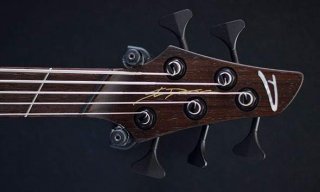
Hm. Any opinions on pau ferro vs wenge fingerboards on supers in particular? I’ve got a custom order hurtling towards the finish line and now I’m undecided.

I’ll probably get to mine next week. I intend to add a terminal block to make it a bit easier to switch in and out.
B>
You’ll still need to desolder the outputs and ground though it would nice not to have to do that with the new switch.same. I won't cut the orginal wires or solder to them. I'll just put them out of the terminal block from the DB-switch and add a new terminal block from where I run the cables to the new switch.
If you are getting buzzing on those two open strings, but not getting buzzing on the first fret on both of those strings, and if your saddles are adjusted for the proper height so there is absolutely no buzzing above the 12th fret on those two strings, then the first thing I would ask is whether the nut was filed too low. Do you know how to check that?Ok so bass fully setup, no more distortion because of too high output (had to do 3 or 4 full turns on the pup screws to get them down enough), no more buzzing below 7th fret on any string, no more buzzing on any string above 12, action is perfect on the whole neck, all good.
Except for two things :
- I now have buzz on open A (a bit) and open E (a lot).
- the bridge screws are a bit higher visually than I'm comfortable with, I'll take a pic and would gladly have your opinions.

Ok so bass fully setup, no more distortion because of too high output (had to do 3 or 4 full turns on the pup screws to get them down enough), no more buzzing below 7th fret on any string, no more buzzing on any string above 12, action is perfect on the whole neck, all good.
Except for two things :
- I now have buzz on open A (a bit) and open E (a lot).
- the bridge screws are a bit higher visually than I'm comfortable with, I'll take a pic and would gladly have your opinions.


If you are getting buzzing on those two open strings, but not getting buzzing on the first fret on both of those strings,
and if your saddles are adjusted for the proper height so there is absolutely no buzzing above the 12th fret on those two strings
then the first thing I would ask is whether the nut was filed too low. Do you know how to check that?

Not sure why you care how high the screws are, here is my E on my ABZ with a 1/8 allen key for scale so it's around 4mm high.
If you're getting buzz only on open strings then you have a nut issue or break angle issue.
I agree with John, the issue is at the nut. Maybe it was set up for a very low tuning with larger strings, like F#. That might explain the funky set up.
Sounds like you are on the right track with set up!
Sometimes I wish more basses have Zero frets (however these do wear down) to deal with this potential problem.


