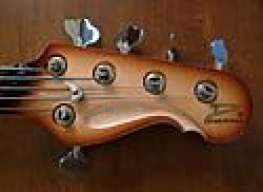
The neck on my 2013 SP-4 and 2016 NG-4 are very similar. The SP neck is a little more rounded. Both are very comfy. 

TalkBass has been independent since 1998. Add your voice.
Create a free account to reply to discussions, view embedded media, and browse with fewer display ads.
Join free Log in
Want zero display ads or expanded classifieds tools? Compare plans.
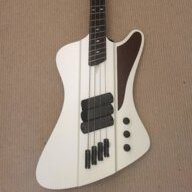
By the way, i’ll be at the Guitar Summit here in Germany, where Sheldon and Rob of Epica will unveil the hellboy d-roc.
I will try to get pics and videos
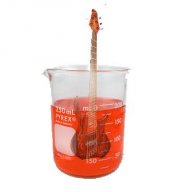
I’m gonna do a fun experiment in a little bit.
this:
View attachment 3825574
+
this:
View attachment 3825575 View attachment 3825576

View attachment 3827252
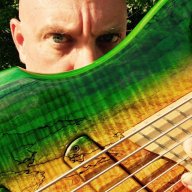
I was cleaning the music room the other night and found these in amongst the chaos.
Beauty! Some good variety right there.View attachment 3827252
I was cleaning the music room the other night and found these in amongst the chaos.
Beauty! Some good variety right there.
You clearly need more stuff

I'm a fan of the cello hipView attachment 3827252
I was cleaning the music room the other night and found these in amongst the chaos.
those basses have such a unique look!
I'm a fan of the cello hip
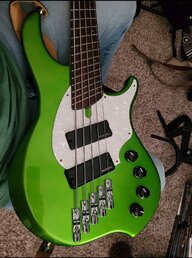
@BurningSkies how does the Voodoo compare tonally to the newer Dingwalls? I don't know much about older models but I don't think I've ever seen one with "straight" pickups.
Hej
I have a Active 2x Control layout Dingwall, and when I change the settings on Rotary pickup selector the volume changes drastically.
Setting 3-"Bridge/neck series" being the highest sounding loudest and 1-"Bridge" being the quietest.
Does this mean my pickups are not set correctly? I set it up based on the videos on Dingwall youtube channel and they are still not as deep as suggested there, but I don't think I can physically push them further than they are now.
Regards
Zalek
Correct. I did a measurement yesterday with the Blackhole Sunburst Z3, and position 2 (bridge/middle series) was 5 dB louder than position 3 (bridge/neck parallel), and it was 8-9 dB louder than positions 1 and 4 (bridge solo and neck solo respectively).The series pickups setting is always louder, it's the nature of the beast when it comes to pickup wiring. I always find that the others should be roughly the same, but I wouldn't be afraid to mess with the bridge pickup height as long as you're not running into problems with the strings hitting the pickup.
Correct. I did a measurement yesterday with the Blackhole Sunburst Z3, and position 2 (bridge/middle series) was 5 dB louder than position 3 (bridge/neck parallel), and it was 8-9 dB louder than positions 1 and 4 (bridge solo and neck solo respectively).
When you play in position 2, you have to mean it! In other words, if you EQ everything else in your signal chain for position 2, you are probably going to want to stay in position 2. Otherwise, the other (easy) option is to just play with the volume knob on 8 in position 2, and volume on 10 for everything else.
Yep, true! When I said "(easy)", I actually meant "(without adding a boost pedal)". I was just being lazy by typing less.or have a boost in your pedal chain you can engage
Spoken like a true pro!!I actually never 'run' with my bass' volume full up. I run with it at about 85% or so. Because it's active there's no net gain tonally for running it full out like with a passive bass. From that 85% I have room to bump up the volume if I run in a single-pickup or parallel setting, or bump down if I need to in series. Once you've played 'em for a while this becomes second nature and you'll know how much of a roll up or down you need at any given moment.