I like this one!With a combustion rotary and swapping the bridge and middle you'd get 1 middle, 2 middle and bridge series, 3 middle and neck parallel, 4 neck. You lose the bridge and neck parallel jazz sound a bit but all would be pretty usable.

Enjoy the benefits of a premium membership!
Upgrade Account
-
TalkBass has been independent since 1998. Add your voice.
Create a free account to reply to discussions, view embedded media, and browse with fewer display ads.
Join free Log in
Want zero display ads or expanded classifieds tools? Compare plans.
You are using an out of date browser. It may not display this or other websites correctly.
You should upgrade or use an alternative browser.
You should upgrade or use an alternative browser.
Dingwall Owners Club
- Thread starter FroggyOne2
- Start date
More options
Who Replied?
Oui. Ce n'est pas trop loin de moi. I saw that one the other week. It seems like a reasonable price.
Lol..I had only 2 years of French in high school. I only remember a few things now. I did go to Tahiti in 1995 so I got to test out my French there. Now I need the Googler Transductor to help me with what you said. I certainly do recognize the words and structure, just not the meaning..is that the important part? HA! Crash course in Spanish now. Reasonable ? $1500.00 ? I'd say so in a battement de coeur!!!
I have a serious question for you Dingwall players. When you play ocataves, octave runs, or in the case of Dua Lipa's octaves, with all this fan-fret business going on, do you use your pinky on that high note or the 3rd finger? If your bouncing back and forth in one spot r/oct/r/oct and on and on, do you hold your two fingers down on the string the whole time or do you 'bounce' back and forth? I'm trying to get a handle on this. People ask on the other side of TB about how they play 4ths, my question is about root/octaves on the Dingwall.
I believe the NGs and Combustions are all series by default.
Yeah I meant on canadian builds obviously

BurningSkies
CRAZY BALDHEAD
- Feb 20, 2005
- 27,956
- 20,348
- Disclosures
- Endorsing artist: Dingwall Guitars
I have a serious question for you Dingwall players. When you play ocataves, octave runs, or in the case of Dua Lipa's octaves, with all this fan-fret business going on, do you use your pinky on that high note or the 3rd finger? If your bouncing back and forth in one spot r/oct/r/oct and on and on, do you hold your two fingers down on the string the whole time or do you 'bounce' back and forth? I'm trying to get a handle on this. People ask on the other side of TB about how they play 4ths, my question is about root/octaves on the Dingwall.
Fingering depends on where on the neck I'm playing. I'm likely to be playing 1/4 down below the 5th fret and 1/3 5th fret and above for octaves. Similarly if I'm doing root 3rd with the third being an octave up (four string stretch) I'll do it by what is comfortable...that might be 1/2, 1/3 or 1/4. If I'm doing triads I'm looking for what is the most comfortable for my fingers.
...sometimes I also pull those diads with 2/4 fretting fingers depending on what I'm playing and where as well.
I generally anchor my first finger and lift my 'octave finger' to mute the higher string, but I'm also muting that higher note with my first finger being across the string too. I'm muting the root note with my right hand plucking fingers, so no need to lift that first fretted finger off at all.

Yeah I meant on canadian builds obviously
This site gives the stock config for their current production I think: Z Pickup & Control
But I don't know of a surefire way to check otherwise without visually inspecting. If you had a similar bass with series/parallel toggles, you could learn how the sounds differ, or compare the eq curve of notes. But seeing as pickup height plays such a big role even looking at waveforms or measuring output volume seems error prone. Similarly your S/N ratio would be heavily impacted by pickup distance from strings regardless of configuration, and should be hum cancelling in both modes.

IvanBassist
Commercial User
- Jun 8, 2008
- 3,744
- 11,127
- Disclosures
- Content Manager at Darkglass Electronics, Dingwall Guitars Artist
I rarely use my 3rd finger for octaves. I use the pinky most of the time. Depending on the groove I either leave it in place pressing the note or slightly raise the finger to mute the string while I play the lower octaveI have a serious question for you Dingwall players. When you play ocataves, octave runs, or in the case of Dua Lipa's octaves, with all this fan-fret business going on, do you use your pinky on that high note or the 3rd finger? If your bouncing back and forth in one spot r/oct/r/oct and on and on, do you hold your two fingers down on the string the whole time or do you 'bounce' back and forth? I'm trying to get a handle on this. People ask on the other side of TB about how they play 4ths, my question is about root/octaves on the Dingwall.

I rarely use my 3rd finger for octaves. I use the pinky most of the time. Depending on the groove I either leave it in place pressing the note or slightly raise the finger to mute the string while I play the lower octave
+1. I also rarely use my 3rd finger and also use my pinky.
I get some it from my upright playing. To me it’s more natural way to play.
IvanBassist
Commercial User
- Jun 8, 2008
- 3,744
- 11,127
- Disclosures
- Content Manager at Darkglass Electronics, Dingwall Guitars Artist
Yup! I also use upright fingering for a lot of stuff+1. I also rarely use my 3rd finger and also use my pinky.
I get some it from my upright playing. To me it’s more natural way to play.
Fingering depends on where on the neck I'm playing. I'm likely to be playing 1/4 down below the 5th fret and 1/3 5th fret and above for octaves. Similarly if I'm doing root 3rd with the third being an octave up (four string stretch) I'll do it by what is comfortable...that might be 1/2, 1/3 or 1/4. If I'm doing triads I'm looking for what is the most comfortable for my fingers.
...sometimes I also pull those diads with 2/4 fretting fingers depending on what I'm playing and where as well.
I generally anchor my first finger and lift my 'octave finger' to mute the higher string, but I'm also muting that higher note with my first finger being across the string too. I'm muting the root note with my right hand plucking fingers, so no need to lift that first fretted finger off at all.
Now that you diseccted it, yes, I was asking primarly 5th fret and lower positions, and as you mentioned 1/4 and JR Knots made reference to the upright thing and more 'natural', I think that is why I'm always doing the 1st and pinky there for the root + octave. Its just sometimes when lifting and pressing that pinky, I press down on the angle fret with the pinky, like misjudge the landing spot.

I have a serious question for you Dingwall players. When you play ocataves, octave runs, or in the case of Dua Lipa's octaves, with all this fan-fret business going on, do you use your pinky on that high note or the 3rd finger? If your bouncing back and forth in one spot r/oct/r/oct and on and on, do you hold your two fingers down on the string the whole time or do you 'bounce' back and forth? I'm trying to get a handle on this. People ask on the other side of TB about how they play 4ths, my question is about root/octaves on the Dingwall.
I'm not a proponent of the 1-finger-per-fret rule that some folks rely on. I prefer to do what feels most comfortable. For me, that means using my pinky when I'm closer to the nut, and ring finger when I get up higher.
Depending on the riff and what it should sound like, I might lift each finger after the note, or I may not. If it's funky/staccato, I lift in order to mute and cut the notes. Sometimes you want to drone or pedal the lower note, in that case I just hold it down.
I have a serious question for you Dingwall players. When you play ocataves, octave runs, or in the case of Dua Lipa's octaves, with all this fan-fret business going on, do you use your pinky on that high note or the 3rd finger? If your bouncing back and forth in one spot r/oct/r/oct and on and on, do you hold your two fingers down on the string the whole time or do you 'bounce' back and forth? I'm trying to get a handle on this. People ask on the other side of TB about how they play 4ths, my question is about root/octaves on the Dingwall.
It’s still early days for me with playing Dingwall basses. That said, I haven’t adjusted my technique at all. I’ve always been a one finger per fret, fingers go where they should kind of player.
Last edited:

I have a serious question for you Dingwall players. When you play ocataves, octave runs, or in the case of Dua Lipa's octaves, with all this fan-fret business going on, do you use your pinky on that high note or the 3rd finger? If your bouncing back and forth in one spot r/oct/r/oct and on and on, do you hold your two fingers down on the string the whole time or do you 'bounce' back and forth? I'm trying to get a handle on this. People ask on the other side of TB about how they play 4ths, my question is about root/octaves on the Dingwall.
Pinky for me too most of the time. It depends on the line, but unless I have to get somewhere else quickly that requires me to fret the octave with the 3rd finger, it's pinky. No need to make it more difficult than it needs to be.
Same here! I just got mine finalized today. I'm also super excited.John at John Fox Bass is confirming my build specs with the shop. I am excited. That is all.
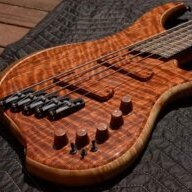
Oh hey, Talkbass is back.
Based on the last things I heard, I should be ~1 month (ish?) out from my Z. Getting a bit excited after all this time!
Based on the last things I heard, I should be ~1 month (ish?) out from my Z. Getting a bit excited after all this time!
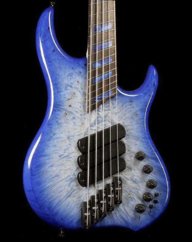
Me three. Finalized on Saturday. August won’t come soon enough.Same here! I just got mine finalized today. I'm also super excited.

Me three. Finalized on Saturday. August won’t come soon enough.
Is yours coming from John too?
Yes it is. John is the man! Too bad he is not allowed on here. I went back through a bunch of his last posts and never saw anything that would support his banning from TB. Weird.Is yours coming from John too?

I have an issue with my NG-3 that I hope to get some help on from more experienced Dingwall players...
I'm recording some tracks for my band and in the quiet sections I'm getting some noise from my bass. Not a ton, but it's noticeable and makes my tracks unusable. I did some troubleshooting to confirm that the noise is coming from my bass and nothing else in the chain. I think this is a relatively new issue since I haven't noticed it before and no one else has mentioned it.
Any ideas what to look for? I opened up the control cavity and took a look and nothing stood out.
Some more background info:
I bought the bass new about 15 months ago.
It has the original batteries. Changing them is on my list of things to do.
I'm soloing the bridge pickup. But it's noisy in every position.
I record in passive mode.
I have 2 Dingwall NG-3 basses and only 1 has the noise issue.
When I touch the strings, the noise tends to go away. I say tends because I really have to have a firm grip for the noise to go away.
I've tried using different instrument cables, going direct to the audio interface, using a different bass, etc. and I'm very confident that the noise is coming from the bass.
Thanks!
--jack
I'm recording some tracks for my band and in the quiet sections I'm getting some noise from my bass. Not a ton, but it's noticeable and makes my tracks unusable. I did some troubleshooting to confirm that the noise is coming from my bass and nothing else in the chain. I think this is a relatively new issue since I haven't noticed it before and no one else has mentioned it.
Any ideas what to look for? I opened up the control cavity and took a look and nothing stood out.
Some more background info:
I bought the bass new about 15 months ago.
It has the original batteries. Changing them is on my list of things to do.
I'm soloing the bridge pickup. But it's noisy in every position.
I record in passive mode.
I have 2 Dingwall NG-3 basses and only 1 has the noise issue.
When I touch the strings, the noise tends to go away. I say tends because I really have to have a firm grip for the noise to go away.
I've tried using different instrument cables, going direct to the audio interface, using a different bass, etc. and I'm very confident that the noise is coming from the bass.
Thanks!
--jack

I’d guess a grounding issue because the noise stops when you grip the bass and strings. (You become the ground)
First thing, I’d check the ground wire to the bridge. Make sure there is a good contact. I’m not sure how they ground the individual string bridge pieces, but it should be obvious once you pull one out.
Most noisy ground issues I’ve run into happened at the bridge.
Then I’d look inside, checking for loose ground wires of a cold solder joint at the switch.
Then I’d re solder the ground wires at the switch to see if it was a cold joint.
All my Dingwalls are silent, so you definitely have something going on.
First thing, I’d check the ground wire to the bridge. Make sure there is a good contact. I’m not sure how they ground the individual string bridge pieces, but it should be obvious once you pull one out.
Most noisy ground issues I’ve run into happened at the bridge.
Then I’d look inside, checking for loose ground wires of a cold solder joint at the switch.
Then I’d re solder the ground wires at the switch to see if it was a cold joint.
All my Dingwalls are silent, so you definitely have something going on.


