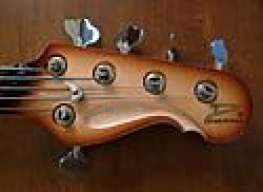
Very nice! Having a solid rig will definitely reap more satisfaction from playing your new Dingwall. I second the notion to check out some Payson nickels before rig-shopping...

Last edited:

TalkBass has been independent since 1998. Add your voice.
Create a free account to reply to discussions, view embedded media, and browse with fewer display ads.
Join free Log in
Want zero display ads or expanded classifieds tools? Compare plans.

Hi all!
Just took delivery of a new Combustion 5. Natural ash body, maple fingerboard. First five-string, currently playing an Aerodyne Jazz and a P, both rosewood fingerboards.
First impression - mixed! Smaller and lighter than I expected (my only five-string experience is my son's Stingray). It feels fragile, unlike the Fenders I'm used to. Very low action, easy to play, no buzzing. However, it sounds clanky and metallic. I'm still working out the controls. Passive and active modes almost sound the same to me, as do the four pickup positions.
The fanned frets seem pretty straightforward, except above the 12th fret (where I rarely play). The B-string feels and sounds tight, although metallic. The maple fingerboard is different, in that it's hard to see the frets and strings!
Overall, mixed feelings. I need to spend some more time with it, and I definitely need a new amp/cab.
View attachment 2929395

Put on nickel strings or play the stainless until the zing wears off. Raise the action or play lighter to minimize physical clank.I definitely need to learn more about strings!
So the metallic "clank" can be reduced by changing out the stainless steel strings?

Hi all!
Just took delivery of a new Combustion 5. Natural ash body, maple fingerboard. First five-string, currently playing an Aerodyne Jazz and a P, both rosewood fingerboards.
First impression - mixed! Smaller and lighter than I expected (my only five-string experience is my son's Stingray). It feels fragile, unlike the Fenders I'm used to. Very low action, easy to play, no buzzing. However, it sounds clanky and metallic. I'm still working out the controls. Passive and active modes almost sound the same to me, as do the four pickup positions.
The fanned frets seem pretty straightforward, except above the 12th fret (where I rarely play). The B-string feels and sounds tight, although metallic. The maple fingerboard is different, in that it's hard to see the frets and strings!
Overall, mixed feelings. I need to spend some more time with it, and I definitely need a new amp/cab.
View attachment 2929395
I definitely need to learn more about strings!
So the metallic "clank" can be reduced by changing out the stainless steel strings?


I definitely need to learn more about strings!
So the metallic "clank" can be reduced by changing out the stainless steel strings?
This is my understanding as well; they ship with Nickel strings.Pretty sure your 2017 Combustion would have shipped with nickel strings.
The clank is most likely a combination of brand new strings and the action being a bit low for your preference.
Play it for a couple of weeks and the strings will mellow, loosen the truss a 1/4 turn and you’ll lose a lot of the clank (quicker and easier than adjusting the string heights imo).
I have been a 4-string player mostly. It was only when I got involved with the amazing low B on the Dingwalls that now I am far more comfortable on a 5-string. Hang in there with it and you most likely will grow to appreciate that low B.Thanks to all for the tips and tricks! Will get through them and report back.
I really, really want to like the Combustion, but right now it's so different in so many ways from my 4-string PJ. I suppose it's a matter of time... and practice...
Pretty sure your 2017 Combustion would have shipped with nickel strings.
The clank is most likely a combination of brand new strings and the action being a bit low for your preference.
Play it for a couple of weeks and the strings will mellow, loosen the truss a 1/4 turn and you’ll lose a lot of the clank (quicker and easier than adjusting the string heights imo).
Excellent! Worked a treat. Slightly higher action, less clank. Thanks!Play it for a couple of weeks and the strings will mellow, loosen the truss a 1/4 turn and you’ll lose a lot of the clank (quicker and easier than adjusting the string heights imo).
I suggest getting a spark plug feeler gauge set like the one linked below and using it to check your relief and keep it constant as the weather changes and whenever you change your strings. Once you find out what relief setting you like on a particular bass, write the setting on a piece of paper and keep it in the case for reference.1/4 turn counter-clockwise made a huge difference. Slightly higher action, less clank!
Thanks to all for the tips and tricks! Will get through them and report back.
I really, really want to like the Combustion, but right now it's so different in so many ways from my 4-string PJ. I suppose it's a matter of time... and practice...
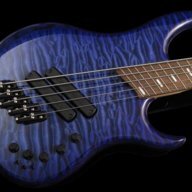
What is the relationship between pickup placement and playing style?
Is it as simple as "the more pickups the more tones you can get"?
So I think "just get a Z3 and cover all the tones."
I suppose that is true, but I probably don't need all possible tones. I'm a finger picking classic rock bassist who tries to slap occasionally but I can't slap worth poopie.
Is there a pickup layout that is ideal for my style?
I understand "bridge pu is trebly, neck pu is bassy." That's the limit of my understanding. Why a bass needs 3 pu is beyond me.
I own a v1 Combustion. Finest bass I've ever owned. Looking forward to upgrading to a made-in-Canada Dingwall.
I suppose if we are only speaking of playing live and a person knows they will only use one setting, one sound, and the 2x gets that particular "sound in your head" there probably is not the need for the 3x pickups. But I can also see if a person is using the bass to record, there is so much tonal ground that can be covered with the 3x. Especially with the S/P switches. This is the configuration I order with all our Canadian basses. Sure, it is an upgrade cost, but considering the small investment to get that wide a variety of sound we feel it is worth it. For me personally, I use only one setting of the NG2 because it IS the "sound in my head". But I have already thought of 2 or 3 other settings of the 3x for a couple of different songs I want to record.What is the relationship between pickup placement and playing style?
Is it as simple as "the more pickups the more tones you can get"?
So I think "just get a Z3 and cover all the tones."
I suppose that is true, but I probably don't need all possible tones. I'm a finger picking classic rock bassist who tries to slap occasionally but I can't slap worth poopie.
Is there a pickup layout that is ideal for my style?
I understand "bridge pu is trebly, neck pu is bassy." That's the limit of my understanding. Why a bass needs 3 pu is beyond me.
I own a v1 Combustion. Finest bass I've ever owned. Looking forward to upgrading to a made-in-Canada Dingwall.