

Enjoy the benefits of a premium membership!
Upgrade Account
-
TalkBass has been independent since 1998. Add your voice.
Create a free account to reply to discussions, view embedded media, and browse with fewer display ads.
Join free Log in
Want zero display ads or expanded classifieds tools? Compare plans.
You are using an out of date browser. It may not display this or other websites correctly.
You should upgrade or use an alternative browser.
You should upgrade or use an alternative browser.
Does a bass being a lightweight indicate a negative?
- Thread starter FishDub
- Start date
More options
Who Replied?
I own many basses. I don’t care about weight because I’m just a bedroom bass playing hack who plays seated.I ask this because I have read many threads on two different views of this, particularly in the classifieds. The first is that a nice, heavy, thick slab of wood in excess of 10-12 pounds accounts for unmatched, resonate tone quality(IE-Vintage Fenders/Musicmans). The other is the ongoing question of "weight?"...Weight isnt really a deal-breaker for me personally if I like the tone and balance, but I dont gig for hours either. So do most ask the weight because they want a heavy, resonant slab of wood OR do they ask because they want a super lightweight, or a bit of both? My Fender P/J is on the heavier side of 9.5-10 lbs but I love the tone. But, my 80s Japan Tune maniac is a featherweight at 7.5 lbs and that thing kills. Been curious about this..
Rest assured however that weight would certainly be an issue if I were a paid gigging musician doing 3 hour sets on a regular bases.
9.0 pounds would probably be the threshold.


I ask this because I have read many threads on two different views of this, particularly in the classifieds. The first is that a nice, heavy, thick slab of wood in excess of 10-12 pounds accounts for unmatched, resonate tone quality(IE-Vintage Fenders/Musicmans). The other is the ongoing question of "weight?"...Weight isnt really a deal-breaker for me personally if I like the tone and balance, but I dont gig for hours either. So do most ask the weight because they want a heavy, resonant slab of wood OR do they ask because they want a super lightweight, or a bit of both? My Fender P/J is on the heavier side of 9.5-10 lbs but I love the tone. But, my 80s Japan Tune maniac is a featherweight at 7.5 lbs and that thing kills. Been curious about this..
I am pretty confident in saying that weight doesn't necessarily mean a tonal difference. Sure, the technical approach towards the same "resonance response", but if done properly, it should all work.
With weight, I look at it a bit differently - it's all about the feel. A slab that is too heavy will feel like I'm dragging a heavy stone with me and, while offering a nice and stable playing platform, won't feel well on my shoulders after a 2-3 hour gig. My Fender Elite V is a good example of a slab, that is already nearing its weight limit for my shoulders, but I like it since it offers me a nice and stable platform I can pound on, and have a good response from it. I can slap it pretty hard and the body will mostly stay in a solid position.
Now truly featherweight bodies, like NYC chambered Sadowskys for example, feel to me personally as if I'm slapping a piece of paper - the body moves more, and, while easier to move around with, the extra movement of the body requires some getting used to and you can quite easily miss notes while playing. That might just be me though - I'm a 2.0m tall, 110kg dude and a 4lbs bass really does feel like paper on my shoulders.
So for me, I like to go to a happy medium - a nice solid piece of wood, that is neither too heavy, nor too light. For a 4 string bass, that would just about be the weight of a modern 4 string Fender Jazz.
So, experiment, try them, do gigs with them, and you'll see for yourself which fits you the most. We don't all wear the same model of shoes for the same reasons, nor should we all play the same bass with same weight.

It's like the difference between a thin girl and a fat girl. Body type isn't a predictor of her personality...or other skills
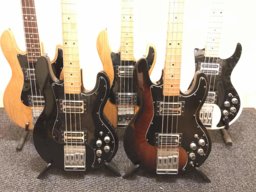
To me lighter basses always feel cheap… I’m sure it’s simply a personal preference thing but the lightweight basses I’ve owned (even quite expensive ones) always feel lacking somehow. I’ve been lucky to not have any shoulder/back injuries yet though… if I did, I’m sure I’d change my tune pretty quickly!
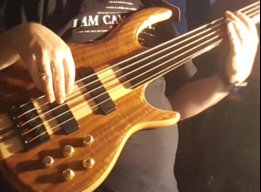
And then many of the world's greatest american guitar builders started using basswood for guitar bodies, due to the excellent properties for an electric guitar. The guitarist in one of my bands has a collection of extremely pricey instruments, and some have basswood bodies.Back in the day, the cheapo imports were made of basswood and stuff like that. They didn't sound that good and people drew the conclusion that light meant an inferior sound. This was likely due to crappy pickups, hardware, and poor setup. People don't like thinking beyond basic conclusions.
Funny how that went down... because you're exactly right about the history of basswood in cheap instruments.
sooooo is that heavy or light?
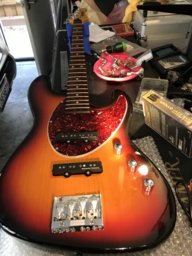
My experience with light basses is that they can be more prone to dead spots on the G and D strings and also to a boxy, thud-like, mid-range timbre. My best cheap basses are heavier, my best light basses are more expensive. I've never played a light bass that sounds 'like' my best heavy basses--everything matters--but my best light basses sound great. Some builders seem to want to build a light bass the same way they build a heavy bass, but I'm starting to believe that for light basses, more design emphasis on resonance modeling and QC to check for resonance issues, good midrange and note definition is needed. Maybe that's why the best light bass names are associated with some of the highest prices.
A second point: If I want to hear the sound of a tonewood in an electric bass, I go for a solid, non-chambered body (or if it's a good neck wood, add it to the neck). For weight reduction, I go with a lightweight species that I know well, because I think light species sound best when you know their limitations and work with them. For example, I can blend light Swamp Ash with a maple top or mahogany back and I have an idea how it will sound. I trust Swamp Ash to blend well with maple or mahogany, whereas maple or mahogany are great all by themselves, but heavier. I know I will prefer a Swamp Ash blend to chambering. If the bass body is all Swamp Ash, then I hear the neck wood and fingerboard more--and it still blends well. My Swamp Ash Corvette $$ sounds like Ovankol and Wenge primarily (yes, the neck/fretboard). Whereas my Swamp Ash Ibanez SR sounds like Wenge and Walnut with carbon inserts. Swamp Ash dilutes the mids of tonewoods in a certain way and makes the highs more airy--I'm OK with it because I'm used to it, but I would never say Swamp Ash is just as good as Mahogany or Maple. Go ahead and start a fad for 6 lb basses with laminated Swamp Ash necks (totally stable!) and chambered Basswood bodies and be happy. I won't be joining that party.
A second point: If I want to hear the sound of a tonewood in an electric bass, I go for a solid, non-chambered body (or if it's a good neck wood, add it to the neck). For weight reduction, I go with a lightweight species that I know well, because I think light species sound best when you know their limitations and work with them. For example, I can blend light Swamp Ash with a maple top or mahogany back and I have an idea how it will sound. I trust Swamp Ash to blend well with maple or mahogany, whereas maple or mahogany are great all by themselves, but heavier. I know I will prefer a Swamp Ash blend to chambering. If the bass body is all Swamp Ash, then I hear the neck wood and fingerboard more--and it still blends well. My Swamp Ash Corvette $$ sounds like Ovankol and Wenge primarily (yes, the neck/fretboard). Whereas my Swamp Ash Ibanez SR sounds like Wenge and Walnut with carbon inserts. Swamp Ash dilutes the mids of tonewoods in a certain way and makes the highs more airy--I'm OK with it because I'm used to it, but I would never say Swamp Ash is just as good as Mahogany or Maple. Go ahead and start a fad for 6 lb basses with laminated Swamp Ash necks (totally stable!) and chambered Basswood bodies and be happy. I won't be joining that party.
agreed. the 6 string bass I built from a kit (and highly customized - I'm currently attempting to build an alembic style series ii preamp for it out of raw electronic components... we'll see how that turns out)... anyway yea the bass is roughly 8.8lb, about 3 to 4 oz less than 9 pounds. the upper horn is around the 13th fret. Ash body, maple neck, no neck dive at all, and the lightest 6 I personally have ever owned (though that's out of only three 6 string basses that I've actually owned).On a six string bass.....maybe.
If the upper horn does not reach the twelfth fret,the light body will cause neck dive.
The body must have enough heft to counter the neck weight and two extra tuners.


A heavy bass does not equal big, beefy tone and a lightweight bass does not equal thin, weak tone.
The only time a lightweight bass is an automatic negative is from a chiropractor’s point of view.
The only time a lightweight bass is an automatic negative is from a chiropractor’s point of view.
Great points here. Without trying hard, I've ended up with my favorite 5 strings coming it at 9-10 lbs and I top out well below 11lbs, but I'm sure the sweet spot depends on the body that holds the fruit. The only lighter 5ers that I'd call favorites have solid swamp ash bodies--the lightest is an SR at 8.16 lbs, no chambering. I'm sure better-built chambered basses can be lighter and awesome--I just don't need to go there, yet. Likewise, I'll never experience the joy of producing the fabulous sounds that the best 12lb basses out there can make, but I'll get over it.So for me, I like to go to a happy medium - a nice solid piece of wood, that is neither too heavy, nor too light. For a 4 string bass, that would just about be the weight of a modern 4 string Fender Jazz.
So, experiment, try them, do gigs with them, and you'll see for yourself which fits you the most. We don't all wear the same model of shoes for the same reasons, nor should we all play the same bass with same weight.

The worst thing about a heavy bass is trying to sell it. The first words out of a buyer's mouth is........"how much does it weigh?" Weight seems to be the #1 concern when buying a bass.
One time I had an early 80s G&L L1000 it was mahogany. It was over 10 lbs. I had it up for sell on our local Craigslist. It was there for a full month. Zero interest. Then one day, I got an email from a buyer about 60 miles away. We talked on the phone about the Wunkay and he asked me, "how much does it weigh?". In my mind, I said, "It's over!".........When I told him it was like 10.5 lbs, he said, "perfect!" "I'll take it!" Wow! Was I ever surprised!
Final story about heavy basses. I had a used Fender Custom Shop 50th Anniversary 1951 P Bass. I paid $3,500 for it but I never asked how much it weighed before I bought it because being a Custom Shop Bass, I automatically assumed that Fender CS would go out of their way to make a light bass.
Came to the house. I put it on the scales........10 lbs 4 oz!!!!!!!!! I was so upset!!!!!!!!! A "boat anchor"!
I kept it for about 4 years and then put it up for sell on Reverb. No one would buy it at that weight! Finally, a person bought it and I lost over $700! Getting rid of it!
Lesson learned? If you buy a bass and ever expect to sell it on down the road sometime, it is harder than hell to sell a bass that's over the 9 lbs 4 oz mark.
(Sometimes up to around 10 oz can come off of a bass by going with alloy tuning machines, bent plate bridge (titanium) and ultra light knobs, plastic or alloy. Alloy neck plate also.)
One time I had an early 80s G&L L1000 it was mahogany. It was over 10 lbs. I had it up for sell on our local Craigslist. It was there for a full month. Zero interest. Then one day, I got an email from a buyer about 60 miles away. We talked on the phone about the Wunkay and he asked me, "how much does it weigh?". In my mind, I said, "It's over!".........When I told him it was like 10.5 lbs, he said, "perfect!" "I'll take it!" Wow! Was I ever surprised!
Final story about heavy basses. I had a used Fender Custom Shop 50th Anniversary 1951 P Bass. I paid $3,500 for it but I never asked how much it weighed before I bought it because being a Custom Shop Bass, I automatically assumed that Fender CS would go out of their way to make a light bass.
Came to the house. I put it on the scales........10 lbs 4 oz!!!!!!!!! I was so upset!!!!!!!!! A "boat anchor"!
I kept it for about 4 years and then put it up for sell on Reverb. No one would buy it at that weight! Finally, a person bought it and I lost over $700! Getting rid of it!
Lesson learned? If you buy a bass and ever expect to sell it on down the road sometime, it is harder than hell to sell a bass that's over the 9 lbs 4 oz mark.
(Sometimes up to around 10 oz can come off of a bass by going with alloy tuning machines, bent plate bridge (titanium) and ultra light knobs, plastic or alloy. Alloy neck plate also.)
Last edited:

Great points here..I do like when people are honest and say, "this one isnt light so if you have back problems then stay away from this bass"..lolThe worst thing about a heavy bass is trying to sell it. The first words out of a buyer's mouth is........"how much does it weigh?" Weight seems to be the #1 concern when buying a bass.
One time I had an early 80s G&L L1000 it was mahogany. It was over 10 lbs. I had it up for sell on our local Craigslist. It was there for a full month. Zero interest. Then one day, I got an email from a buyer about 60 miles away. We talked on the phone about the Wunkay and he asked me, "how much does it weigh?". In my mind, I said, "It's over!".........When I told him it was like 10.5 lbs, he said, "perfect!" "I'll take it!" Wow! Was I ever surprised!
Final story about heavy basses. I had a used Fender Custom Shop 50th Anniversary 1951 P Bass. I paid $3,500 for it but I never asked how much it weighed before I bought it because being a Custom Shop Bass, I automatically assumed that Fender CS would go out of their way to make a light bass.
Came to the house. I put it on the scales........10 lbs 4 oz!!!!!!!!! I was so upset!!!!!!!!! A "boat anchor"!
I kept it for about 4 years and then put it up for sell on Reverb. No one would buy it at that weight! Finally, a person bought it and I lost over $700! Getting rid of it!
Lesson learned? If you buy a bass and ever expect to sell it on down the road sometime, it is harder than hell to sell a bass that's over the 9 lbs 4 oz mark.

I've always felt the same way.
But I must say, I am 57, and this is the first year that I have picked up my Warwick 5 string and an audible involuntary "oof!" came out of my mouth.
Your first age-related “oof!” is like a baby’s first word. Too bad no one was around to document that historic moment.
There will be many more to come, now…


sooooo is that heavy or light?
It’s neither heavy or light! It’s Perfect

The middle way is always best… have a great weekend you all!

Caring about weight has gotta be some ven diagram of back injuries, gigging frequency, and age. Not sure how many people seek out weight for something other than the sake of weight.


