• TalkBass has been independent since 1998. Add your voice.
    Create a free account to reply to discussions, view embedded media, and browse with fewer display ads.
    Join freeLog in
    Want zero display ads or expanded classifieds tools? Compare plans.

Double Bass Does electric bass fingering work on double bass? No.

As the first post states, 1-2-3-4 methods exist. They are far from standard taught by a very teachers, HAVE NOTHING TO DO WITH ELECTRIC BASS and few videos of great players from the rarified world of classical solo bass are hardly proof of a wider applicability.

For classical solo playing it may or may not be the way of future, but certainly, we are not there yet.

Even still, the point of the thread is to point out the a bass guitarist's existing technique DOES NOT WORK on double bass.
Pursuing one of these methods to retain your bass guitar fingerings is not going to be very efficient nor is tracking down one of the few teachers who teach it going to be worthwhile.

Worse, and far more common the bass guitarist will try to figure it out on their own - which again, NEVER WORKS.

If it were to really happen, they would probably have to find a teacher that would take a beginner, learn a standard fingering system, and then practice enough to get into a school where one of these FEW great teachers teach or move to a their city get accepted as a private student.
Again, Zero cases of a one to one bass guitar technique working is still zero cases.
 
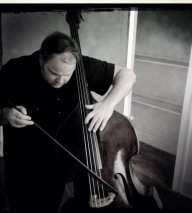
Well, I enjoyed watching that young man, but his technique had little to do with any sort of BG technique. Or fingering.

And I had trouble with my db teachers because I wouldnt stick to simandl when I was transitioning from the grid based, 1-2-3-4, approximately is good enough fretted bg technique. There are three beasts really, DB, BG and fretless BG. Different techniques and ultimate fingerings for all of them
 
That is a different scene all together!
What's different? You brought in the scenario of a ostinato with double bass and drums.Seriously, I have also seen not only Percy Heath use unconventional fingerings in low positions but also, Milt Hinton. Willie Dixon is another. I mention Milt and Willie because they have played in the unamplified settings too playing lots of unamplified ostinatos with drums. Milt uses a Bille fingering system 1-1-2 down low and so does Willie. Lot's of volume from what I heard. Not puny or unstable at all. It's different because..............?
 
It's different because..............?

Mainly, they are just using unorthodox technique - not trying to get a four finger span.
I am pretty comfortable with all four fingers after going through Billie a few times and I will use the third finger low when it feels right.
I have two days at my job where I have control of the stereo and I just did study of the MJQ. What an incredible band!
 
Mainly, they are just using unorthodox technique - not trying to get a four finger span.
I am pretty comfortable with all four fingers after going through Billie a few times and I will use the third finger low when it feels right.
I have two days at my job where I have control of the stereo and I just did study of the MJQ. What an incredible band!
Fair enough. MJQ are fantastic. Agreed. John Lewis used to carry around Bach scores with him. He said he would give Percy a part and then Percy would end up just being Percy.

I brought up Milt, Willie and Percy because I think they illustrate how an unorthodox fingering approach works well. I think a 4 finger system whether it be on BG or DB does not mean a rigid adherence to 1-2-3-4, as my examples illustrate.
 
Also, it should be noted, since Damon posted a link to Silvio Dalla Torre's website, that he plays in 5ths tuning and 4ths tuning as well. Here is an interesting excerpt from Joel Quarrington's website where he mentions rigid adherence Simandl fingering and the threat of injury in 5ths tuning. Since we looked at Silvio's perspective on fingering we might as well look at Joel's. Oh, yeah I know. "That's not what this thread's about". Yada, yada. (Just kidding Damon)


From Joel Quarrington's website:

"In Germany, piano maker and Double bass player Gustav Bushman attempted to reintroduce the bass in fifth tuning. In spite of encouragement by Wagner, Von Bulow and Nikish, he had to give it up because of fingering problems. The technical difficulties linked with the fifth tuning are of less importance for jazz musicians, who have no printed art to follow. This is why it is sometimes used by jazz bassists, such as the American Red Mitchell, who explains in a Newsletter of the International Society of Bassists that he finally settled on this system because it seemed the most natural solution to the problem of obtaining low C without the awkwardness of an extension or a five-string instrument. According to him, the fifth tuning makes it easier to play certain double stops such as tenths at the expanse of losing some ease of playing in the smaller intervals (seconds and thirds in particular). Scale passages tend to be played up the strings, and this tuning facilitates open positions triads. Italian virtuoso Isaia Bille found this system “more sonorous, ampler in its vibrations and more perfect in its acoustic and didactic proceeding” than the EADG type of bass. He rejected its use, however, owing to the frequent left-hand shifting it caused.

Mr. Bille certainly had the right appreciation of fifths, but with all due respect, he was wrong about the “frequent left-hand shifting.” In theory, it is natural to assume this to be the case as a player in fifths becomes much more sensitive to the keys works are played in, however the reality seems to be a slight increase in shifting that in my opinion does not make “frequent left-hand shifting” a reason to not play in fifths. I will grant this though: to play in fifths requires a solidly developed technique. A player who uses a rigid fingering system “a la Simandl” for instance, would find the difficulties overwhelming at times and injury a very real threat. An ability to play in all positions and strings of the instrument would be a definite advantage! Fingering solutions are a fascinating aspect of fifth tuning and sometimes call for clear lateral thinking that can be rewarding and amusing because the answer might be so far removed from anything you were ever taught! I would like to mention that although I did start out in this tuning in order to obtain a low C, it is not the reason I continued after I learned how difficult it would be to re-learn everything I knew. (Indeed, re-learning how to read music was the most difficult part. I play everything at pitch now.) No, the reason I continued was that for the first time in my career, I understood the intonation of the other instruments in the orchestra and the other stringed instruments in particular. I suppose I had always tried to play a sort of “tempered” intonation, especially with piano, but suddenly I had an instrument whose intonation is determined by harmonic function and response to itself, and a whole new world of intonation opened up to me. It was clear to me there was no way to turn back. This was too exciting!"
 
I didn't know you played fifths, Chuck! As I have said, I use dada a lot and I also have my 7 string I keep in fourths but has other patterns that make sense.

The point being: hanging on to specific fingers across instruments and even different tunings on the same instrument is not a great plan.

I tend to focus on just knowing where the notes are and trying to use the most musical and efficient way to get them.
 
I didn't know you played fifths, Chuck! As I have said, I use dada a lot and I also have my 7 string I keep in fourths but has other patterns that make sense.

The point being: hanging on to specific fingers across instruments and even different tunings on the same instrument is not a great plan.

I tend to focus on just knowing where the notes are and trying to use the most musical and efficient way to get them.
Bro! No way. Chris Symer is the resident 5ths player here at TBDB. I went to hear him at Charlie O's here in Los Angeles a while back. He's awsome, fingerings and all regardless of what Troy and Nathan say about him. Here's a link to my favorite former guitar player turned Double Bass player. This guy is off the charts:

Bo
 
Bro! No way. Chris Symer is the resident 5ths player here at TBDB. I went to hear him at Charlie O's here in Los Angeles a while back. He's awsome, fingerings and all regardless of what Troy and Nathan say about him. Here's a link to my favorite former guitar player turned Double Bass player. This guy is off the charts:

Bo

That guy is awesome. I think Turetzky played guitar first, too!
 
The point being: hanging on to specific fingers across instruments and even different tunings on the same instrument is not a great plan.

I tend to focus on just knowing where the notes are and trying to use the most musical and efficient way to get them.

Sorry if this is slightly OT, but why isn't hanging on to fingerings across instruments a great plan? If it works, you get to keep the same 'shapes' (technique excluded) so it'd be easier on the brain I'd have thought?

Surely that would help people know where the notes are? (like in a 1-2-4 EB and DB system, there's always a 5th between 1 and 4)
 
As the first post states, 1-2-3-4 methods exist. They are far from standard taught by a very teachers, HAVE NOTHING TO DO WITH ELECTRIC BASS.. existing technique DOES NOT WORK on double bass.

Well, this thread is about fingering, at least that's what the title and first post say it's about, and not technique, and I think that's where the bulk of the confusion lies.

If it were to really happen, they would probably have to find a teacher that would take a beginner, learn a standard fingering system, and then practice enough to get into a school where one of these FEW great teachers teach or move to a their city get accepted as a private student.

Michael Wolf in Berlin teaches young kids from beginner level, and teaches them 1-2-3-4 method. I'm not saying it'd be easy for someone to go from a BG 1-2-3-4 technique and start learning double bass with a 1-2-3-4 teacher, [thereby keeping the same fingering system (not technique!)], all I'm saying is that it's possible.

Again, Zero cases of a one to one bass guitar technique working is still zero cases.

This is baloney. What percentage (overall) of beginning students do we have, on average, that come to double bass after previously playing BG with a 1-2-3-4 system. I think 5% to 10% would be a conservative estimate. Seems as Mr. Wolf has been teaching beginners in Berlin to all ages for many years, I think it is safe to say that statistically, cases of someone using 1-2-3-4 fingering on BG and the using the same 1-2-3-4 fingering on double bass (not technique) DO exist.
 
Seeking out Michael Wolf because you want to hang on to your bass guitar fingerings is stupid and a profound waste of his time.
If you want to get on a classical soloist track, then yes.

So, sure it is possible to end up using the same fingers for the same notes - if you want to play classical solo music.
It is still far from proven outside of that world - my theory is that those bassists practice so much that really doesn't matter what fingers they use.

Seriously, you need to find a thread about four finger technique and stop quibbling over the title. It means their existing technique won't work. Drop it.
 
Well, this thread is about fingering, at least that's what the title and first post say it's about, and not technique, and I think that's where the bulk of the confusion lies.

I'm confused. How can 'fingering' and 'technique' be separated?

I think what Damon is getting at is there is a very different 'technique' involved in using 1-2-3-4 on DB vs EB.

I think the misleading thing about this thread is equating 1-2-3-4 fingering with EB fingerings. It seems you guys are talking past eachother.
 
fingers said:
I'm confused. How can 'fingering' and 'technique' be separated?

From page 1, and when you put it in context, there's no argument:

Bass guitar fingering patterns work just fine for double bass, but they are best played with different fingers on DB than on BG. Anyone who has absorbed the concept of different "box patterns" for various types of scales on guitar or BG will not have to abandon the concepts of the basic shapes as they relate to interval structures, but they will have to have a different concept of how to finger these patterns to have much chance of playing them in tune in various parts of the DB neck.

One concept I've had a lot of luck teaching with students is the notion of learning three basic major scale box patterns in thumb position (TP), where the four finger patterns can easily be transposed from a 1-2-3-4 fingering to a T-1-2-3 fingering. Once some fluency has been gained up in this position, the whole "across the neck" concept seems to flow more freely down lower on the neck, using pivots and shifts to reach the outside intervals of the boxes. As always, intonation is usually the major stumbling block, but I think the concept of the BG/Guitar-derived box relationship of the notes (kind of like musical chess) is very useful.

Yeah, there is a strong relationship between the two. I use my bass guitar to work out chordal ideas a lot because it does transfer. You do need to learn the fingering from scratch.
If you already play bass guitar and want to learn double bass you don't have to re-learn everything but you do have to re-learn everything!

Maybe this is at the heart of the misunderstanding?
 
One concept I've had a lot of luck teaching with students is the notion of learning three basic major scale box patterns in thumb position (TP), where the four finger patterns can easily be transposed from a 1-2-3-4 fingering to a T-1-2-3 fingering. Once some fluency has been gained up in this position, the whole "across the neck" concept seems to flow more freely down lower on the neck, using pivots and shifts to reach the outside intervals of the boxes. As always, intonation is usually the major stumbling block, but I think the concept of the BG/Guitar-derived box relationship of the notes (kind of like musical chess) is very useful.

Chris, I don't quite understand the term 'box' fingering, but I assume its the various chordal shapes that can be achieved in a 1-2-3-4 hand position on EB. If I'm misunderstanding please excuse me!

I completely agree that the 1-2-3-4 'concept' (T-1-2-3) and shapes can be transferred to a 1-2-4 system lower down, in fact I found this to be a revelational in my understanding of the bass, especially with 'across the fingerboard' fingerings like you said. Gradually the fingerboard started to feel like a keyboard, the chordal shapes became intuitive. I'd imagine that this would be really advantageous to jazz players as their chordal understanding of the instrument is arguably more important than classical players.

But it's not a perfect system - having to think one fingering system and play another - which is why I think a full-intrument 1-2-3-4 system (is this BG box fingering?) is the ideal system for BGists who want to transfer their already formed shapes, as difficult as it would be to find a teacher. Of course the LH techniques will differ, but that fundamental fingering system will obviously transfer.

To be able to use the DB to work out chordal patterns à la EB would be a great tool for those of us who play both instruments, I'd imagine. Of course due to the few numbers of teachers using this method today, it's going to be very, very difficult to actually do this. But I'd argue that it's good to know that it's possible, and in the future, as Della Tore said, it may very well be the way all DBists play.
 
Chris, I don't quite understand the term 'box' fingering, but I assume its the various chordal shapes that can be achieved in a 1-2-3-4 hand position on EB. If I'm misunderstanding please excuse me!

The patterns can be achieved that way, but as I could never play them in tune with 1-2-3-4 fingering on fretless DB, I didn't transfer them to the DB that way when I picked them up. I'm coming at this from a different place still, as my first (two year) degree was in classical guitar. On that instrument, 1-2-3-4 makes sense to me. When I picked up BG it was still possible but not comfortable, so I altered it, and when I started playing fretless, my intonation was terrible trying to play 1-2-3-4, so I went another direction with the fingerings. The patterns remained intact, but the fingerings themselves were altered to facilitate better intonation.

...I'd imagine that this would be really advantageous to jazz players as their chordal understanding of the instrument is arguably more important than classical players.

But it's not a perfect system - having to think one fingering system and play another.

I can't speak to the rest of what I edited out from the above as I've never gotten 1-2-3-4 to work as a fingering system down low, and by the time get to the middle of the neck I'll just go into low thumb position if I need the extra finger. But again, it doesn't feel like "thinking of one fingering system and playing another" to me, it's just a different vernacular of the same language. It's the transfer of the patterns themselves that matters - the fingerings are just another skill set to learn to apply to the patterns. I never feel like any performance is a good one if I play out of tune, so for me it makes sense to finger in a way that facilitates good intonation rather than try to make a concept easier. If I couldn't do it on a 34" scale fretless BG, it only makes sense that it would be harder on a 42" scale DB. Again, though, that's just me, and everyone else's mileage may vary.