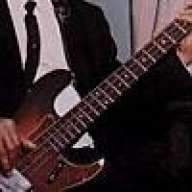
Wow, installing those flats was unexpectedly difficult. But they're on now and sound pretty excellent unamplified - stoked to try them with headphones today.

TalkBass has been independent since 1998. Add your voice.
Create a free account to reply to discussions, view embedded media, and browse with fewer display ads.
Join free Log in
Want zero display ads or expanded classifieds tools? Compare plans.

Wow, installing those flats was unexpectedly difficult. But they're on now and sound pretty excellent unamplified - stoked to try them with headphones today.
It might have just been me, but EB provides instructions for how to wind the strings onto the posts - I'd never done it like that before and found it difficult to do per their instructions.I have never played with flats before, let alone installed them. Been thinking about trying it though. What is the difficulty with installing them?

I have flats on both of my StingRay Special HH's. T.I. flats on one and DR Legends on one. I installed them the same way I always do (not the Ernie Ball recommended way) and it's fine. Both sound killer, as well. Maybe if you use Ernie Ball flats, their winding method might be the way to go. But I love the T.I.'s and the DR flats.It might have just been me, but EB provides instructions for how to wind the strings onto the posts - I'd never done it like that before and found it difficult to do per their instructions.
But the strings are on and sound killer.
It might have just been me, but EB provides instructions for how to wind the strings onto the posts - I'd never done it like that before and found it difficult to do per their instructions.
But the strings are on and sound killer.
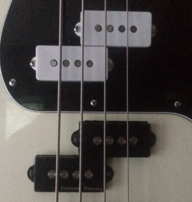
I used to feel that way. Then I got a Ray25. I sold that and got a Big Al5H. And a Stingray Special 5HH. And a Big Al 5SSS. And a Bongo 5HH. I still have my P bass, but have sold all my other passive basses. Both are great in their own way, but the necks and tonal variability of Music Man basses are the best.I'm kind of in the same boat, always been intrigued by the StingRay but have always just stuck with my Fender's (mainly P's). I know their different, but I suppose my main concerns is active as I always played passive electronics and also finding my way around the neck to also find a great sound. I would like to branch out but the little voice in my head always pulls me back to Fender's and P's and says "don't fix what is not broke and just works."

If you ever run across one again, the only action should take is buying it right then and there.I played a Big Al 5SSS once in a Guitar Center outside of Boston in December 2012.
It still visits me in my dreams.
I had about $75 to my name back then so I was in no position to buy it. I did have a friend who worked there and, in retrospect, I should have talked to him about any and all ways I could have made it happen.If you ever run across one again, the only action should take is buying it right then and there.
I love my Big Al 5SSS as much as I do my Stingrays. They are amazing basses. Different from a Stingray, yes, but equally amazing.
These statements are very true. As much as the preamp in the Big Al is ludicrous, the secret sauce is that the Big Al SSS sounds fantastic passive, too. I play mine passive most of the time (neck and middle pickups).If you ever run across one again, the only action should take is buying it right then and there.
I love my Big Al 5SSS as much as I do my Stingrays. They are amazing basses. Different from a Stingray, yes, but equally amazing.
I agree 100%. I play mine passive with the neck and middle pickups 1/2 to maybe 2/3 of the time and the use the passive tone control and my plucking position to vary it.These statements are very true. As much as the preamp in the Big Al is ludicrous, the secret sauce is that the Big Al SSS sounds fantastic passive, too. I play mine passive most of the time (neck and middle pickups).
Thanks for the insight. I guess I am not against trying something new, I just never did because the Fender just always worked for me. I'm get more comfortable to the idea of something different, I'll likely pull the trigger on a StingRay or a Spector. Of course, I'll plan to keep my best Fender(s) close.I used to feel that way. Then I got a Ray25. I sold that and got a Big Al5H. And a Stingray Special 5HH. And a Big Al 5SSS. And a Bongo 5HH. I still have my P bass, but have sold all my other passive basses. Both are great in their own way, but the necks and tonal variability of Music Man basses are the best.

I ordered the day after you. I wonder if they work on CDE basses one at a time,..... naww surely not!Just got an email from ups that a label was created for my custom design experience bass!!! Ordered on October 10th,


