Gosh. Fender instruments are what they are, their qualities are obvious to those that have played them - some like them, the others don't. Why all the fervour?
From Carol Kaye's own mouth, in passim: the fender bass worked for what I played back then - I'd get them professionally set up and never bother with changing strings... it was quicker to buy a new one already set up... Not at a level of my Epiphone Emperor jazz guitar (Epiphone used to be more appreciated than Gibson way back then) but it worked. I'm sure we'll get the thread locked now that I dragged Carol in, right? Chuck Rainey recorded 'Aja' on a P Bass - he then went on to use a Ken Smith 6, which he felt was a superior instrument (at thrice the cost, it had better be!). But he'd play whatever the producer demanded. etc etc - you can take any old time cat and they played Fenders because that worked in the studio (and live). And recording was their job. Stating that Fenders were used for any other reason than that they delivered the goods is deluded or ignorant. The price was of course a bonus for musicians.
Leo Fender saw an opportunity, designed a product that enabled him to take advantage of that opportunity, end of story. He was a very talented designer who wasn't stuck in his ways, that much is obvious to anyone who looks at how his designs evolved from Fender to Music Man to G&L. Fender the company pioneered economies of scale in musical instrument production --> decent overheads at prices well undercutting Epiphone and Gibson. Fender the man understood the need to optimize quality/cost and did just that. Like any talented designer. I'm fairly sure that as the economical impetus for an affordable, amplified bass that guitarists could double on was there, sooner or later we'd have had a profusion of slab-bodied electric basses. There was money to be made, and the invisible hand of the market would have ensured that something would've emerged. And we'd consider that something 'the standard' now.
It isn't rocket science, it's electrical engineering.
Fender amps are derivative of RCA schematic book designs. They work. Someone else would have stumbled on the same designs, eventually. The classic recordings may have sounded a little different, but in the end, amplifying a signal can only be done in so many ways.
To attribute the birth of electric bass and rock'n'roll bass tone's whole existence to Leo Fender is folly - it's called 'the great man theory of history' in historical scholarship. World War II was not fought because Hitler and Stalin were evil men in power, but because the circumstances in Europe virtually guaranteed an armed conflict. To only look at Hitler and Stalin is to miss the context precludes any real understanding of historical events. Great Man theory of history is thoroughly bunked, this is political science 101 stuff here. Fender the company created and marketed products that delivered the goods then. As of today, hand-made instruments are available at prices directly competitive with high-end assembly line products, and it's never been better for the shopping musician. Buying Fender is the safe, and by safe I mean socially acceptable, choice, but for attention to detail and QC, my money is better spent elsewhere. I personally do not think Fenders sound remarkably, or at all, better than, say, G&Ls and cannot stand the 50's aesthetics of Fender's main line of instruments, much as I reject the 50's American design as a whole and the modernist progressive narrative that is to blame for much of the world's current ills.
Yes, I've spent a lot of time at a university.
From Carol Kaye's own mouth, in passim: the fender bass worked for what I played back then - I'd get them professionally set up and never bother with changing strings... it was quicker to buy a new one already set up... Not at a level of my Epiphone Emperor jazz guitar (Epiphone used to be more appreciated than Gibson way back then) but it worked. I'm sure we'll get the thread locked now that I dragged Carol in, right? Chuck Rainey recorded 'Aja' on a P Bass - he then went on to use a Ken Smith 6, which he felt was a superior instrument (at thrice the cost, it had better be!). But he'd play whatever the producer demanded. etc etc - you can take any old time cat and they played Fenders because that worked in the studio (and live). And recording was their job. Stating that Fenders were used for any other reason than that they delivered the goods is deluded or ignorant. The price was of course a bonus for musicians.
Leo Fender saw an opportunity, designed a product that enabled him to take advantage of that opportunity, end of story. He was a very talented designer who wasn't stuck in his ways, that much is obvious to anyone who looks at how his designs evolved from Fender to Music Man to G&L. Fender the company pioneered economies of scale in musical instrument production --> decent overheads at prices well undercutting Epiphone and Gibson. Fender the man understood the need to optimize quality/cost and did just that. Like any talented designer. I'm fairly sure that as the economical impetus for an affordable, amplified bass that guitarists could double on was there, sooner or later we'd have had a profusion of slab-bodied electric basses. There was money to be made, and the invisible hand of the market would have ensured that something would've emerged. And we'd consider that something 'the standard' now.
It isn't rocket science, it's electrical engineering.
Fender amps are derivative of RCA schematic book designs. They work. Someone else would have stumbled on the same designs, eventually. The classic recordings may have sounded a little different, but in the end, amplifying a signal can only be done in so many ways.
To attribute the birth of electric bass and rock'n'roll bass tone's whole existence to Leo Fender is folly - it's called 'the great man theory of history' in historical scholarship. World War II was not fought because Hitler and Stalin were evil men in power, but because the circumstances in Europe virtually guaranteed an armed conflict. To only look at Hitler and Stalin is to miss the context precludes any real understanding of historical events. Great Man theory of history is thoroughly bunked, this is political science 101 stuff here. Fender the company created and marketed products that delivered the goods then. As of today, hand-made instruments are available at prices directly competitive with high-end assembly line products, and it's never been better for the shopping musician. Buying Fender is the safe, and by safe I mean socially acceptable, choice, but for attention to detail and QC, my money is better spent elsewhere. I personally do not think Fenders sound remarkably, or at all, better than, say, G&Ls and cannot stand the 50's aesthetics of Fender's main line of instruments, much as I reject the 50's American design as a whole and the modernist progressive narrative that is to blame for much of the world's current ills.
Yes, I've spent a lot of time at a university.
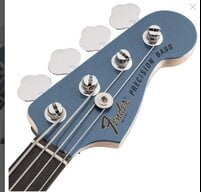


 Ask Marcus Miller and Geddy lee and Steve Harris why they use old 70's Fenders...they are all crap. If you like Fender ...and some of us do for those keeping score..great! If you dont, I'm not going to crawl in a corner and weep over it.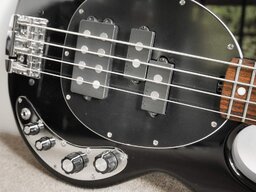
 , now sports a Fender Geddy Lee Jazz Bass in his gear profile
  !!!
!!! ..You don't say!