- Feb 16, 2008
- 21,240
- 23,638
- Disclosures
- John K Custom Basses

TalkBass has been independent since 1998. Add your voice.
Create a free account to reply to discussions, view embedded media, and browse with fewer display ads.
Join free Log in
Want zero display ads or expanded classifieds tools? Compare plans.
i wouldn't recommend adjusting the bias on one.

Any updates on this? I'd like to grab one at the store, but from what I understand, there really is no way of telling without opening the pedal...
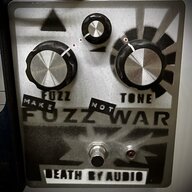
Oh no. I just ordered a new one. My old one didn't have trim pots or any SMD's.the new ones with the trimpots would be dialed in at the factory for optimum sound. i see that he's using SMD jfets
There has been a change in Jfeds?that's hard to say. i think that the new ones with the trimpots would be dialed in at the factory for optimum sound. i see that he's using SMD jfets in them which are more consistent that the TO-92 Jfets that have been discontinued, but i also saw that there's mounting holes on the PCB for the old type.
View attachment 3623648
Sorry, I didn't checked this thread since a long time.
Here's the pic of the front.
I have to say I really dig this pedal, I prefer it over my Fifth Gear that was on my pedal board previously in place of my Barbershop.
The one difference between the two I have is that one has a green and the other a white-ish PCB...and was there more to the different coloured pcbs than just the colour(any further changes, I may not be able to spot)?
I always use the older of the two( with green PCB)
Did you ever find an answer to this?Quick question for the Fairfield users:
I've heard there are people running the Barbershop at 18v, which will change the tone; is this true?
Does anyone know if the Modele B can also be run at 18v?
Did you ever find an answer to this?
With this in mind, you may not be able to get adequate drive using a higher voltage power supply if your instrument has a low output level. Maybe a good solution though if your instrument has a very high output level (like some active basses do).It works fine at 18v. More clear less distorted.
From the manual:
The Model B Barbershop was designed to operate
using your typical centre negative, regulated 9-9.6
VDC power supply. The pedal is protected against
reversed polarity. The pedal will function with
voltages up to 18 VDC but the character of pedal
will drastically change. The higher the voltage, the
less drive you will have.