

Enjoy the benefits of a premium membership!
Upgrade Account
-
TalkBass has been independent since 1998. Add your voice.
Create a free account to reply to discussions, view embedded media, and browse with fewer display ads.
Join free Log in
Want zero display ads or expanded classifieds tools? Compare plans.
You are using an out of date browser. It may not display this or other websites correctly.
You should upgrade or use an alternative browser.
You should upgrade or use an alternative browser.
Fender Lame-o American design experience Fail
- Thread starter Kirk Bryant
- Start date
More options
Who Replied?
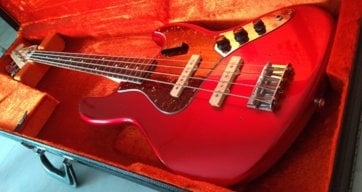
It is not uniqueness though what we are always after - one may want a top-quality Fender in the color/wood combination of his/her likings, another might go for a reincarnation of a specific vintage Fender (OP being an example) and so on. In cases like these, Fender's Custom Shop is a solid choice.Yeah. I thought the appeal of Fender was that they are "the industry standard" and therefore NOT unique. It's kinda difficult to be "classic" and "standard" and "fresh" and "unique" at the same time.

By "road worn" they mean "dragged behind a pickup truck", right?Fender? Hyping something that's underwhelming? That cannot be!! (pawn shop/road worn/carbonita/etc etc etc etc)


Hehe - I'm one of those folks who definitely does not want to "turn my vision into reality".While maybe the OP is extremely passionate about the downsides to this, I do have to agree him. There are fewer options in the 'Design Experience' than if you just browse their basses on their website the old-fashioned way, and anyone who's been window shopping on their website for a while knows that. While it is just a marketing ploy, it's a marketing ploy which is designed to get people who literally have no clue otherwise to think they're getting a custom deal at the expense of the appreciation of life-long Fender fans.
The "turn your vision into a reality" slogan does not reflect the experience at all, which is very disappointing.


A few years ago, I commissioned a P/J Bass build by a local luthier and got it for about the price of an American Standard.
Earlier this year, I did my dream P-Bass build with Warmoth and various other suppliers. Granted, I did all the finishing and construction myself, but it ended up setting my back about $700. In both cases, got EXACTLY what I wanted, and several options aren't even available from Fender.
Earlier this year, I did my dream P-Bass build with Warmoth and various other suppliers. Granted, I did all the finishing and construction myself, but it ended up setting my back about $700. In both cases, got EXACTLY what I wanted, and several options aren't even available from Fender.
Remember, you are unique. Just like everybody else.It is not uniqueness though what we are always after - one may want a top-quality Fender in the color/wood combination of his/her likings, another might go for a reincarnation of a specific vintage Fender (OP being an example) and so on. In cases like these, Fender's Custom Shop is a solid choice.

 It is just that some basses look identical.

Our Fender rep told me about the feature awhile before it was released, but I was pretty underwhelmed by the customization options. Fender is still our favorite company to work with though.


Notice that the image I saved from my Design Experience build has the very same hump in the lower cutaway contour that you had on your actual bass!Well, you're actually quite late to the party on this as there has been a lengthy thread about it already: Fender American Design Experience | TalkBass.com
As you can see, there have been some good and some bad experiences with it. I love the look of mine which includes a Modern P-Bass American Standard body in Ash, an American Standard Jazz neck with a maple fretboard, a High Mass Vintage bridge and and a 68' P-Bass pickup. Mine is in Translucent Blonde.
The American Design Experience is NOT a custom shop bass. If that's what you're hoping for at this price point, you'll be disappointed (or apparently, a bit angry). For me, it allowed me to build an American Standard P-Bass with an American Standard Jazz neck (something that is NOT available from Fender in any other MIA bass), in a color I love, that's a genuine Fender as opposed to parts bass. Of course, it does cost a few hundred more than an American Standard. It's worth it to me.
Now, mine had some QC issues which I discuss with photos here: Fender American Design Experience | Page 47 | TalkBass.com That to me is the inexcusable part worth getting riled-up about. Fender took it back and has milled a new body and it should be back to me within 2 weeks
Putting those QC issues aside for the moment, just accept that it's a "limited option" type of program which may expand in the future to include additional options. Believe me, I have my issues with Fender (and prefer my Lakland USAs), but I think you maybe need to consider this a pilot program that could expand down the line. Of course, you can also simply ignore it and let the market dictate whether the offerings have value or are too limited.
Let's not forget that there is a similar production anomaly with some older Fenders that is considered a hallmark of the era it originated from. This could be considered a identifying characteristic of the ADE basses for years to come! Let's face it, it does not affect playability and it's also not visible from the most important angle.
Last edited:
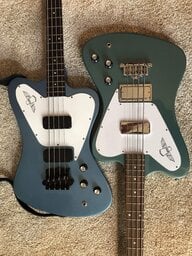
Magic.Amazing! You got that with black hardware! How could they do that?
Ok. I'm a fan. The company recently had a change at the top. He is a fan too. My guess is that he is well aware of what we, the enthusiasts, are saying. Give the guy some time. What I do believe, is that the company is filled with a lot of employees who care. And they make some darn nice instruments. There. I said it. I feel much better now.
Is that a bubinga neck with wenge fretboard?

Ever heard of the concept of tempering your expectations?
Yes. But by the same token there's also something called "managing customer expectations" which wise companies pay careful attention to doing.
Managing customer expectations takes two forms:
1) Don't offer - or appear to be offering - something you are unable or unwilling to deliver. Failure to do so can expose you to possible legal sanctions if a court or government regulatory agency determines that a reasonable person, without expertise in the finer points of your business or industry, would draw the wrong conclusion, or make a bad decision for themselves based on what you are advertising.
2) From a pure marketing, company credibility, and "customer experience" perspective, take extreme care to be sure what you are offering can't be misinterpreted or misconstrued insofar as it's humanly possible. Because while you may well not be violating any laws, having disgruntled and unhappy customers is never in the best interests of the company or its business. This includes not having your own definitions for commonly used and understood terms such as "free" or "guaranteed for life."
Not to knock Fender (too much
 ) but in the case of their "design" offering, they're really not letting you 'design' anything. They're offering a fairly small and fixed number of personalization options. You aren't for one second designing anything through their service. You're effectively walking through their stockroom, looking in their part bins, and picking components from their existing inventory of already designed and manufactured parts. And those choices don't include every part they sell, or option they offer. Just a fairly focused subset.
In short - you get to have them bolt together the equivalent of a FrankenBass or FrankenGuitar. Even the 'custom' shop is a bit of a misnomer in that regard. It's 'tinker-toy manufacturing.' Not custom crafting.
It's really more like what car manufacturers offer their customers. Choose a product family; start with a small number of base models within that family, and then choose what options you want in it. And pick a color - with the understanding that not all options or colors are available on all models.
But car manufacturers make that perfectly clear up front and in their advertising. They don't spring it on you in the showroom. And they certainly don't call it "designing your new car." They make it clear you are selecting pre-defined components and packages. And that although there are choices you can make, those choices are limited.
And the car buyer is ok with that. Because they have no illusions they're getting to actually design their own car. They're personalizing it. And theres a major conceptual difference between the two. At least in the dictionaries I'm familiar with.
Fender doesn't seem to understand that. Because they're using an auto industry idea - but clothing it in musical industry terms and phrases.
When you say custom bass, I (and many others) think: every aspect of this instrument was specifically selected and executed for this particular instrument. It was hand-fabricated, expertly hand-assembled, expertly set-up to an individual customer's specifications - and it's truly one of a kind.
Custom luthier shops and botique designers can do that. Fodera comes very close to doing it. Fender does not.
Maybe I'm being a little short with Fender. But I also worked for Fortune 500 (number 5 to be precise) and have run my own business for close to 30 years now. And as both an employee of someone else's company - and owner/president of my own - I'm painfully aware of how important it is not to play semantic games - either intentionally or (even more importantly) unintentionally - with one's customers.
Fender needs to clarify. And tone down some of their claims about "design" and "custom" offerings. Because it's not only the right thing to do. It's the smart thing to do.
Or so I think anyway.

Last edited:

- Aug 21, 2003
- 11,601
- 18,637
- Disclosures
- A-Designs Mike Lull GK Tsunami Cables GHS Strings RMI Basswitch Nordstrand Pickups Darkglass
I you can do that through Warmoth for a fraction of the price. Just have it put together with some who had some experience.unless you want a fender....in which case you can go the custom route and customize to your hearts desire
Wow there's alot of meat there...I glad you tempered your statement with that last line. Certainly not everyone agrees with all of your views.Yes. But by the same token there's also something called "managing customer expectations" which wise companies pay careful attention to doing.
Managing customer expectations takes two forms:
1) Don't offer - or appear to be offering - something you are unable or unwilling to deliver. Failure to do so can expose you to possible legal sanctions if a court or government regulatory agency determines that a reasonable person, without expertise in the finer points of your business or industry, would draw the wrong conclusion, or make a bad decision for themselves based on what you are advertising.
2) From a pure marketing, company credibility, and "customer experience" perspective, take extreme care to be sure what you are offering can't be misinterpreted or misconstrued insofar as it's humanly possible. Because while you may well not be violating any laws, having disgruntled and unhappy customers is never in the best interests of the company or its business. This includes not having your own definitions for commonly used and understood terms such as "free" or "guaranteed for life."
Not to knock Fender too much, but in the case of their "design" offering, they're really not letting you 'design' anything. They're offering a fairly small and fixed number of personalization options. You aren't for ine second designing anything through their service. You're effectively walking through their stockroom, looking in their part bins, and picking components from their existing inventory of already designed and manufactured parts. And those choices don't include every part they sell, or option they offer. Just a fairly focused subset.
In short - you get to have them bolt together the equivalent of a FrankenBass or FrankenGuitar. Even the 'custom' shop is a bit of a misnomer in that regard. It's 'tinker-toy manufacturing.' Not custom crafting.
It's really more like what car manufacturers offer their customers. Choose a product family; start with a small number of base models within that family, and then choose what options you want in it. And pick a color - with the understanding that not all options or colors are available on all models.
But car manufacturers make that perfectly clear up front and in their advertising. They don't spring it on you in the showroom. And they certainly don't call it "designing your new car." They make it clear you are selecting pre-defined components and packages. And that although there are choices you can make, those choices are limited.
And the car buyer is ok with that. Because they have no illusions they're getting to actually design their own car. They're personalizing it. And theres a major conceptual difference between the two. At least in the dictionaries I'm familiar with.
Fender doesn't seem to understand that. Because they're using an auto industry idea - but clothing it in musical industry terms and phrases.
When you say custom bass, I (and many others) think: every aspect of this instrument was specifically selected and executed for this particular instrument. It was hand-fabricated, expertly hand-assembled, expertly set-up to an individual customer's specifications - and it's truly one of a kind.
Custom luthier shops and botique designers can do that. Fedora comes very close to doing it. Fender does not.
Maybe I'm being a little short with Fender. But I also worked for Fortune 500 (number 5 to be precise) and have run my own business for close to 30 years now. And as both an employee of someone else's company - and owner/president of my own - I'm painfully aware of how important it is not to play semantic games - either intentionally or (even more importantly) unintentionally - with one's customers.
Fender needs to clarify. And tone down some of their claims about "design" and "custom" offerings. Because it's not only the right thing to do. It's the smart thing to do.
Or so I think anyway.
- Not everyone feels duped by Fender and many find the Design Experience to be a cool offering by Fender.
- Some people, including the craftsman that put their hearts into their work at Fender Custom Shop, think that the Fender Custom's are anything but "tinker-toy" level products.
- It's Fodera not Fedora!

I rather liked the configuration tools on The Fender site.
No, it isn't a Custom Shop bass, but it is better than having to take what you find in a retail store. You can get very nearly any mainstream/mass produced option you want, and see a nice mock-up of what will arrive at your door for around or even under 2K.
It is what it is. If you want very early Fender configurations, or rare accoutrements, break out the checkbook and shell out 5 or 6 thousand dollars, or more.
No, it isn't a Custom Shop bass, but it is better than having to take what you find in a retail store. You can get very nearly any mainstream/mass produced option you want, and see a nice mock-up of what will arrive at your door for around or even under 2K.
It is what it is. If you want very early Fender configurations, or rare accoutrements, break out the checkbook and shell out 5 or 6 thousand dollars, or more.
Huh? Black hardware isn't terribly hard to find...Amazing! You got that with black hardware! How could they do that?


