
That does in fact go both ways.You know that you can just change the channel, right?

TalkBass has been independent since 1998. Add your voice.
Create a free account to reply to discussions, view embedded media, and browse with fewer display ads.
Join free Log in
Want zero display ads or expanded classifieds tools? Compare plans.
That does in fact go both ways.You know that you can just change the channel, right?


How many knobs still have the "F" cap?
 The only original parts are the wood, the nut, the string tree, the neck plate and bolts.

I rarely chime in on issues about the quality of an instrument manufacturer's products, but the past month has been a parade of flubs by Fender that I can't ignore. I am not talking about instruments which have been on the wall of a Guitar Center for months, or product that is used in any way. All of these examples are from brand new stock straight from Fender, and in their original packing boxes. I will start with instruments at the lowest price range, and advance to the more expensive ones.
Case #1-New Charvel San Dimas 4 Bass.
This bass came with fairly deep sander cuts in the body that were painted over in two areas. It also had the noisiest circuit I have ever heard. The wires for the preamp and circuit are so convoluted, that it is difficult to trace them through the circuit. The bass is unusable from the factory due to the buzz and the microphonic pickups. Very poor shielding is part of the issue.
Case #2-New Charvel San Dimas 5 Bass.
Straight out of the box, this bass caught my attention when I saw that the Lumilay side dots had excessive chipping or tear out around them of the maple fingerboard. I also saw similar tear out around the fingerboard inlay dots on top. I looked on line at some other Charvels, and saw they also had similar tear out. This is simply the result of worn tooling. Change the bits once in a while guys!
When I plugged in the bass, I noticed that when the pan pot was in the middle, the pickup's signal became weak and thin. A clear sign that the pickups are wired out of phase. Who missed this incredibly obvious mistake at the factory? Only one of the pickups is a Dimarzio, but nobody figured out that the wiring codes are different between the neck and bridge pickups.
Case#3-New USA Vintage Series Fender '60 Precision Bass.
You would think that the $2100.00 USA made Fender bass would be free of issues, but guess again. This bass started out with a massive amount of brown epoxy at the 6th fret, which was put there to fill a large knot with radiating cracks around it. I have NEVER seen such a blatant repair on any Fender! Then I plugged in the bass, and when I turned up the volume all the way, it was fine. But, when rolling off the volume, there was a thinning of the signal and the tone knob was not functional. As with the other recent Fenders on my bench, I had to go into the circuit for a fix. To my surprise, they had soldered the hot wire from the pickup to the lug for the output jack! Is there any circuit more basic than that of a Precision Bass? How do you mess that up when you only have one job all day? How does the quality control guy miss the fact that the tone knob is non functional?
I don't know what is going on at Fender these days, but they had better fix it before it gets too out of control. Since this is a bass forum, I won't go into the issues I have had with the vast amount of Fender guitars that come in my shop, but let's just say it is getting worse day by day. Hey, if Fender wants to keep screwing up on simple stuff, it is great for my business, but I want them get back on track so when I buy a new instrument, I don't have to waste time tracking down circuit problems etc. Hopefully this discussion will clue some folks in to what may be wrong with their new Fender products, but more than that, I hope it gets the management at Fender to re-evaluate their employees and quality control. I will say that the fret jobs are better than ever, and the necks are quite stable. Once I did the work on these instruments, they came out great and play beautifully. Setup work is one thing, but wiring issues and finish flaws are quite another. View attachment 4840217
I disagree… when I start considering a $2100 purchase, the first thing I do is hit the internet to look up reviews and experiences with the product. This is EXACTLY the type of thread that I look for. If you don’t see the point of talking about a bass on “Talkbass”, then I don’t know what to tell you.I'm struggling to understand the point of this thread. If you have a beef with Fender QC, then please talk to Fender about it.
The only thing a thread like this accomplishes is a "pile-on" effect where others chime in to bitch about their perception of poor QC.
This is Luthier's Corner where we discuss building instruments, this isn't the suggestion box or customer service for Fender.

Still not getting the point. You can't be a luthier for as long as I have been and not expect all sorts of problems from Fender and every other manufacturer out there. I wake up knowing that today will bring me factory flaws from Fender, but in the past couple of months, it has increased in frequency, and I am simply pointing out that something has changed at the factory to allow for more flubs to pass inspection. The point here is that flaws are leaving the factory in higher numbers than ever from what I can see from my more than adequate exposure to the product. Keep in mind that a salesman or even a customer is not a good gauge for finding these issues. A luthier is better, but also know that not all luthiers are qualified or good luthiers, and if they don't really care, they could miss things. My point is these were pretty obvious issues with these instruments, and Helen Keller could have found them.
Or the fact that as a session bassist, some producers won't let you in the front door without a P Bass in you hands. LOL.What is hilarious is that anyone thinks that Fender's were good at any point in time. They weren't, they aren't, and likely never will be. Anyone expecting a FSO to play at all like an actual modern instrument is living in a dream. You want authenticity? Prepare for garbage. Evolution hobbled by nostalgia. But people will pay for it. A 6k jazz bass with dead spots all over... why? Ubiquity. Fools. The only real reason to buy a Fender is the resale value.
Sample bias? Do you even understand the concept? The larger the sample, the less bias there is. Besides, I am also a consumer, and retailer of instruments. I see more Fender product than most folks, and that qualifies me to see and point out a trend in QC failure.Uhhh you work at a repair shop. That’s called “sample bias.”

As much as this thread seems to point out some QC issues, I would not want it to keep you from buying a Fender. The '60 Precision they are offering now is a great bass, and a very faithful repro of the original. I own both, and can attest to that. Like I said earlier in this thread, the only place they did not get the details 100% was the way they grounded the capacitor. Other than that, the bass is very close in feel and tone to my original '60. The neck is slightly thicker, but not much. The pick guard is nice and thick and has the aluminum grounding plate underneath. The tuners are reverse like my '60, and it even comes with the bridge and pickup covers you can install if you want to. In my opinion, this new '60 P is the best version yet to getting the correct feel and tone of an original. Don't be afraid to get one, but if the pickup does not work, at least this thread will tell you how to fix it.I like Fenders but this isn't the only thread out there that talks about QC concerns coming from the Fender factory, I've been seriously looking at wanting to get the new Fender American Vintage Series II 60s Precision bass in black, but the more I've been hearing about Fenders QC issues honestly I'm not really sure if I want to shell out 2K for this particular bass.
The repair guy I bring my Zon basses too for setting up is a Authorized Fender Custom Shop Repair person has told me for years the concerns of QC issues with Fenders.
Sample bias? Do you even understand the concept? The larger the sample, the less bias there is. Besides, I am also a consumer, and retailer of instruments. I see more Fender product than most folks, and that qualifies me to see and point out a trend in QC failure.

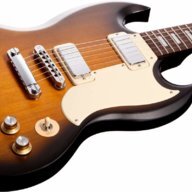
What’s the weight difference? I have a 65 eb3 and a modern SG bass and the weight difference is dramaticAs much as this thread seems to point out some QC issues, I would not want it to keep you from buying a Fender. The '60 Precision they are offering now is a great bass, and a very faithful repro of the original. I own both, and can attest to that. Like I said earlier in this thread, the only place they did not get the details 100% was the way they grounded the capacitor. Other than that, the bass is very close in feel and tone to my original '60. The neck is slightly thicker, but not much. The pick guard is nice and thick and has the aluminum grounding plate underneath. The tuners are reverse like my '60, and it even comes with the bridge and pickup covers you can install if you want to. In my opinion, this new '60 P is the best version yet to getting the correct feel and tone of an original. Don't be afraid to get one, but if the pickup does not work, at least this thread will tell you how to fix it.
I've got a real 60' and until they figure out how to reproduce the shrunken and slightly lumpy pickguard, I'll just stick with my original...As much as this thread seems to point out some QC issues, I would not want it to keep you from buying a Fender. The '60 Precision they are offering now is a great bass, and a very faithful repro of the original. I own both, and can attest to that. Like I said earlier in this thread, the only place they did not get the details 100% was the way they grounded the capacitor. Other than that, the bass is very close in feel and tone to my original '60. The neck is slightly thicker, but not much. The pick guard is nice and thick and has the aluminum grounding plate underneath. The tuners are reverse like my '60, and it even comes with the bridge and pickup covers you can install if you want to. In my opinion, this new '60 P is the best version yet to getting the correct feel and tone of an original. Don't be afraid to get one, but if the pickup does not work, at least this thread will tell you how to fix it.
Well, first we need to get the facts straight. I am not a Fender dealer, nor a Fender authorized repair facility. I am not known as "The Fender Guy", and I have no opinion of the brand other than to inform the public of a qualified, hands on analysis of the facts. I get a ton of Fenders crossing the bench simply because there are a ton of Fenders out there. I am not comparing Fender's track record to any other brand in this thread. Every brand has its quirks, and I work on a huge variety of brands and quality levels, but like I noted earlier, I normally keep the observations to myself. If you want me to start listing the issues with every manufacturer out there, get ready for a massive tome, or call me and prepare to be on the phone for 24 hours. I only brought this up because it is a significant measurable change in the norm. If my sample was low, it would be impossible to make this statement, but if it is your opinion that having approximately 1000 Fenders cross my bench each year is too low a sample, or is biased in some way, I can't make this work for you.Yes, I do, my degree included numerous stats courses. My job is all about data analysis.
There are a number of factors that could be attributed to sample bias. For example, it’s a fact that Fender sold more guitars than ever over the past three years, and by a significant amount more than other guitar manufacturers. It’s possible that you’re receiving more Fender repairs than ever because there are a lot more Fenders in people’s hands.
It’s also possible that you’re known locally as “the guy who repairs Fenders.” As you’ve mentioned, you sell more Fenders than the average Fender seller, so again, that’s more Fenders towards your sample.
Sample bias is when your sample is not representative of the population as a whole. For example, a mechanic working at a Ford dealer is going to see a lot of Fords; his or her high rate of Ford repairs is not indicative of a high rate of Ford failures, since there are many other brands which also have failures and there are many other Ford dealers. A bigger sample just exacerbates sample bias. That’s how sample bias works.
A smart business person would recognize a trend in their own customer base and try to capitalize on it, maybe by branding themselves as “the guy who specializes in Fender repairs”, versus “the guy who hates working on Fenders because of their rising lax quality control.” Rather than jumping to conclusions, they’d try to make sure they understand what other factors are at play, versus biting the hand that’s feeding them.
Almost nobody here knows you personally or professionally, none of the resistance you’re seeing here is personal, you’re a stranger interacting with other strangers. Instead of getting belligerent, you could accept the fact that Fenders are apparently putting food on your table, but instead you’re raising a lot of noise about something that seems to fly in the face of what many others are experiencing.
You’re welcome to take things personally all you want, but if so, you can expect more resistance and fewer people engaging with you.

I haven’t made any assumptions, I said the phrase “sample bias” and you questioned my understanding of sample bias - necessitating an explanation of sample bias. No assumptions - I stated “it’s possible that…” at least a couple of times. That’s not making assumptions, that’s describing what sample bias is and what two potential reasons for it could be in your case.Well, first we need to get the facts straight. I am not a Fender dealer, nor a Fender authorized repair facility. I am not known as "The Fender Guy", and I have no opinion of the brand other than to inform the public of a qualified, hands on analysis of the facts. I get a ton of Fenders crossing the bench simply because there are a ton of Fenders out there. I am not comparing Fender's track record to any other brand in this thread. Every brand has its quirks, and I work on a huge variety of brands and quality levels, but like I noted earlier, I normally keep the observations to myself. If you want me to start listing the issues with every manufacturer out there, get ready for a massive tome, or call me and prepare to be on the phone for 24 hours. I only brought this up because it is a significant measurable change in the norm. If my sample was low, it would be impossible to make this statement, but if it is your opinion that having approximately 1000 Fenders cross my bench each year is too low a sample, or is biased in some way, I can't make this work for you.
First of all, you are getting an unbiased presentation of the facts. If I were a Fender dealer, I would never say anything because they will drop your dealer status and threaten to shut you down in a minute with a letter from Fender legal. I have nothing to lose by presenting accurate observations, other than less work for me if Fender gets the QC under control. As a luthier who does this work as more of a service to the music community versus a way to retire, it does not bother me if I make a few less $ in order to correct a wrong being done to the consumer. That must make me a dumb business person according to you. People who only see numbers and analysis won't understand a philosophy based on principles.
When you say "many others", you are not presenting accurate information. Where are your numbers? If you want to take a pole here to get some, feel free to waste your time. This thread was not intended to come up with a ratio of good basses to bad ones. It was the simple presentation of recent QC fails from Fender, and to note that I am seeing things like that in higher frequency than normal. I have a normal or baseline believe it or not. Continuous daily grind of instruments coming in and going out for 42 years is my baseline.
It blows my mind that someone like you, touting a grasp of data collection, would make the mistake of assuming. All I know is your assumptions did not make an ass of me.......
My original 1960 weighs slightly more than the new "60. I am telling you, they did a great job reproducing the real deal. The slab fingerboard, the radius, even the hootenanny button on the back of the headstock are all just like the original. The only place on the body that is a bit different is the neck pocket is not as tight, and there are no nail holes in the top under the pickguard.What’s the weight difference? I have a 65 eb3 and a modern SG bass and the weight difference is dramatic