Except, sir, and friend, what he has can do the trick. It is not scooped unless you dial it in that way. Really, these are very, very flexible amps.Perhaps you should just buy a Fender.

TalkBass has been independent since 1998. Add your voice.
Create a free account to reply to discussions, view embedded media, and browse with fewer display ads.
Join free Log in
Want zero display ads or expanded classifieds tools? Compare plans.
Except, sir, and friend, what he has can do the trick. It is not scooped unless you dial it in that way. Really, these are very, very flexible amps.Perhaps you should just buy a Fender.

Ah-Ha! An anti-Fender Scooper! Booooooo! Hissss! To Hell With You!!!It is not scooped unless you dial it in that way.

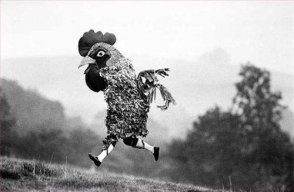
Bwaahahaha!...Someone is turning Whisky Wednesdays into Fermented Fridays...!
Bwaahahaha!
A. Sez the man in a chicken suit
B. It's sad too see Sir Linnin on the bottle.
C. How did you know I'm on beer 10?!?!
Now #12, but it's just watery GuinnessYep
Yep again!
I had no idea


 .
.
Dirt pedal. I really don't like what rumble's drive channel sounds like and it loses lots of low end.HEY RUMBLERS!
Do you prefer your Rumble's dirt channel or do you prefer to get your dirt form a pedal?
Bonus points for 'why'.

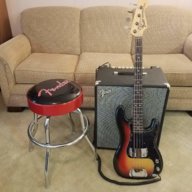
I like the onboard overdrive on my Rumble 200. It's convenient, and with the Fender footswitch which has an LED, you don't have to wonder if it's on or off. However, I've had to convince a couple of sound guys to use the XLR out from the amp instead of taking the signal straight from my bass. If I can muster an equal growl from my Zoom B3, I may start using that, but I haven't quite copied the sound.HEY RUMBLERS!
Do you prefer your Rumble's dirt channel or do you prefer to get your dirt form a pedal?
Bonus points for 'why'.

For the kind of gigs I do, it makes a huge difference. I play in a 10-piece Motown/R&B band so the rhythm section gets wedged in behind our three singers and horn section, meaning I'm always within two feet of my amp. I've done a gig with a single 2x10 cabinet elevated and slightly tilted on an amp stand, but I felt it ran out of gas on the low end. The pair together keeps the floor coupling (plus the two cabinets coupled together) but still elevates the top cabinet to where you can hear it, and the lows just sound so much bigger. We always have full FOH support so I don't need to be insanely loud, typically running the master at noon, but we do get quite loud on stage as we typically are running between six and eight powered monitors.
That said, for times when I can only bring one cabinet due to limited vehicle space, I bring my Orange OBC115 to use with my Rumble head as it's quite aggressive and "vintage" voiced, making it a great standalone cab. I elevate it about a foot off the ground on a utility case and am good to go with that arrangement, but the pair of Rumble 2x10s is awesome, especially outdoors when you can open up the master volume. I also like that I can bring a pair of 39 pound cabinets that when stacked are the same height as an 8x10!
What does an 80 yr old woman smell like? Depends!HEY RUMBLERS!
Do you prefer your Rumble's dirt channel or do you prefer to get your dirt form a pedal?
Bonus points for 'why'.
Mark them with a sharpieSuppose you have some personal profile, the knobs get moved during transport, and you forgot where to dial it all in at.


I’ve always had trouble understanding the whole «scooped» thing. Even if it were true, «un-scooping» a Rumble should be easy to do by just boosting the mids, right?Let me rant on a minute or two. The anti-Fender propaganda is that all Fenders are 'scooped'. All their amps are 'scooped'. All their pickups are 'scooped'. All their strings are 'scooped'. [No joke! Some have said that they don't like Fender strings because they are 'scooped'.] Hell, even Fender straps are 'scooped'!
When Leo Fender was designing what became known as the 'Brownfaced' amps in 1960, he added the first midrange control to his now famous passive tone stack. His amps had so many mids that he made his midrange control cut only. That's right, Fender amps had so many mids that he made his midrange control cut only. Bass & Treble were boost only. Not all amps had a midrange control. And to make things even more confusing all the tone controls were passive and interactive. If you turned down the treble you also turned down the mids (whether or not you had a midrange control, it made no difference). Same thing with the bass control. Turn up the bass and you turned up the mids at the very same time. I remember the Fender tone stack well. B.B. King set his at 6-6-6. I set mine at 7-7-7.
At this time Leo Fender invented the 'piggy back' amp head in 1961-62. These were the very first amp heads. Showman first then the Bassman. These amps would go on to become the much vaunted and highly sought after 'Blackfaced' series launched in 1963-64 as the Brownfaces had to be sold before new Blackfaces were manufactured. Later in 1968 they would become the 'Silverfaced' amps. There were some circuitry mods but the same basic Leo Fender design. These things sold like hot cakes & bourbon on Sunday morning. I loved my Silverfaced Bassman 100.
If you want to know about the birth of Fender Bass Amplification and the Fender Rumble series, read chapter 27 of Tom Wheeler's 'The Soul of Tone'. Fender Rumbles were based on the signature Fender tone from day one. This has not changed. Fender amps have never been 'scooped' and they never will be.
Introduced in 2003, Fender Rumbles were well received. They sounded good and were as teenager proof as you could make an amp. The pulsating 'disco' LEDs on the Rumble 60 and 100 added to teenage appeal. By 2009 Fender Rumbles were the best selling bass amps world wide. A global achievement that Fender Rumble would continue to reach year after year, and even today they are still the world's best selling bass amps.
Fender Rumbles outsell all but one company's total annual output. Some day soon I look forward to announcing that Fender Rumble sales have outstripped all bass amp companies combined. It is very close, but not today. Soon.
Edited with accurate dates thanks to @RColie