• TalkBass has been independent since 1998. Add your voice.
    Create a free account to reply to discussions, view embedded media, and browse with fewer display ads.
    Join freeLog in
    Want zero display ads or expanded classifieds tools? Compare plans.

Fender Rumble LT25, Studio 40 & Stage 800

Thanks for the reply. I haven't had a chance to try out the USB to PC yet. Was actually planning on getting to that later today although I'm also planning on giving the bass a good scrub-down when I change to my new strings later.

Sound like a much better method, and using a DAW to playback audio provides way more control anyway. My problem is I don't have a DAW and don't want to spend money. (I use a Windows PC) Do you know of any good free ones? I won't be producing anything on it so it doesn't have to be fancy, but I'm also not afraid to learn a non user-friendly interface if it's a better program.


I record straight to my Android via USB with the video camera, sound recorder apps should work too.. On some phones (I use a Google Pixel 3) you can use an external USB microphone. The audio quality isn't the best and stereo effects are recorded mono.. but it helps me to remember little riffs that I can polish up later. Oh, another cool thing is, that your phone should also record whatever audio is playing in a background app. Hope that helps.
 
  • Like
Reactions: G-Dog
Question about compression. Many of the amp models have a standard noise gate and compression added to them. The noise gate I understand, and I appreciate the convenience of not having to add an effect to the chain for a simple gate. The compressor, however, I am less familiar with.

The standard compressor setting just has Off, Low1, Low2, Low3, Mid1, Mid2, Mid3, High1, High2, and High3. I assume the Low setting boosts a section of the low range, and the number designates the amount of boost that is occurring. That's what I assume, and what I think I hear, but the effect seems very subtle.

My question is, have you guys found this compression setting worthwhile and convenient, how do you use it, or are one of the add-on effect compressors a plainly superior option to mess around with for compression?
 
Question about compression. Many of the amp models have a standard noise gate and compression added to them. The noise gate I understand, and I appreciate the convenience of not having to add an effect to the chain for a simple gate. The compressor, however, I am less familiar with.

The standard compressor setting just has Off, Low1, Low2, Low3, Mid1, Mid2, Mid3, High1, High2, and High3. I assume the Low setting boosts a section of the low range, and the number designates the amount of boost that is occurring. That's what I assume, and what I think I hear, but the effect seems very subtle.

My question is, have you guys found this compression setting worthwhile and convenient, how do you use it, or are one of the add-on effect compressors a plainly superior option to mess around with for compression?
Compression is something you notice when it's not there. It's the least exciting effect there is, but once you get your head around how it affects your sound, you'll appreciate it.

Compression can sound like it's fattening up your sound, but what you're hearing is the compression basically evening out the volume of your playing.. your quieter playing is leveled out with your more aggressive playing. Some players can compensate and never need compression for live playing, but almost every recording you've ever heard has been compressed.

Compression doesn't boost, so much as it squishes. Hence the name.

The simple versions are plenty enough for me.
 
  • Like
Reactions: iagtrplyr and G-Dog
Compression is something you notice when it's not there. It's the least exciting effect there is, but once you get your head around how it affects your sound, you'll appreciate it.

Compression can sound like it's fattening up your sound, but what you're hearing is the compression basically evening out the volume of your playing.. your quieter playing is leveled out with your more aggressive playing. Some players can compensate and never need compression for live playing, but almost every recording you've ever heard has been compressed.

Compression doesn't boost, so much as it squishes. Hence the name.

The simple versions are plenty enough for me.
That makes sense, but is my basic understanding of how the simple compression settings work correct?
 
That makes sense, but is my basic understanding of how the simple compression settings work correct?

I think it's one way you could look at it, BS. I'm far from a compression expert, but my Ampeg PF-800 head had a compression knob that the manual said: This controls the amount of signal compression. At the fully counter-clockwise position, there is no compression; at the fully clockwise position, the compression ratio is 10:1. The higher the ratio the more squish ya get. So I've looked at the settings on my Stage as low to a higher ratio of compression. For me, I don't tend to use more than Low1 or Low2. If someone wants to tell us this is completely incorrect I'll get over it, but this thinking has worked for me. I never use the noise gate either, but then I don't play through high-gain amp models. The Fender Bassman TV doesn't need anything but willing fingers as far as I'm concerned.
 
You guys are on the right track. If you want to experiment with the difference that compression can make, start with the lowest setting and play a few notes with your fingers and then some aggressive slap or picking, then do the same on the highest setting. It would help you hear the difference if you can record it and play it back. You'll notice on the higher setting that the notes where you played harder will sound like you're squeezing 10lbs of sugar into a 5lb bag, the less aggressive notes will be more equal in volume.

If you, like me and most other players.. don't really play 100% consistent with attack, compression will at least make you sound like you do. There are some rumored players out there that are said to play consistent enough to not need compression.

If you want to experiment with some of the more complex compressors, there's a lot of other tweakable options. Attack and release being the biggest two. Attack works similar to a noise gate when using high gain, if you have it set really high, it will miss the first note you play because that note registers as noise. Release is, how soon the compression has from the previous note to grab the next note you play. Weird stuff can happen with extreme settings.. it's hard to explain without some sort of graphical display.

Like most things artsy.. it's all subjective. There's no real "right" way. Just experiment. But, I'll say that if you go spend $150 on a compression pedal thinking it's gonna be exciting to get home and plug in... You're going to be completely underwhelmed. In a live/loud setting, no one can tell if you're using a compressor, swapped your pickups for Novak's, installed a custom handmade rhinoceros horn nut, put a Fender waterslide decal on your squier...etc

That makes sense, but is my basic understanding of how the simple compression settings work correct?

I think it's one way you could look at it, BS. I'm far from a compression expert, but my Ampeg PF-800 head had a compression knob that the manual said: This controls the amount of signal compression. At the fully counter-clockwise position, there is no compression; at the fully clockwise position, the compression ratio is 10:1. The higher the ratio the more squish ya get. So I've looked at the settings on my Stage as low to a higher ratio of compression. For me, I don't tend to use more than Low1 or Low2. If someone wants to tell us this is completely incorrect I'll get over it, but this thinking has worked for me. I never use the noise gate either, but then I don't play through high-gain amp models. The Fender Bassman TV doesn't need anything but willing fingers as far as I'm concerned.
 
I suppose it's more accurate to think of attack and release as response time knobs more than intensity knobs.

I really hope i didn't confuse y'all even more. I've played for 20 years before using compression and when I started, it was frustrating trying to cut through the misinformation.
 
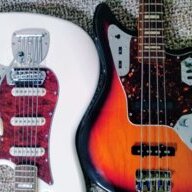
Here's a pic with my Stage and basses. I realized I haven't posted one yet. I still like to plug into the rumble 100 now and then if I catch myself tweaking settings more than I'm playing. I really wish I didn't have neighbors so close because it's really fun to bi-amp the mids and highs through the 100... Especially if I've got some clean vs wet effects creating some stereo sounds
 

Attachments

  • IMG_20200216_065309.jpg
    IMG_20200216_065309.jpg
    1.6 MB · Views: 112
Hi there,
Few questions for the users of the Rumble 800 Stage, before I pull the trigger on buying one;

  • As much as I am looking forward to getting rid of the clutter on my pedal boards by using the included effects with the amp, I want to keep my distortion/pre-amp pedal in the mix, but can I place it in between two included effects in the amp, using the FX send/return connectors in the back? I would assume Fender lets us have this modularity as it would make it problematic to have my distortion before the included compression or after the included delay/reverb etc.

  • Assuming the above is a positive, how do you like the included compression effect? I currently use an MXR bass compressor pedal with good results and tend to like "transparent" compression, but don't mind a bit of tone coloring as it is for slapping or for adding before distortion especially. Basically, do you still need a good pedal or does the included one fit the bill?

  • I recently purchased over $500 worth of effect pedals (compressor, envelope filter, flanger, ..) and yet have to upgrade my amp. I was about to get something in the price range of the Rumble 500/Rumble 40 Studio, but now I am, seriously thinking about returning the pedals to get what I think looks like a step up and get the Rumble 800. I don't care for many effects to be "perfect" or filled with parameters to fine tune as I use them sparingly, except for distortion or compression. So if they are good enough and usable with the foot switch, it looks like the right move, but your feedback would be much appreciated as the over abundance of gear selection nowadays has gotten the best of what is left of my wisdom.

Thanks!
 
Hi there,
Few questions for the users of the Rumble 800 Stage, before I pull the trigger on buying one;
  • As much as I am looking forward to getting rid of the clutter on my pedal boards by using the included effects with the amp, I want to keep my distortion/pre-amp pedal in the mix, but can I place it in between two included effects in the amp, using the FX send/return connectors in the back? I would assume Fender lets us have this modularity as it would make it problematic to have my distortion before the included compression or after the included delay/reverb etc.
... ...


Hi, there, Diver! Welcome to TalkBass and this sub-thread of the Fender Rumble Club. I see you posted this question there, too. Good insurance for getting input. ;)

Alas, on the bottom of page 44 of the Stage & Studio manual it says the "effects loop ... will act as the last elements in the signal chain."
PSX_20200216_205242.jpg

Lots of other good info on the Rumble Club Wiki page, linked in my signature, especially in the Stage & Studio section and the TONE App Support section there.
.
... ...
  • Assuming the above is a positive, how do you like the included compression effect? I currently use an MXR bass compressor pedal with good results and tend to like "transparent" compression, but don't mind a bit of tone coloring as it is for slapping or for adding before distortion especially. Basically, do you still need a good pedal or does the included one fit the bill?
... ...


I've never been much for pedals, but do enjoy the Rumble Studio's built-in effects very much. I also have other modeling amps that I feel similarly about, but the Studio gives me much better control of its built-in effects.
.
... ...
  • I recently purchased over $500 worth of effect pedals (compressor, envelope filter, flanger, ..) and yet have to upgrade my amp. I was about to get something in the price range of the Rumble 500/Rumble 40 Studio, but now I am, seriously thinking about returning the pedals to get what I think looks like a step up and get the Rumble 800. I don't care for many effects to be "perfect" or filled with parameters to fine tune as I use them sparingly, except for distortion or compression. So if they are good enough and usable with the foot switch, it looks like the right move, but your feedback would be much appreciated as the over abundance of gear selection nowadays has gotten the best of what is left of my wisdom.
Thanks!


You're certainly right about the dizzying variety of wonderful bass gear these days. But, as always, your own sound test is the only thing that can provide you the most important opinion: namely, yours! But, I haven't seen any Rumble Stage or Studio amps on the demo floor at music stores. However, I have heard of some used models being found at such stores, where you should be able to try them out to see if the effects you're most interested in are suitable to your ears. :thumbsup:

Hope this helps.
.
 
You guys are on the right track. If you want to experiment with the difference that compression can make, start with the lowest setting and play a few notes with your fingers and then some aggressive slap or picking, then do the same on the highest setting. It would help you hear the difference if you can record it and play it back. You'll notice on the higher setting that the notes where you played harder will sound like you're squeezing 10lbs of sugar into a 5lb bag, the less aggressive notes will be more equal in volume.

If you, like me and most other players.. don't really play 100% consistent with attack, compression will at least make you sound like you do. There are some rumored players out there that are said to play consistent enough to not need compression.

If you want to experiment with some of the more complex compressors, there's a lot of other tweakable options. Attack and release being the biggest two. Attack works similar to a noise gate when using high gain, if you have it set really high, it will miss the first note you play because that note registers as noise. Release is, how soon the compression has from the previous note to grab the next note you play. Weird stuff can happen with extreme settings.. it's hard to explain without some sort of graphical display.

Like most things artsy.. it's all subjective. There's no real "right" way. Just experiment. But, I'll say that if you go spend $150 on a compression pedal thinking it's gonna be exciting to get home and plug in... You're going to be completely underwhelmed. In a live/loud setting, no one can tell if you're using a compressor, swapped your pickups for Novak's, installed a custom handmade rhinoceros horn nut, put a Fender waterslide decal on your squier...etc

My choice, if asked, is definitely the rhino horn. It makes a statement, don’t you agree?
 
  • Like
Reactions: Dookieshoes
Here's a pic with my Stage and basses. I realized I haven't posted one yet. I still like to plug into the rumble 100 now and then if I catch myself tweaking settings more than I'm playing. I really wish I didn't have neighbors so close because it's really fun to bi-amp the mids and highs through the 100... Especially if I've got some clean vs wet effects creating some stereo sounds

Nice image of the harem, Dookieshoes. Take that same pic and post it on our Combo Club pages and become a member with your number and not much else. Still fun though and we’ve got a couple of Stage 800 owners, me included.
 
  • Like
Reactions: Dookieshoes
Most of the effects that I own physical versions of are very comparable. You may lose a few things here and there. One of the Fuzz pedals is based on the big muff guitar version I assume because it doesn't have a wet/dry blend option. The compression doesn't have the LED lights to show you what's going on like an MXR. Those are just a few examples, may be deal breakers to some folks but others manage fine.

Before you return all your pedals you may consider that the studio/stage seem to have a 5-6 effect signal chain limit. After that, the option to add more is greyed out for me. There may also be something in the literature about that limit. So depending upon how crazy you want to get, ya may want to keep one or two.


Hi there,
Few questions for the users of the Rumble 800 Stage, before I pull the trigger on buying one;

  • As much as I am looking forward to getting rid of the clutter on my pedal boards by using the included effects with the amp, I want to keep my distortion/pre-amp pedal in the mix, but can I place it in between two included effects in the amp, using the FX send/return connectors in the back? I would assume Fender lets us have this modularity as it would make it problematic to have my distortion before the included compression or after the included delay/reverb etc.

  • Assuming the above is a positive, how do you like the included compression effect? I currently use an MXR bass compressor pedal with good results and tend to like "transparent" compression, but don't mind a bit of tone coloring as it is for slapping or for adding before distortion especially. Basically, do you still need a good pedal or does the included one fit the bill?

  • I recently purchased over $500 worth of effect pedals (compressor, envelope filter, flanger, ..) and yet have to upgrade my amp. I was about to get something in the price range of the Rumble 500/Rumble 40 Studio, but now I am, seriously thinking about returning the pedals to get what I think looks like a step up and get the Rumble 800. I don't care for many effects to be "perfect" or filled with parameters to fine tune as I use them sparingly, except for distortion or compression. So if they are good enough and usable with the foot switch, it looks like the right move, but your feedback would be much appreciated as the over abundance of gear selection nowadays has gotten the best of what is left of my wisdom.

Thanks!
 
  • Like
Reactions: iagtrplyr
Most of the effects that I own physical versions of are very comparable. You may lose a few things here and there. One of the Fuzz pedals is based on the big muff guitar version I assume because it doesn't have a wet/dry blend option. The compression doesn't have the LED lights to show you what's going on like an MXR. Those are just a few examples, may be deal breakers to some folks but others manage fine.

Before you return all your pedals you may consider that the studio/stage seem to have a 5-6 effect signal chain limit. After that, the option to add more is greyed out for me. There may also be something in the literature about that limit. So depending upon how crazy you want to get, ya may want to keep one or two.

Hey thanks for the reply, I cannot remember last time I used more than 5 effects in the chain. But like you said, the MXR has that cool graphic bar graph and I might miss it too much since I use it a lot and therefore never developed an ear for fine tuning it.
I was more thinking about the more exotic and sporadic stuff like envelope filters and flangers, that I feel will be easily replaced by the Rumble's.
I had plans to buy more effects and build a pedal board. So even if I have to keep a few pedals, I would be able to to keep a permanent mini pedal board setup that I can bring anywhere while knowing that if I need something out of the norm, I most likely can get it from the amp.

I also have an Alpha Omega distortion that I know will not be matched by the Rumble :P

I know this might all sound petty, my initial goal was to get an amp, but I also started getting sidetracked with pedals but at the end this seems like all what I am looking for in one box. The fact a pedal board is in the amp can't hurt the fun or creativity, all that while keeping a setup easy to install/undo.

Thanks to you and G-Dog for the quick replies. I ordered it and cannot wait to see how I like it!
 
  • Like
Reactions: G-Dog
... ..., for the users of the Rumble 800 Stage, before I pull the trigger on buying one; ... ... Thanks!

... ... Thanks ... I ordered it and cannot wait to see how I like it!


That's terrific, Di! Post a pic in the Fender Rumble Club to get a membership number, then come back here to continue discussing your new do-it-all box.

Meanwhile, you can RTFM* while waiting for it to arrive.


*Read The Fine Manual
.
 
I dropped all my pedals and just went with the Stage 800. The chorus and flanger options are nice, phaser and envelope filter are sick! The overdrive and fuzz options are more than I ever use or need, i really like the compression options, everything from smoothing out or limiting to full on squashing. The octaver is nice and tracks well.
Same here.

I have an HX Stomp that I used to use for effects with my prior standard amp (and still use as an amp-less fly rig). Since getting the R800, though, I pretty much only use the Stomp for pitch-shifting when playing live.

The effects on the R800 are very good and, in combination with its multiple amp models, I can get all the sounds I need (from R&B to Rock to Alternate and Grunge) in a single unit. Note, though, that I generally call up a single sound for a whole song; I don't do any "tap dancing" for effects mid-song.
 
Same here.

I have an HX Stomp that I used to use for effects with my prior standard amp (and still use as an amp-less fly rig). Since getting the R800, though, I pretty much only use the Stomp for pitch-shifting when playing live.

The effects on the R800 are very good and, in combination with its multiple amp models, I can get all the sounds I need (from R&B to Rock to Alternate and Grunge) in a single unit. Note, though, that I generally call up a single sound for a whole song; I don't do any "tap dancing" for effects mid-song.
I have a couple of songs that I have to kick in/out some effect, either flange or EQ. Pretty slick process. Don't shy away from tap dancing, it's easier than you think if you set it up properly.