

Enjoy the benefits of a premium membership!
Upgrade Account
-
TalkBass has been independent since 1998. Add your voice.
Create a free account to reply to discussions, view embedded media, and browse with fewer display ads.
Join free Log in
Want zero display ads or expanded classifieds tools? Compare plans.
You are using an out of date browser. It may not display this or other websites correctly.
You should upgrade or use an alternative browser.
You should upgrade or use an alternative browser.
- Status
- Not open for further replies.
More options
Who Replied?
That's going to be spectacular.
Nice sig
Just has a nice ring to it. You could say that to anyone.
- Aug 21, 2008
- 1,168
- 33
- Disclosures
- Endorsing Artist : Fodera Guitars , Harvest fine leather bags & straps
Coming in a couple weeks - Jason says the body has been carved. Lotsa colors in this koa.
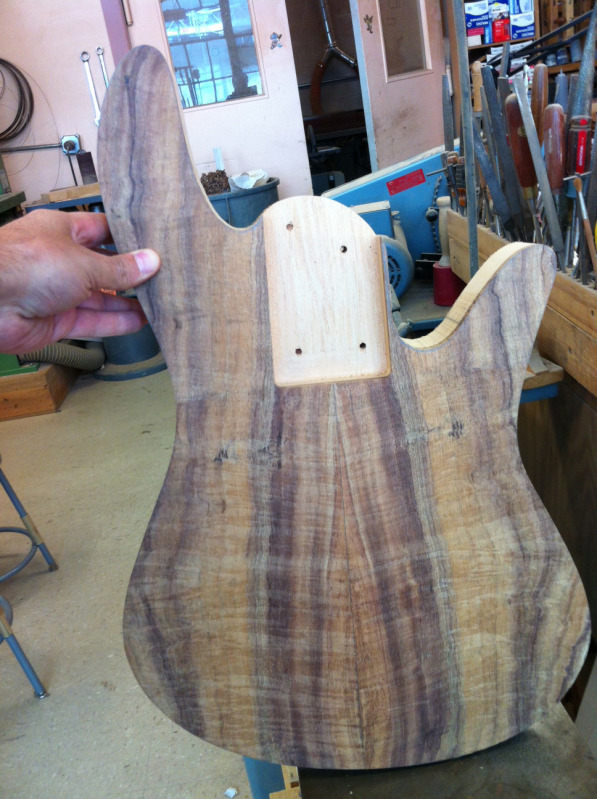

great !!!
p.s. : can't wait to see mine with the Holly on it


Damian Coccio
Supporting Member
nostatic said:I'm liking 33", though my muscle memory is still somewhat entrenched at 34" scale. I never pick up my 35" scale instrument. I'm still thinking that my goal will be to migrate to 33" for everything except the YYD. I have to admit that I'm curious about a 33" scale 4-banger as well. I'd love to play the latest Tony Grey instrument and see how that feels. I'm wondering about slapability on the 17.5mm spaced 4 as the MGS is a bit tricky for slap/pop. Actually slap is easy, but pop there isn't a lot of space to dig in. That could be a message for me to work on technique.
Yeah 35s are just outside my comfort zone. Mainly due to the position of the neck, first fret is just typically too far away. 33 is very comfortable, but I still feel like I'm not commanding the same clarity and sonic power as a 34. Hopefully the new bass will reinforce that conclusion. The new bass focus was 90% tone, 10% looks. I'm not completely sold on the concept of warm woods, to me it's like putting a blanket on a bell, and the more maple, walnut and ebony in a bass, it seems like it just sounds better to me. Ive just found it very difficult to add articulation in the high end if its not there to begin with, mids, no problem. I'm probably wrong, but hey, I'm having fun...
- Apr 24, 2004
- 1,359
- 53
- Disclosures
- Designer Fodera Guitars/Michael Pope Design, Inc., Trickfish Amplification
I'm liking 33", though my muscle memory is still somewhat entrenched at 34" scale.
Muscles don't remember anything. They just (hopefully) do as they're told. It's your brain doing the remembering. You can overcome it!

Mr. Pope is correct. I own 36,35,34,33 and 41 1/2 scale basses and never had a problem switching them out once I had "learned" that particular scale length.
Muscles don't remember anything. They just (hopefully) do as they're told. It's your brain doing the remembering. You can overcome it!


Munjibunga said:Coming in a couple weeks - Jason says the body has been carved. Lotsa colors in this koa.
Sweet! Looks great

Coming in a couple weeks - Jason says the body has been carved. Lotsa colors in this koa.
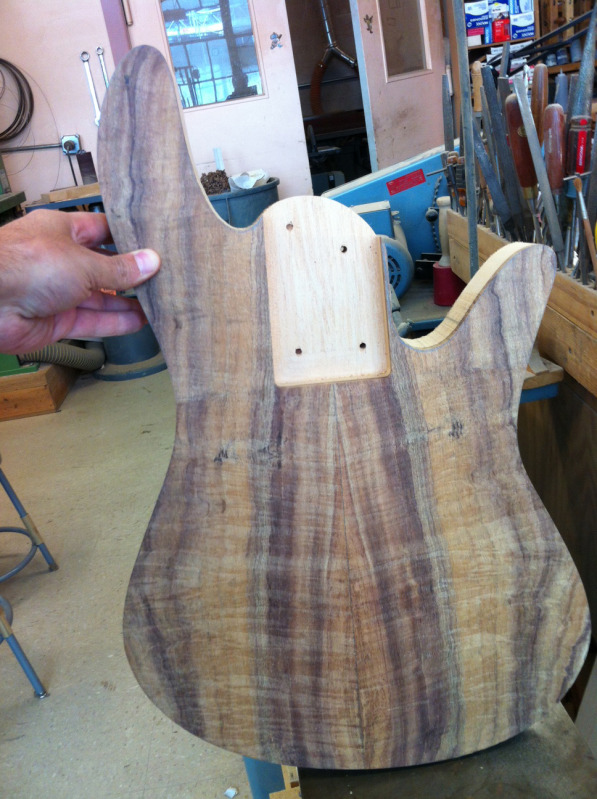
Wow!!!
 That looks Niiiiiice!

Coming in a couple weeks - Jason says the body has been carved. Lotsa colors in this koa.
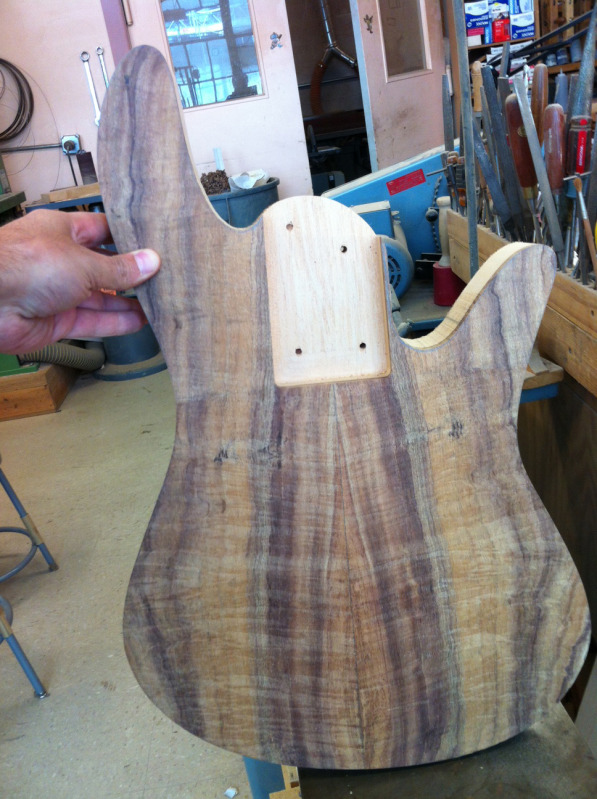
Nice top!
Interesting without being ott.

Beautiful. I hope it's OTT when they finish it!
Nice top!
Interesting without being ott.
Muscles don't remember anything. They just (hopefully) do as they're told. It's your brain doing the remembering. You can overcome it!
hmmm, dunno.
feels like my hands remember this stuff and feel more comfortable on certain instruments.
i remember my mom giving me an article about muscle memory from a long time ago.
quick internet search (okay, first hit was wikipedia) shows that there seems to be a school of thought that it does exist, though it can be also termed motor learning (?).
Just has a nice ring to it. You could say that to anyone.
bar pickup line, "hey baby, priced a bassoon lately?"

hmmm, dunno.
feels like my hands remember this stuff and feel more comfortable on certain instruments.
i remember my mom giving me an article about muscle memory from a long time ago.
quick internet search (okay, first hit was wikipedia) shows that there seems to be a school of thought that it does exist, though it can be also termed motor learning (?).
I'm not a neuroscientist, but I do use a lot of it when doing psychotherapy in terms of understanding why and how changes occur.
My understanding is it's your brain, not your muscles that allow you to adapt to different instruments. Neural synapses form and then are reinforced by myelin sheaths that make impulses easier to perform. When you practice, you're changing your brain's structure so that it's easier to repeat certain motions, and over time, they become a near permanent skill acquisition.
Read this if you're interested:
Invalid Link Removed
Hey guys, even though I just got my new Fodera Imperial (http://www.fodera.com/Main/NewBornDetails.aspx?FeaturedItemID=468) , I'm already gasing for another Fodera and want some feedback. I've really come to appreciate the balance and versatility of the Foderas and I'm having a hard time imagining being satisfied with much else now.
I've always kept a bolt on with a brighter tone in my arsenal for slap and more aggressive playing, and even though the Imperial is working great, I still would like a second axe. I have a sadowsky that I'm about to part with and have room for a second fretted bass. The imperial is on the slightly darker side of things with it's Brazilian rosewood board and mahogany tone block, even though it has a punchy ash body.
I keep thinking the Emp standard 5 would be great since it's in the same ballpark as my imperial but bolt on, brighter maple top and brighter pau ferro board. I don't want to go as far bright as a 70's J bass ash/maple board combo, so this might be just the ticket.
Basses with ebony/ash usually sound to bright to me, like Tom Kennedy's signature bass. My Sadowsky is ebony/alder and I would've thought the alder might have taken the edge off the board, but it's actually pretty bright, though of course Roger's instruments have a very different DNA makeup and the board seems to impart more tone than on a Fodera, IME.
The other combo, then, that has caught my eye for some time is found in a used AJ double cut 5 bolt-on with a walnut body, ebony board, and ebony top. I know the ebony is going to impart more clarity and bell like tones than the pau ferro board, but I'm not really sure what to expect from an all walnut body and if that might tamp it down from getting too zingy. The bass is here and there's some great sounding links to some youtube clips. I've always thought this was a great Fodera tone.
Link Removed
Any thoughts one this walnut/ebony AJ vs the Emp Standard? I would think the AJ would have tighter lows and maybe a little more zing than the Emp Standard, though the emp standard seems have a lot of range and it makes so much sense to me why they designed it the way they did. On the other hand, the emp could also be too close sounding to my Imperial to really justify as a second axe.
I've always kept a bolt on with a brighter tone in my arsenal for slap and more aggressive playing, and even though the Imperial is working great, I still would like a second axe. I have a sadowsky that I'm about to part with and have room for a second fretted bass. The imperial is on the slightly darker side of things with it's Brazilian rosewood board and mahogany tone block, even though it has a punchy ash body.
I keep thinking the Emp standard 5 would be great since it's in the same ballpark as my imperial but bolt on, brighter maple top and brighter pau ferro board. I don't want to go as far bright as a 70's J bass ash/maple board combo, so this might be just the ticket.
Basses with ebony/ash usually sound to bright to me, like Tom Kennedy's signature bass. My Sadowsky is ebony/alder and I would've thought the alder might have taken the edge off the board, but it's actually pretty bright, though of course Roger's instruments have a very different DNA makeup and the board seems to impart more tone than on a Fodera, IME.
The other combo, then, that has caught my eye for some time is found in a used AJ double cut 5 bolt-on with a walnut body, ebony board, and ebony top. I know the ebony is going to impart more clarity and bell like tones than the pau ferro board, but I'm not really sure what to expect from an all walnut body and if that might tamp it down from getting too zingy. The bass is here and there's some great sounding links to some youtube clips. I've always thought this was a great Fodera tone.
Link Removed
Any thoughts one this walnut/ebony AJ vs the Emp Standard? I would think the AJ would have tighter lows and maybe a little more zing than the Emp Standard, though the emp standard seems have a lot of range and it makes so much sense to me why they designed it the way they did. On the other hand, the emp could also be too close sounding to my Imperial to really justify as a second axe.
I'm not a neuroscientist, but I do use a lot of it when doing psychotherapy in terms of understanding why and how changes occur.
My understanding is it's your brain, not your muscles that allow you to adapt to different instruments. Neural synapses form and then are reinforced by myelin sheaths that make impulses easier to perform. When you practice, you're changing your brain's structure so that it's easier to repeat certain motions, and over time, they become a near permanent skill acquisition.
Read this if you're interested:
Invalid Link Removed
sure. i wonder if it's more about a feedback loop between your hands and your brain.
you play upright, so you know the difference between a D and an Eb neck. i had a D neck on my upright and then had an electric upright that was between D and Eb (don't ask). made it hard to play in tune because i was so used to feeling where the D was and it was now somewhere in between D and Eb.
likewise i find it very hard to really feel a 35-inch neck. my hand/brain connection "knows" where everything is *supposed* to be, but it ain't.
i think the term "muscle memory" is probably a less-than-accurate term that describes the connection/feedback system.
but then, i'm not a scientist, i'm just a country bass player
Muscles don't remember anything. They just (hopefully) do as they're told. It's your brain doing the remembering. You can overcome it!
Hey, hey! Don't go getting all scientific on us.
- Status
- Not open for further replies.


