• TalkBass has been independent since 1998. Add your voice.
    Create a free account to reply to discussions, view embedded media, and browse with fewer display ads.
    Join freeLog in
    Want zero display ads or expanded classifieds tools? Compare plans.

Fodera Club Part XXV

Status
Not open for further replies.
There is a reason that we try to get folks to go with a 2+3 if they will be using a low-B. The more string that sits behind the nut, the more downforce there is at the nut and that generally makes for the best sounding B-string at a given scale length. We do 3+2 by request as long as the player knows the pros and cons...

For an instrument strung E-C, the difference is too negligible to notice.

J

Getting a 3+2 out of Jason is like pulling teeth - but he finally relented on my Viceroy. Now I wish I had gotten the 2+3.


NOT!
 
There is a reason that we try to get folks to go with a 2+3 if they will be using a low-B. The more string that sits behind the nut, the more downforce there is at the nut and that generally makes for the best sounding B-string at a given scale length. We do 3+2 by request as long as the player knows the pros and cons...

For an instrument strung E-C, the difference is too negligible to notice.

J

I only use the B string as a thumb rest anyways, so I should be good!:D
 
I have a question for Jason about Anthony Jackson's basses after reading that he takes his new hybrid on the airplane with him in a gig bag.


When Anthony's Presentations come back into the shop, do they have various dings and wear, like a bass that's played every day and used a ton; or does he take immaculate care of his instruments and they are always clean and in fantastic condition? I'm just curious since he is such a monster player that travels a ton and probably has his bass in his hands as often as not.


Edit: I forgot, I have another question. Did you guys ever think about using an adjustment wheel on the Standard basses like Sadowsky and EBMM use?


Thanks!

Michael
 
There is a reason that we try to get folks to go with a 2+3 if they will be using a low-B. The more string that sits behind the nut, the more downforce there is at the nut and that generally makes for the best sounding B-string at a given scale length. We do 3+2 by request as long as the player knows the pros and cons...


For an instrument strung E-C, the difference is too negligible to notice.


J


+1 for 2+3 headstock. B sounds amazing on my new bass configured that way.

On a 33" scale wrapping a b string on the 3+2 is no joke either.

Btw: Jason is the only way to get the best performance on a 33" 6 string to go extended b headstock?
 
There is a reason that we try to get folks to go with a 2+3 if they will be using a low-B. The more string that sits behind the nut, the more downforce there is at the nut and that generally makes for the best sounding B-string at a given scale length. We do 3+2 by request as long as the player knows the pros and cons...

For an instrument strung E-C, the difference is too negligible to notice.

J


I think you have it backwards actually. A lot of string behind the nut would, in most cases, result in LESS downforce on the nut. The sharper the angle, the more downforce (all other things being equal). Same thing at the bridge.

This is why there are 'hold down trees and knobs' on many basses that have a long distance between the tuner and nut, etc.
 
I think you have it backwards actually. A lot of string behind the nut would, in most cases, result in LESS downforce on the nut. The sharper the angle, the more downforce (all other things being equal). Same thing at the bridge.

This is why there are 'hold down trees and knobs' on many basses that have a long distance between the tuner and nut, etc.

Not on an angled headstock imho. I don't know scientifically how much difference it makes, but I do know that my 2+3 b sounds amazing and when Jason tells me something I take it very seriously. Having room to wrap a b string properly is concretely scientifically quantifiable.


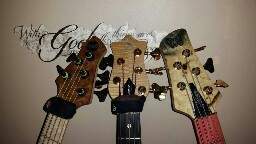
ImageUploadedByTalkBass1391527415.097958.jpgImageUploadedByTalkBass1391527424.598292.jpg
 
Angle is the same, as you can see in nuwave's picture, so assuming that the string is perfectly flexible, you will have exactly the same force on each of the strings at the nut. It is based on the angle, which is set by the headstock's built in angle.

Strings are not perfectly flexible, so while you are not changing the actual pressure on the nut from each string (more or less, given the angles are all roughly the same), you will see variations in the shape of the contact pressure patch if you were to map the pressure field of the string in the nut. I'll see if I still have the mappings I did on this about 6-7 years ago.

Honestly, the stiffness of the string, the string gauge, and the pull angle (horizontally) of the string have a greater effect on this than distance behind the nut if the angle (vertical) is kept the same.

But everyone has their own preferences and experiences these things differently.

That said, my Fodera was ordered 3+2 because I've never personally experienced much/any difference in 3+2/2+3. But I ordered my fretless 2+3...because why not? "Tighter" feeling B strings are more important to me on fretless, so why not experience the mojo/juju, whether I believe in the actual physics or not. :)

Having room to wrap a b string properly is concretely scientifically quantifiable.

What does this mean to you?
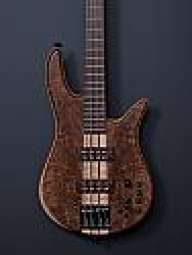
 
Angle is the same, as you can see in nuwave's picture, so assuming that the string is perfectly flexible, you will have exactly the same force on each of the strings at the nut. It is based on the angle, which is set by the headstock's built in angle.

Strings are not perfectly flexible, so while you are not changing the actual pressure on the nut from each string (more or less, given the angles are all roughly the same), you will see variations in the shape of the contact pressure patch if you were to map the pressure field of the string in the nut. I'll see if I still have the mappings I did on this about 6-7 years ago.

Honestly, the stiffness of the string, the string gauge, and the pull angle (horizontally) of the string have a greater effect on this than distance behind the nut if the angle (vertical) is kept the same.

But everyone has their own preferences and experiences these things differently.

That said, my Fodera was ordered 3+2 because I've never personally experienced much/any difference in 3+2/2+3. But I ordered my fretless 2+3...because why not? "Tighter" feeling B strings are more important to me on fretless, so why not experience the mojo/juju, whether I believe in the actual physics or not. :)


What does this mean to you?


I have to side with mike pope on the longitudinal mode performance benefit of having additional string length above the nut. The difference maybe very small, but since I don't have a strong aesthetic preference I'll take it.

A proper b string wrap to me means the the full diameter of the b string is not at the tuning peg. The tapered part is. I've had problems especially with 33" scale with the string cores breaking and just being very difficult / nearly impossible to wrap. Also the string never comes off in a tangent rather in an arc because the large diameter doesn't like to conform to the tuning peg. Maybe that changes the tone, maybe not, but I don't like it.
 
As an aside, I think one of the major benefits of dealing with a group like Fodera is that a good number of variations of woods and construction types go through their hands. They get to hear and play all of them and have for a very long time. This contributes a really good feel for what works best even when the science may be tough to quantify the benefits. When I get an instrument like my last build (game changer) it affirms this and therefore engenders a greater respect for what they do and the experience that lies behind it.
 
FWIW, I prefer the aesthetic of the 2+3 headstock anyway. Maybe it's because it looks a little more balanced to have two big strings and three small ones? Dunno, but I like it. :)

The one I absolutely can't get used to, is the 3+2 or 3+3 where the B string goes outside the tuners. Definitely MHO on this, and no offense to those who like it, but it just looks really wonky to me.

[Invalid or Expired Link Removed]
 
Not on an angled headstock imho. I don't know scientifically how much difference it makes, but I do know that my 2+3 b sounds amazing and when Jason tells me something I take it very seriously. Having room to wrap a b string properly is concretely scientifically quantifiable.


View attachment 391354View attachment 391355


D tuner on the low B :) Cool! How ever we need soundclips :)
 
Angle is the same, as you can see in nuwave's picture, so assuming that the string is perfectly flexible, you will have exactly the same force on each of the strings at the nut. It is based on the angle, which is set by the headstock's built in angle.

+1 Didn't take the angled headstock into account. In that case, it shouldn't make any difference either way.
 
Status
Not open for further replies.

Latest posts