• TalkBass has been independent since 1998. Add your voice.
    Create a free account to reply to discussions, view embedded media, and browse with fewer display ads.
    Join freeLog in
    Want zero display ads or expanded classifieds tools? Compare plans.

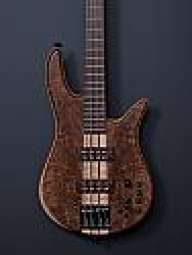
Fodera Essence.

Basically a Fodera Emperor is a Jazz bass with tweaks. Same scale, same type of PU's, same construction (bolt-on version), same PU placement and sometimes the same woods. But the details all add up to make it a lot different. I've never played a jazz bass that reminded me of an NYC bass. I get the correlation, but to me the end result is much different.
 
It's quite irrational.:) My guess is, it costs them LESS to actually produce a bass than it did 5 years ago (you would hope so, since that's part of running a good business).

You are kidding...to my knowledge every single component in a Fodera is more expensive today than it was 5 years ago (even the nine volt batteries of which there are now two and 5 years ago there was only one).

The woods alone are becoming incredibly scarce and the cost to Vinny and Joey of replacing their stock of tonewoods with each bass they make are sky rocketing.

Folks, there is a reason that Foderas cost so much and it isn't Vinny and Joey getting rich (although they certainly deserve to make a great living given that they are at the VERY TOP of their field). Every part on every bass they make is selected because it will aid in making the bass they are building the best it can be. Period. When you build anything in a 'quality above all else' manner, costs add up really quickly. The replacement cost of the woods alone that go into a Fodera (without any other components, cost of labor or profit) is greater than the current retail price of all but Fender's highest cost basses (think Custom Shop, Victor Bailey, etc.).

One other interesting point that speaks to the desireability of these instruments (beyond the fact that the roster of upper echelon players that use them is simply amazing) is their resale value. I am personally unaware of any other top maker whose basses actually appreciate in value. Certainly I am not arguing for people to start investing in Fodera's, but with the exception of vintage Fenders, what other brand allows you to buy a bass, use it and enjoying playing an incredibly fine instrument and then, if you need to or want to, sell it three years later for more than you paid for it? This speaks volumes to what people see as the value of a Fodera bass.

Finally, having had the opportunity to meet and talk to a good number of players that use Fodera's, we spend much, much more time speaking about how beautiful and nuanced they are and how much they have allowed us (as bassists) to express ourselves better than anything else we have played as opposed to what they cost....
 
You are kidding...to my knowledge every single component in a Fodera is more expensive today than it was 5 years ago (even the nine volt batteries of which there are now two and 5 years ago there was only one).

The woods alone are becoming incredibly scarce and the cost to Vinny and Joey of replacing their stock of tonewoods with each bass they make are sky rocketing.

Folks, there is a reason that Foderas cost so much and it isn't Vinny and Joey getting rich (although they certainly deserve to make a great living given that they are at the VERY TOP of their field). Every part on every bass they make is selected because it will aid in making the bass they are building the best it can be. Period. When you build anything in a 'quality above all else' manner, costs add up really quickly. The replacement cost of the woods alone that go into a Fodera (without any other components, cost of labor or profit) is greater than the current retail price of all but Fender's highest cost basses (think Custom Shop, Victor Bailey, etc.).

One other interesting point that speaks to the desireability of these instruments (beyond the fact that the roster of upper echelon players that use them is simply amazing) is their resale value. I am personally unaware of any other top maker whose basses actually appreciate in value. Certainly I am not arguing for people to start investing in Fodera's, but with the exception of vintage Fenders, what other brand allows you to buy a bass, use it and enjoying playing an incredibly fine instrument and then, if you need to or want to, sell it three years later for more than you paid for it? This speaks volumes to what people see as the value of a Fodera bass.

Finally, having had the opportunity to meet and talk to a good number of players that use Fodera's, we spend much, much more time speaking about how beautiful and nuanced they are and how much they have allowed us (as bassists) to express ourselves better than anything else we have played as opposed to what they cost....

My point was that the massive price increases have much, much, much more to do with pure demand than an increase in cost. And remember, the absolute cost of goods is only one part of the cost of an instrument. I assume that, if the company is worth anything (which I believe it is... I'm a fan and played one for YEARS), that they continue to improve their process, resulting in better margins. Whether a battery costs more, or topwoods cost a bit more is uninteresting to me, and my guess is, these increases are a trivial part of the huge price increase.

These costs are going up similarly for all boutique builders, and after owning MANY of these top of the line boutiques, and playing a LOT of Fodera's, my feeling is Fodera is AMONG the top basses out there in fit and finish and quality, but they are IN NO WAY the 'best' (i.e., there is no way the materials and construction can justify the price on a pure rational bassis.). Of course, if you 'think' they are the 'best', just like those that think Ken Smith basses, or Sadowsky basses, or whatever are the 'best', then you will pay the price and think they are 'worth it'. This is true in ANY product category.

The reason the price is going up, just like Sadowsky and a few other highly desired instruments, is IMO due to a lot more players wanting these basses than the current supply allows. For an owner of a business, this is a WONDERFUL thing:).

Also, totally +1 on resale, due the soaring price increased and long wait times. I played my Fodera hard for about 6 years, and sold it for slightly more than I paid for it. That's a very cool thing!
 
Finally, having had the opportunity to meet and talk to a good number of players that use Fodera's, we spend much, much more time speaking about how beautiful and nuanced they are and how much they have allowed us (as bassists) to express ourselves better than anything else we have played as opposed to what they cost....

One more final comment:D I too have had similar 'meetings' and get togethers with Celinder owners and Sadowsky owners, and there is a similar 'amazement and reverence' for the instruments. I'm sure this is true for MTD owners, Alembic owners, etc.

Most who like a bass enough to throw down $4,000-$7,000 will see something quite 'special' in the design, construction and tone. This is not unique in any way to Fodera or Fodera owners IMO and IME:)

Again, I'm a fan of the Fodera instruments. Just trying to apply some basic economics and 'marketing 101' to explain the high price, in case anyone is interested.
 
One more final comment:D I too have had similar 'meetings' and get togethers with Celinder owners and Sadowsky owners, and there is a similar 'amazement and reverence' for the instruments. I'm sure this is true for MTD owners, Alembic owners, etc.

Most who like a bass enough to throw down $4,000-$7,000 will see something quite 'special' in the design, construction and tone. This is not unique in any way to Fodera or Fodera owners IMO and IME:)

Again, I'm a fan of the Fodera instruments. Just trying to apply some basic economics and 'marketing 101' to explain the high price, in case anyone is interested.

Absolutely. No question that part of the ability to charge high prices is demand! ;) Cheers.
 
In large part, this tread identifies two major schools of thought
1. Fodera and company are money hungry gougers who prey on poor bass players. Fodera should just make enough to eek out a living and move to Jabib where the cost of living is nothing.
2. Free market thinkers who believe they should make what they can based on the demand they have created for their product. (free enterprise)

I would like to point out that the first school of thought is pervasive in the music business (music in not a business unfortunately) How many times have we as musicians, come across outward hostility at the notion that we should be paid to make music, not only paid but paid fairly. The amount of study and dedication it takes to learn to really play an instrument, we could all have the title M.D. at the end of our names, yet people still ask "you want to get paid to "play" music?" Isn't this some of that same thinking?

Same would be true of really talented luthiers. If Vinny Fodera feels bad when he raises prices, he should go back to the band saw and do what he does best, make basses. Let his business partner run the business.

As musicians, artists or artisans, we should rejoice that we have an opportunity to profit from our talent, not cower and be apologetic. We should conduct ourselves in a more business-like fashion. If more of us thought like this, being a musician might provide a living for more that just a hand full of elite players. This might be a better society in which to live for artists.
IMO of course.
 
My point was that the massive price increases have much, much, much more to do with pure demand than an increase in cost. And remember, the absolute cost of goods is only one part of the cost of an instrument. I assume that, if the company is worth anything (which I believe it is... I'm a fan and played one for YEARS), that they continue to improve their process, resulting in better margins. Whether a battery costs more, or topwoods cost a bit more is uninteresting to me, and my guess is, these increases are a trivial part of the huge price increase.

+1, word.
 
I bought a Fender Geddy Lee about 3 years ago, new, for 650 bucks. The same bass now is 850 bucks. 200 dollars increase, that's about 32% increase in the price. In no way it is a boutique bass or anything like that, and I doubt Fender raised the price due to greed. I think it has more to do with the cost of importing things than anything else.
Not sure how this affects the boutique builders.
 
Money, schmoney. Let's get to the real problem here - there are several easily spotted typographical errors on the Essense site. I guess those big bucks don't trickle down to someone that can do some proofreading. ;) Using "their" instead of "there" is pretty high on the list of things not to do in _any_ professional communication.

I figured "Essense" was just a hip name, but now I'm scared that it might be a typo. ;)

edit: Of course, I would still love to be able to play/own a Fodera someday. They look like very well-built instruments, all pricing arguments aside. :)
 
They charge what they can.
Don't we all?:)

I personally think that foderas are expensive given the comparatively simple shapings- which I am told is one place where a lot of time goes into ( compare the shapings on fodera with , say lefay and one will see what i mean).
But , to say it again...They charge what they can.
 
Some thoughts from Europe.
There is always one, who is considered as the best one in the World. I think in case of basses this is Fodera. The best luthier of the World. Are they really overpriced?
Fodera's prices might be high for you, but here down in Europe we have a new generation of "boutique" luthiers appearing at fairs, selling extremely fancy basses at around 4-8000 EUR. IME these basses are not made for real players, they are nowhere from Sadowsky Metros, or even Fenders, but there is a growing segment of collectors who are not particularly interested about the performance, but the outlook.

Think about violins, flutes, saxophones, cellos, played by professional musicians. I can tell you, they cost much more and I'm not talking about used ones, I'm talking about the top luthiers' instruments currently.
 
Some thoughts from Europe.
There is always one, who is considered as the best one in the World. I think in case of basses this is Fodera. The best luthier of the World. Are they really overpriced?
Fodera's prices might be high for you, but here down in Europe we have a new generation of "boutique" luthiers appearing at fairs, selling extremely fancy basses at around 4-8000 EUR. IME these basses are not made for real players, they are nowhere from Sadowsky Metros, or even Fenders, but there is a growing segment of collectors who are not particularly interested about the performance, but the outlook.

Think about violins, flutes, saxophones, cellos, played by professional musicians. I can tell you, they cost much more and I'm not talking about used ones, I'm talking about the top luthiers' instruments currently.

I agree on most of this,but given that foderas are shaped fairly simply ( the shaping of the instrument being one place where usually a lot of time goes into) I find them expensive when looking at people like lefay,to name only one, whose basses are a lot more complex as far as shaping is concerned and the overal qualityand materials is every bit as good.
But then again...
They charge what they can...or probably even less than they could.

As to bassess not made for players, One make comes to mind but I would not count Fodera into this category.
Would be a crying shame not to play them.
 
I agree on most of this,but given that foderas are shaped fairly simply ( the shaping of the instrument being one place where usually a lot of time goes into) I find them expensive when looking at people like lefay,to name only one, whose basses are a lot more complex as far as shaping is concerned and the overal qualityand materials is every bit as good.
But then again...
They charge what they can...or probably even less than they could.

As to bassess not made for players, One make comes to mind but I would not count Fodera into this category.
Would be a crying shame not to play them.

I don't think complexity has much of anything to do with price. You can have a complex build process but if few are willing to pay what you want, you can't command/demand higher prices.

IME most of the really expensive basses don't go to working musicians. And as usual high price does not equal high performance.
 
Its interesting that no one seems to consider the fact that to make something at the very top level, means you have to reject a lot "sub-standard" stuff that might not make the top grade, but would be perfectly suitable for very high end. Now, I'm not saying that this defintely applies to Fodera, but more as a general observation.

For example it may be that for every suitable piece of body wood that Fodera will use in their guitars, they have to reject, on average, 20 or 30 blanks sent to them by their supplier. This process would be time comsuing and possibly expensive. Imagine that multiplied by every bit of their hardware and then consider every process in the manufacturing of the bass being exacted to those sort of tolerances. Any slip-up could mean a costly rebuild (using fresh parts).

The point being that it could be that Fodera have imperceptably high standards that, along with their reputation, drives up the price of their basses beyond other boutique basses. Maybe your bass is made out of the wood that Fodera rejects. If that's the case with my basses, that's fine with me. I love my basses. But for someone else, they might want the wood that Fodera accepts and to them, its worth the cost.
 
Its interesting that no one seems to consider the fact that to make something at the very top level, means you have to reject a lot "sub-standard" stuff that might not make the top grade, but would be perfectly suitable for very high end. Now, I'm not saying that this defintely applies to Fodera, but more as a general observation.

For example it may be that for every suitable piece of body wood that Fodera will use in their guitars, they have to reject, on average, 20 or 30 blanks sent to them by their supplier. This process would be time comsuing and possibly expensive. Imagine that multiplied by every bit of their hardware and then consider every process in the manufacturing of the bass being exacted to those sort of tolerances. Any slip-up could mean a costly rebuild (using fresh parts).

The point being that it could be that Fodera have imperceptably high standards that, along with their reputation, drives up the price of their basses beyond other boutique basses. Maybe your bass is made out of the wood that Fodera rejects. If that's the case with my basses, that's fine with me. I love my basses. But for someone else, they might want the wood that Fodera accepts and to them, its worth the cost.


This might make sense for higher end production instruments, but not for these 'one off' handmade instruments. In my dealings with these types of luthiers, they are very 'small lot' purchasers of wood. It's not like they buy a truckload of ash and then sort through the pieces. They buy small lots from known sources, and would reject anything not up to par... not pay for it and throw it away.

Again, material costs are a trivial portion of massive price increases like these. It's all about being able to make fewer pieces than people are willing to buy, combined with a high quality deliverable that continues to satisfy the vast majority of buyers.