- Nov 27, 2003
- 2,017
- 5,418
- 50
- Disclosures
- Rogue luthier employed at Knooren Handcrafted bass guitars
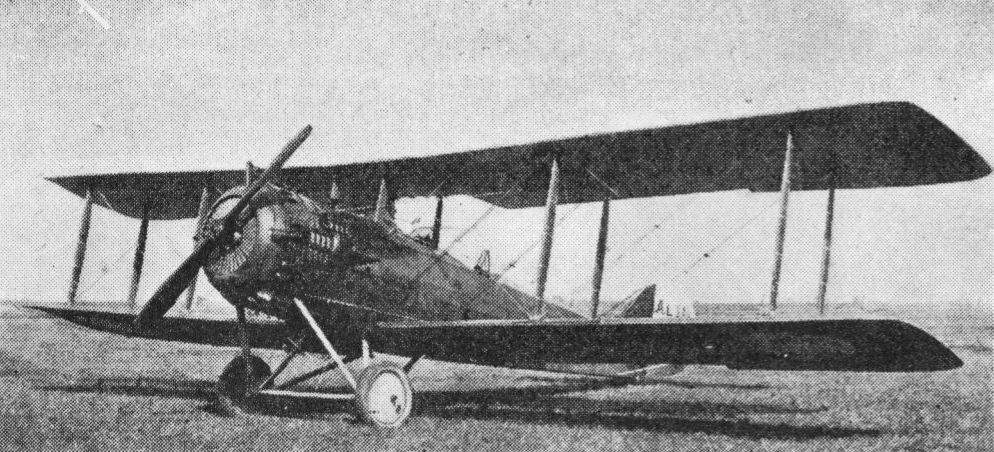
Ah yes the biplane, just seeing one brings forth visions of trench warfare, rotary engines, ragtime music and black and white silent movies. Shown here is one of the best known: the Sopwith Camel.
But the Biplane is so much more than just that and after the first world war the Biplane found plenty of use outside its original role. Biplane transports for example were popular bushplanes because of their light construction and double wings meant they could take off with a short runway, or when fitted with skies or floats not even a runway at all. And many bomber saw itself being converted to passenger plane which helped the whole airline business, Pardon the pun, take off.
As such the planes themselves were getting bigger as the whole idea of taking a plane to go on vacation became popular and the more seats one has on a plane the lower the pricing of those said seats is going to be. But the whole concept behind that was actually tried out BEFORE the first world war. When Russian engineer Igor Sikorsky built what was at that time the biggest plane ever, the aptly named "Le grand"
The "Le Grand" was the first four engined plane and the first to be designed from scratch as being a passenger plane and this was in May 1913, however, the "Le Grand" failed to get any attention for serial production and people never believed it could actually fly, when it was printed as having done just so in the news papers, many thought it was a hoax. The "Le grand" simply was too far ahead of its time.
As was the Siemens Schuckert VIII bomber which was the world's first six engined plane. I guess the picture says enough.
Those early Giants were just too big for their own good.
Another early Biplane Giant, though smaller than the Siemans, was the Farman F.60 Goliath, which was a French designed bomber which arrived too late to play any role in the first World war. But designer Henri Farman realized that with its payload capacity and long range would make an excellent airliner.
With a respectable 60 examples built, he was proven right.
The passenger compartment of the Farman F.60 Goliath, which as you can tell looks a lot like a bus, it had windows all around.
This is the sole survivor of the type, incomplete, no wings, no engines, just the travelcoach like fuselage, note also the open cockpit.
These gents photographed in 1931 are refuelling what was back then the biggest land based plane ever made, the Handley Page HP 42 This giant, made from corrugated metal remains the only passenger plane where not a single life had been lost during its service life.
The HP 42. could carry 24 passengers in what was then the ultimate of luxury. Sadly all aircraft were lost in the second world war.
So after the second world war, the role of the Biplane was pretty much over with planes like the Boeing B-29 which became the 377 stratocruiser. and the Lockheed constellation providing sleek comfort for air travel, the Biplane was a relic of the past.
...Well not exactly because after the end of the second world war, a Russian Designer by the name of Oleg Antonov began to design a replacement for the Polikarpov Po-2 utility plane, which had been used as a bush plane, a flying ambulance, as a supply plane for inhospitable places in the mining towns in Siberia. Antonov got word that while the Po-2 was a stellar performer, the general consensus was that it basically was too small, what Antonov created has since become the longest produced biplane ever, and size wise the biggest single engined biplane ever.

with a staggering 18000 units built over a span from 1947 when production began up to 2001 when production finished, the An-2 "Colt" still is a familiar sight all over the world. A dependable beast of burden, albeit not a fast one.
The An-2 was designed to be as rugged and dependable as can be but also easy to maintain, its engine was designed to take any kind of fuel and still run and as you can tell, it could be fitted with skies or floats depending on what kind of environment it was operated in.
The An-2 has since become popular with classic aircraft enthusiasts and warbird aficionados, it is also popular as a skydiving plane but the majority are still in use as Oleg Antonov intended them to be, as flying trucks, crop dusters, Bush planes and supply planes. With a modernized version powered by Turboprop engines also filling in that niche quite comfortably.
No the Biplane is still relevant and not just as a look into the past.