• TalkBass has been independent since 1998. Add your voice.
    Create a free account to reply to discussions, view embedded media, and browse with fewer display ads.
    Join freeLog in
    Want zero display ads or expanded classifieds tools? Compare plans.

Fretless Side Dots

One lined, most not ... lines don’t matter, dots don’t matter. Either you put the time in to learn how to properly intonate the bass while playing, or you’ll play out of tune most times. There’s no magic secret, you need to put the time in with your bass. A whole bunch of fretted players just never get this basic fact, people who play stringed orchestral instruments get it right away. You need to put the time in and work with the bass and your ears ...
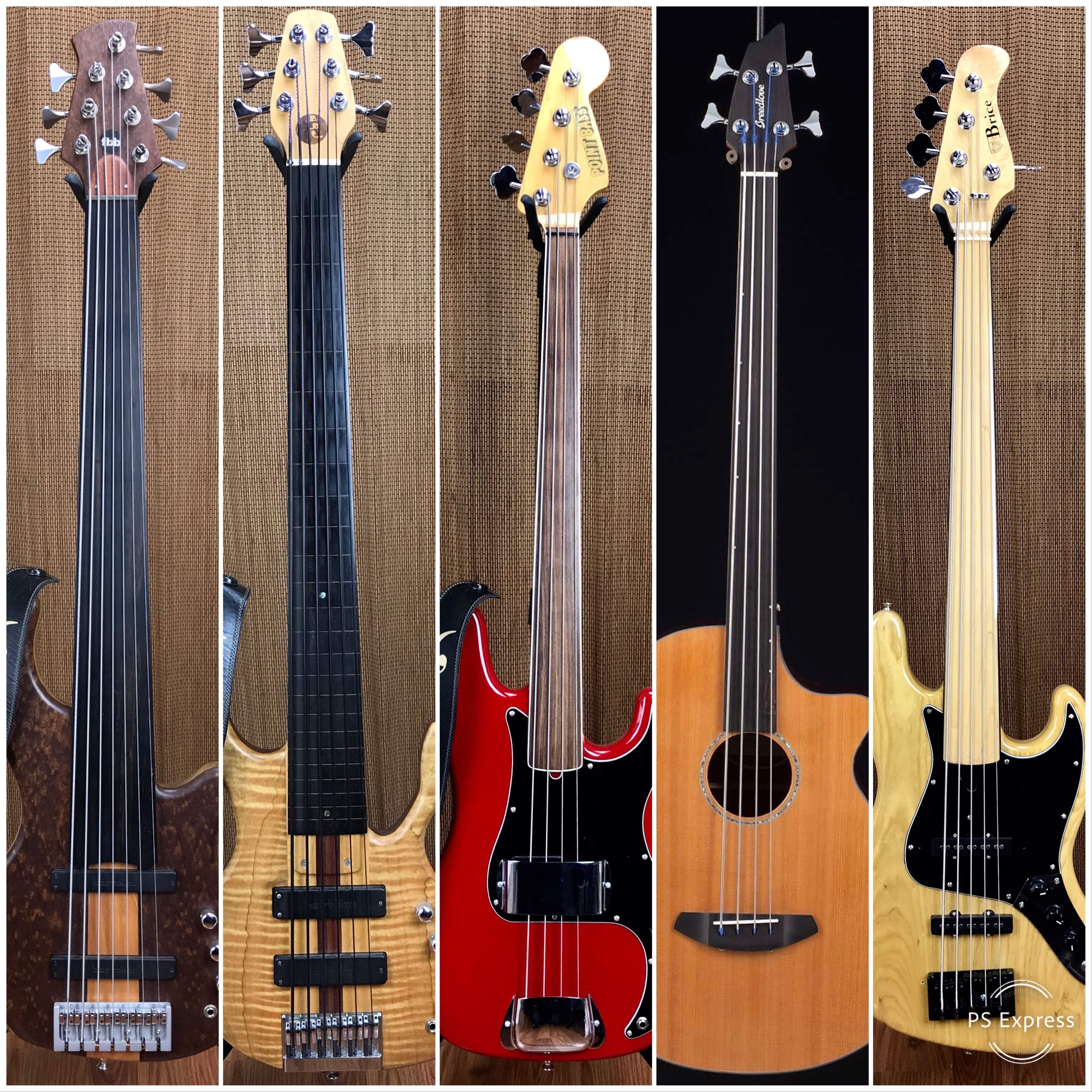
0F1A4F9B-AF5E-485E-8171-949D29C1E9D4.jpeg
 
Hey, I know this topic has been discussed here before but I couldn't find an answer to one particular question.

Why are the fretless side dots often only on every other note...and if you are using the dots as a guideline then how are you suppose to do the same for the non-dotted note...is it just the middle between 2 dots...?

Thanks!

Also -- I know you should use your ears, so hoping to avoid that debate.

I had a bass defretted and then found the side dots (in the usual fretted bass positions) were not helpful. I had a luthier drill out and blank off the old side dots then put in Luminlay side dots aligned with each fret marker (it’s a lined fretless) to help me find the right position in the dark. I thought this was a great idea until I realised there’s this thing called parallax error…. and what my eyes told me was a finger lined up with the side dot wasn’t as lined up as I thought. The Luminlay dots are still useful sometimes (helps with confidence I’m not about to open up in completely the wrong part of the neck) but TBH much less so than I’d anticipated. Muscle memory and a tuner in ‘always on’ mode (yeah I know, another crutch…. but helps as I’m still learning) are all much more important IME. And, yes, ears, but in my case by the time I can hear the note’s a clam it’s usually too late!
 
  • Like
Reactions: Beej
I had a bass defretted and then found the side dots (in the usual fretted bass positions) were not helpful. I had a luthier drill out and blank off the old side dots then put in Luminlay side dots aligned with each fret marker (it’s a lined fretless) to help me find the right position in the dark. I thought this was a great idea until I realised there’s this thing called parallax error…. and what my eyes told me was a finger lined up with the side dot wasn’t as lined up as I thought. The Luminlay dots are still useful sometimes (helps with confidence I’m not about to open up in completely the wrong part of the neck) but TBH much less so than I’d anticipated. Muscle memory and a tuner in ‘always on’ mode (yeah I know, another crutch…. but helps as I’m still learning) are all much more important IME. And, yes, ears, but in my case by the time I can hear the note’s a clam it’s usually too late!

the Luminlay dots work for me just as they do when I’m playing fretted...reference points on the neck so I’m always oriented.
 
  • Like
Reactions: drTSTingray
How about lines and dots. This has worked well for me. Looks just like a fretted neck from the side basically.
^^^ This. I have no shame admitting that I prefer a lined fretless with only side dots (no normal blocks/dots on the fingerboard) and I don't consider it a badge of honor to play without lines. I try not to stare at the fingerboard as I play, and instead only look down when I change hand positions - knowing where to put my fingers while I'm in a position is muscle memory. I only use the lines and side dots as a reference, but it's nice to have them.
 
  • Like
Reactions: ProbablyTooLoud
Hey, I know this topic has been discussed here before but I couldn't find an answer to one particular question.

Why are the fretless side dots often only on every other note...and if you are using the dots as a guideline then how are you suppose to do the same for the non-dotted note...is it just the middle between 2 dots...?

Thanks!

Also -- I know you should use your ears, so hoping to avoid that debate.

The idea is that they provide the same visual cues as dots on the fingerboard. If you had a dot for every semitone you wouldn't easily know which is which. Too much information. So you get the normal intervals and figure out the space inbetween.
 
I had both a lined fretless and unlined. The lined one was identical to fretted bass when looking at the neck while the unlined had only dots where the frets 3-5-7-9-12 etc would be.

It was that hard to play both ways to me. It just took a little time and trusting myself.
 
I have found that I need dots where the frets would be. Dots between where the frets would be freaks' me out, even on a lined fretless. I have both lined and unlined fretless basses. I also put a few dots on my upright bass. If you are first starting out on a fretless, a lined neck is a good way to go. I also want the dots on the 1,3,5,7,9 and 12.

I have a few basses with LED's from Fret Fx add on. There awesome, and quiet helpful on a dark stage. ... FretFX ... Attachable Illuminated LED Fret Markers
 
Hey, I know this topic has been discussed here before but I couldn't find an answer to one particular question.

Why are the fretless side dots often only on every other note...and if you are using the dots as a guideline then how are you suppose to do the same for the non-dotted note...is it just the middle between 2 dots...?

Thanks!

Also -- I know you should use your ears, so hoping to avoid that debate.


I find the Fender scheme of dots on the note at 3,5,7, 9, 12 etc to be the easiest, they are just guides although of course G on the E string is right at the dot but but it depends on how you put your finger down, fretless is an active way to play, you always need to listen as you play. I too have an old Rickenbacker fretless with dots on every note and it gets confusing up the neck, I usually white out most of them and leave it like a Fender. The only time the dots are really helpful though is when I make a big jump way up the neck and even then only as a ballpark thing.
 
Last edited:
My two fretless BGs have the dots, which is more than my DB! It's hard to look at the DB fingerboard when I'm playing though, so it really forces ear playing.

I just ordered one that's got that kind of marking. My first thought was "but why?" I mean, I get it, but it makes my eye twitch a little with the visual clutter on an otherwise unadorned neck. It's only visible to the player though, so I'm not bothered enough for it to be a deal breaker.


For some reason intonation is just a easy to me on an upright with no guide at all than a fretless bass with dots, probably because the scale is so much longer on an upright it's more forgiving of a small movement of your fretting finger(s) although way up on the neck is much more difficult.
 
I had a bass defretted and then found the side dots (in the usual fretted bass positions) were not helpful. I had a luthier drill out and blank off the old side dots then put in Luminlay side dots aligned with each fret marker (it’s a lined fretless) to help me find the right position in the dark. I thought this was a great idea until I realised there’s this thing called parallax error…. and what my eyes told me was a finger lined up with the side dot wasn’t as lined up as I thought. The Luminlay dots are still useful sometimes (helps with confidence I’m not about to open up in completely the wrong part of the neck) but TBH much less so than I’d anticipated. Muscle memory and a tuner in ‘always on’ mode (yeah I know, another crutch…. but helps as I’m still learning) are all much more important IME. And, yes, ears, but in my case by the time I can hear the note’s a clam it’s usually too late!


I bought a good fretless bass about 15 years ago and it came with side dots between the notes like on a fretted bass, I could not believe it, I tried to get used to it for a while and finally sold it. I should have done what you did though, it was a nice bass and kind of rare.
 
  • Like
Reactions: MuttThud
Hey, I know this topic has been discussed here before but I couldn't find an answer to one particular question.

Why are the fretless side dots often only on every other note...and if you are using the dots as a guideline then how are you suppose to do the same for the non-dotted note...is it just the middle between 2 dots...?

Thanks!

Also -- I know you should use your ears, so hoping to avoid that debate.
The dots mark center of 3 5 7 9 12 15 17 19 and so on. Just like a fretted bass. If you're playing your bass on the dots, your playing about half step down out of tune.

The note is the exact middle of two dots. If you aren't putting your finger in the exact center of two dots, you're playing out of tune.

The fretted bass guitar was named "The Precision Bass" for a reason.
 
Last edited:
The dots mark center of 3 5 7 9 12 15 17 19 and so on. Just like a fretted bass. If you're playing your bass on the dots, your playing about half step down out of tune.

If the dots are in the wrong place, yes. Why you would want to build a bass that way, I do not know.

I have often thought that even fretted instruments would be better with the side dots directly under the frets.
 
  • Like
Reactions: bobyoung53
^^^ This. I have no shame admitting that I prefer a lined fretless with only side dots (no normal blocks/dots on the fingerboard) and I don't consider it a badge of honor to play without lines. I try not to stare at the fingerboard as I play, and instead only look down when I change hand positions - knowing where to put my fingers while I'm in a position is muscle memory. I only use the lines and side dots as a reference, but it's nice to have them.

There IS no shame, though there's lots of the TB fretless community that would love to try to shame players who want that or lines in a not so subtle elitism. They're the same people who want you to play blindfolded or under a new moon at midnight in your windowless basement. Generally nonsense, and there are some well known high quality fretless players who use lined basses. People should pick the one they're most comfortable with and play the heck out of it. All of the nonsense stops players from picking up and trying to play fretless...which probably means the world misses out on a whole bunch of guys who would be great fretless players.


Just because you have lines or want markers doesn't mean you have to use them:
56497161_10214069334153387_6259516587372445696_n.jpg


(live on stage at the Odeon in Nelson NY)

There's lots of guys I think we can agree can play fretless pretty flawlessly that like lines.

Steve-Lawson-LessonsHeader.jpg


^Oh carp, he's even LOOKING at them!

Then there's this guy:

20th-for-site.jpg