
- May 16, 2007
- 3,395
- 4,869
- Disclosures
- Volunteer developer/beta tester with Source Audio, Morningstar Engineering & MORTRIX
@Andras Szalay I think I mentioned this too.some of the fm stuff is giving me a click/pop at the start of the note still.

TalkBass has been independent since 1998. Add your voice.
Create a free account to reply to discussions, view embedded media, and browse with fewer display ads.
Join free Log in
Want zero display ads or expanded classifieds tools? Compare plans.
@Andras Szalay I think I mentioned this too.some of the fm stuff is giving me a click/pop at the start of the note still.

Need to learn to play as well as you do next!It’s on there: factory 25 in the FM set.
I programmed it with P bass and flats so it’ll play differently with anything else. Should work on a Jazz with front pickup favoured or soloed. If using rounds, turn the passive tone control down.Need to learn to play as well as you do next!
I’m away at the moment but can do a recording when back, it’s on all sounds but most noteanble on things with a slow attack - played into an external decay you. An hear it repeat! (I did wonder if its similar to that pic earlier where there was a short errant C note at the start of the note, accurate setting minimises it but doesn’t remove it)@Andras Szalay I think I mentioned this too.
When I first updated and tested the sounds, I was getting the pops, too. Since creating a new bank with a mixture of new and old sounds, I haven't noticed the pops...@Andras Szalay I think I mentioned this too.
There is a bit of an artefact upon note release that’s been a bugbear of mine for ages. It is much more apparent on certain patches; if you play notes in quick succession, it can make you think it’s the attack causing the issue but it’s actually the release of the previous note.I’m away at the moment but can do a recording when back, it’s on all sounds but most noteanble on things with a slow attack - played into an external decay you. An hear it repeat! (I did wonder if its similar to that pic earlier where there was a short errant C note at the start of the note, accurate setting minimises it but doesn’t remove it)
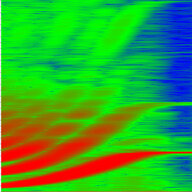

That's the reason I don't share more of my sounds.One man’s useful is it
i think that one man’s killer synth bass sound may very well be someone else’s pan pipe cheese (1.1 I’m looking at you)



Problem solved using Dexed instead of Midi-Ox.I think that’s a cheap-enough experiment. The Future Impact in past iterations was somewhat picky with MIDI USB interfaces as well, apparently because of the packet size the data was in- so it might make sense that a similar issue is happening with the Sysex dumps from the DX7. The Roland UM-One MK-2 is a decent little MIDI interface that can be found for fairly cheap

Its the one I use! Thanks Quatschmacher!It’s on there: factory 25 in the FM set.

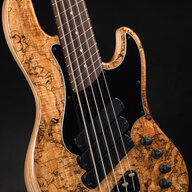

I’ve had the MXR since release and the Future Impact since its second year IIRC. To me the reason for the difference in sound response has a lot to do with how the MXR’s amp envelope responds to release/decay in the input signal- with sustained notes the synth oscillator voice “fizzles” unnaturally when the input signal drops below a threshold (probably where the “fuzz” comparison comes from as the same unnatural decay tends to happen when using gated fuzz to emulate a synth sound), whereas the current iteration of the Future Impact allows for clean note sustain and decay that can actually sustain beyond what the strings of a bass are capable of. I felt like older firmware versions of the Future Impact could have similar issues with decay as the MXR at some settings (though it was usually somewhat smoother), while the newest updates have really upped the ante by including a fully functional ASDR amp envelope that can sustain notes indefinitely. For fast playing and short note values I think the MXR is still pretty cool, and I really like the filter in the MXR and the relatively simple interface. Strong compression into the MXR (or the internal compressor) can also help increase note sustain. But yeah the current Future Impact is undeniably capable of sounds and responses far beyond the MXR if you are willing to invest the time into it (and I’d say the current tracking of the FI is much more forgiving and noticeably faster too though the speed of the MXR is pretty impressive in 4-string mode).Future Impact (4.5 VIP) vs MXR Bass Synth – Real World Take (R&B Cover Band Use)
So I used my FI 4.5 VIP pedal on a gig for the first time this weekend. I've also spent a good amount of time with the MXR Bass synth pedal on gigs since it's release. Below I offer my comparison of the two pedals.
1. Sound Quality – This Is the Big One
For me, the Future Impact simply sounds better. Not subtly better—meaningfully better.
The FI produces a more multi-dimensional, layered, and full synth tone. It feels like an actual instrument rather than an effect sitting on top of your bass signal. Notes have depth, weight, and complexity. You hear distinct oscillator behavior, filtering, and envelope shaping working together in a way that feels organic and “synth-like.”
By contrast, the MXR tends to sound more like a processed bass signal—almost like a filter + fuzz combo rather than a true synth engine. It can sound good in a mix, but it lacks that 3D, harmonically rich character you want for classic R&B synth lines (think Stevie Wonder / Parliament/ Michael Jackson / Bruno Mars / Chaka Khan / Whitney Houston).
The difference, I think, comes down to architecture. The FI is essentially a full synth engine (multiple oscillators, envelopes, filter etc.) The MXR feels more like a preset-based effects processor approximating synth tones. If you goal is "convincing synth bass," the FI wins IMO.
2. Editor + User Database = Huge Advantage
This is where the gap really widens. The FI pedal is augmented with computer Editor software, and more importantly for me (since I'm not well versed in synth programming) has access to a huge user preset database, which is continually updating. That's a game changer. If I can't find what I need on the pedal, I can go to the database and find a preset that gets the job done and load it into the pedal. In addition, I can tweak the preset and user sounds using the Editor. (Something I hope to get better at in the future).
By contrast, the MXR has no computer connectivity, no editor, no preset ecosystem, no way to browse or import sounds. You are basically limited to what's on the pedal + whatever you can dial in by ear. And you are doing it in the blind. There is no visual feedback for parameter values, no way to really understand what's happening under the hood. As someone with limited knowledge re synth programming, the FI easily wins. The user interface is far superior.
3. Hardware Interface
Both pedals are well-built and gig-worthy. No complaints there. But the adjustable parameters on the FI pedal itself are clearly defined. You know what your are adjusting and can make intentional, repeatable changes. On the MXR pedal, as explained above, adjustments feel more like guesswork. In addition, the new Setlist mode on the FI pedal itself is extremely useful when using it on a gig. (And you don't need a computer to do this.) I can organize my sounds in performance order prior to the gig. The MXR has no comparable feature.
Bottom Line
The MXR Bass Synth is a solid and fun pedal. It's compact, sounds decent, and it's preset are all usable in a gig situation. But the Future Impact sounds more like a real synth, offers vastly better control and flexibility, and has a huge ecosystem via the user database. For my use case the FI isn't just better, it's on a different level.
The Future Impact is not perfect. The vast majority of the factory presets on the FI are not usable for my gigs. (I realize that it is not strictly a bass synth pedal.) It has a steeper learning curve than the MXR. (Hopefully Panda Audio will produce some YouTube instructional videos to lower the curve.) But with the addition of the new 4.5 presets there are now enough classic bass synth programs on the pedal itself to make it a true "plug and play" bass synth pedal, if that is what you are looking for. Yes, there are now 198 presets with the addition of the FM sounds. The shear number of sounds can be overwhelming. But Panda Audio wisely added the Setlist mode to address this. And for non-programers the huge user-created database offers more than enough sounds for a gigging bass player to browse and download. Kudos to @Andras Szalay, @Quatschmacher and the rest of the Panda Audio team for the new and improved 4.5 Future Impact pedal.
Thank you for this very thoughtful and detailed comparison.Future Impact (4.5 VIP) vs MXR Bass Synth – Real World Take (R&B Cover Band Use)
So I used my FI 4.5 VIP pedal on a gig for the first time this weekend. I've also spent a good amount of time with the MXR Bass synth pedal on gigs since it's release. Below I offer my comparison of the two pedals.
1. Sound Quality – This Is the Big One
For me, the Future Impact simply sounds better. Not subtly better—meaningfully better.
The FI produces a more multi-dimensional, layered, and full synth tone. It feels like an actual instrument rather than an effect sitting on top of your bass signal. Notes have depth, weight, and complexity. You hear distinct oscillator behavior, filtering, and envelope shaping working together in a way that feels organic and “synth-like.”
By contrast, the MXR tends to sound more like a processed bass signal—almost like a filter + fuzz combo rather than a true synth engine. It can sound good in a mix, but it lacks that 3D, harmonically rich character you want for classic R&B synth lines (think Stevie Wonder / Parliament/ Michael Jackson / Bruno Mars / Chaka Khan / Whitney Houston).
The difference, I think, comes down to architecture. The FI is essentially a full synth engine (multiple oscillators, envelopes, filter etc.) The MXR feels more like a preset-based effects processor approximating synth tones. If you goal is "convincing synth bass," the FI wins IMO.
2. Editor + User Database = Huge Advantage
This is where the gap really widens. The FI pedal is augmented with computer Editor software, and more importantly for me (since I'm not well versed in synth programming) has access to a huge user preset database, which is continually updating. That's a game changer. If I can't find what I need on the pedal, I can go to the database and find a preset that gets the job done and load it into the pedal. In addition, I can tweak the preset and user sounds using the Editor. (Something I hope to get better at in the future).
By contrast, the MXR has no computer connectivity, no editor, no preset ecosystem, no way to browse or import sounds. You are basically limited to what's on the pedal + whatever you can dial in by ear. And you are doing it in the blind. There is no visual feedback for parameter values, no way to really understand what's happening under the hood. As someone with limited knowledge re synth programming, the FI easily wins. The user interface is far superior.
3. Hardware Interface
Both pedals are well-built and gig-worthy. No complaints there. But the adjustable parameters on the FI pedal itself are clearly defined. You know what your are adjusting and can make intentional, repeatable changes. On the MXR pedal, as explained above, adjustments feel more like guesswork. In addition, the new Setlist mode on the FI pedal itself is extremely useful when using it on a gig. (And you don't need a computer to do this.) I can organize my sounds in performance order prior to the gig. The MXR has no comparable feature.
Bottom Line
The MXR Bass Synth is a solid and fun pedal. It's compact, sounds decent, and it's preset are all usable in a gig situation. But the Future Impact sounds more like a real synth, offers vastly better control and flexibility, and has a huge ecosystem via the user database. For my use case the FI isn't just better, it's on a different level.
The Future Impact is not perfect. The vast majority of the factory presets on the FI are not usable for my gigs. (I realize that it is not strictly a bass synth pedal.) It has a steeper learning curve than the MXR. (Hopefully Panda Audio will produce some YouTube instructional videos to lower the curve.) But with the addition of the new 4.5 presets there are now enough classic bass synth programs on the pedal itself to make it a true "plug and play" bass synth pedal, if that is what you are looking for. Yes, there are now 198 presets with the addition of the FM sounds. The shear number of sounds can be overwhelming. But Panda Audio wisely added the Setlist mode to address this. And for non-programers the huge user-created database offers more than enough sounds for a gigging bass player to browse and download. Kudos to @Andras Szalay, @Quatschmacher and the rest of the Panda Audio team for the new and improved 4.5 Future Impact pedal.


It's quite fun to program the commands using their web editor. I feel like a genius when I find a clever combination of commands.The MC4 Pro arrived today, it's a cute little thing. Now I'll have to learn how to use it. Here's my current board, not all hooked up but laid out. Soon I hope to replace the big honking bypass looper by a Morningstar ML-10X.
View attachment 7478657
I’ve been having a lot of fun sending FI into the PF101Here's my current board,
 ecrease each ser.no. value by exactly 1. (Example:ser.no.:127 becomes ser.no.:126, ser.no.:168 becomes ser.no.:167).


