

Enjoy the benefits of a premium membership!
Upgrade Account
-
TalkBass has been independent since 1998. Add your voice.
Create a free account to reply to discussions, view embedded media, and browse with fewer display ads.
Join free Log in
Want zero display ads or expanded classifieds tools? Compare plans.
You are using an out of date browser. It may not display this or other websites correctly.
You should upgrade or use an alternative browser.
You should upgrade or use an alternative browser.
GenzBenz Streamliner Pt 8...
- Thread starter Chef
- Start date
- Status
- Not open for further replies.
More options
Who Replied?
I'm just trying to upgrade to a cab that doesn't have too big of a lowend cause the Streamliner has plenty.
This is an EXCELLENT observation. Super warm cabs don't play as nice. I like the GK growl with this amp
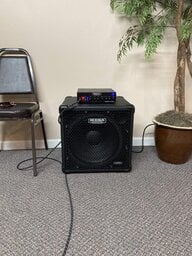
This is an EXCELLENT observation. Super warm cabs don't play as nice. I like the GK growl with this amp
Thanks Tunaman how does that pair of GK neo 115's sound with the Streamliner?

Aussie Mark
I come from a land down under
- Oct 26, 2002
- 1,161
- 206
- Disclosures
- Endorsing Artist: Fender; O'Neill Amps; Cave Passive Pedals
Hey, what does the STL900 sound like with the UL310?
Pretty good I expect. It sounds great with either my UL610 or UL210.

Here's my rig: Streamliner 900, FMC 2x12", SR Classic V.
As has been mentioned before the STL has a big bottom (as does the SR) so I rarely boost the lows at all. I used to play a Glockenklang Soul and cab and I feel that this setup delivers all it's punch and clarity plus a whole lot of tubey warmth. I love this rig!
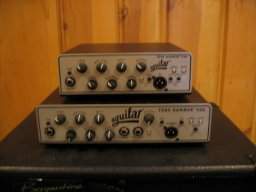
As has been mentioned before the STL has a big bottom (as does the SR) so I rarely boost the lows at all. I used to play a Glockenklang Soul and cab and I feel that this setup delivers all it's punch and clarity plus a whole lot of tubey warmth. I love this rig!
Nice! I gigged a Glock Heartrock for a while,and I definitely hear what you are saying about the similarities... wide, creamy, fat, loud, and a crystal clear top end. For me, all the good of the HR, but the differences are in the direction of 'better' with the Streamliner.


- Feb 16, 2008
- 21,240
- 23,633
- Disclosures
- John K Custom Basses
IME, the VT pedal works great with it, but i personally think that the streamliner's built gain/distortion sounds better than the pedal's distortion does.

svtb15
Inactive
- Mar 22, 2004
- 13,004
- 4,741
- Disclosures
- I play it all. Whatever works for the gig. Q+
I tried my VT bass pedal with my Streamliner.. Personally i like the Streamliner all by itself than with the VT bass.. And it's one less thing to hook up in the signal chain..
You can get some gnarly distortion with the streamliner on its own if that is what you want...
I tend for a clean signal with slight tube compression by opening up the Gain pot a little more than most people might.. But the amp breathes real nice on its own for my needs
You can get some gnarly distortion with the streamliner on its own if that is what you want...
I tend for a clean signal with slight tube compression by opening up the Gain pot a little more than most people might.. But the amp breathes real nice on its own for my needs
Do you guys think that an Orange OBC 115 and a STL-600 would be a good match?
Also, how does the head react to pedals like the VT bass?

I played a Gig last night with my Streamliner and Berg HT112ER using a MM Stingray Standard. The tone was absolutely glorious. This Stingray has the three Band EQ and for kicks I goosed the Mid control a bit. I had the Stingray EQ controls at Treble on about 11:00, Mid on about 3:00, and the Bass on about 2:00. The Streamliner EQ was set at Zero cut or boost across the board.
I tried my VT bass pedal with my Streamliner.. Personally i like the Streamliner all by itself than with the VT bass.. And it's one less thing to hook up in the signal chain..
You can get some gnarly distortion with the streamliner on its own if that is what you want...
I tend for a clean signal with slight tube compression by opening up the Gain pot a little more than most people might.. But the amp breathes real nice on its own for my needs
The built in overdrive sounds really convincing then, if you guys prefer that to the VT Bass.
Personally I didn't like the OD of my Fusion 550 at all and I'm a little biased now maybe about heads' OD capability.
Any comment about the cab?
Will playing a Mayones BE 4 Exotic bass (very mid-oriented, think early Warwicks) strung with flatwounds and the already mentioned Orange.
svtb15
Inactive
- Mar 22, 2004
- 13,004
- 4,741
- Disclosures
- I play it all. Whatever works for the gig. Q+
The VT is more of a total Amp simulator. .output tubes and all.... Sounds closer to an SVT ..
Streamliner is different in its own way... and i love it
Streamliner is different in its own way... and i love it
I've done quite a few amp comparisons lately, with the Streamliner included, and the thing that really sticks out to me is the absolutely magnificent job the designers did in sculpting the low end of this amp (I assume through hi pass filtering and a few other things that are over my head).
This became very clear in a recent comparison of the Mesa M6 and Streamliner. While both are fabulous in their own way, the low end of the Streamliner seemed just as fat and big, but while the M6 destroyed smaller cabs with higher tuning (i.e., that 'speaker pistoning through the grill' sort of thing), the Streamliner sounded huge, but totally controlled.
The best example was with my Acme 112. The M6 literally farted that cab out at even low volumes, with all that (useless IMO) sub bass cranking out of that map, while the Streamliner sounded deep, full, non compressed, and allowed the Acme to reach surprisingly high volume levels before finally farting a bit.
Even my beloved Markbass F500 is not as controlled down low (i.e., it doesn't sound as deep and full, but yet seems to put more strain on the drivers when cranked).
This low end sculpting, combined with that limiting circuit that allows the rather standard ICE module to somehow significantly outperform competitive amps using the same module, makes this (and the Shuttle Max 9.2 for those who want a tighter, brighter, more modern tone) really something.
If any of the new heads Genz will (I assume) introduce at NAMM this year somehow combine some of the EQ power of the larger Max heads with the footprint of the Shuttles, I might just become 'Genz amplification exclusive'.
The low end performance of the Streamliner is just really beautiful to me, and allows that rare combination of a low end that sounds huge with the ability to crank at high volumes without sounding tubby or bloated. Totally digging it!
This became very clear in a recent comparison of the Mesa M6 and Streamliner. While both are fabulous in their own way, the low end of the Streamliner seemed just as fat and big, but while the M6 destroyed smaller cabs with higher tuning (i.e., that 'speaker pistoning through the grill' sort of thing), the Streamliner sounded huge, but totally controlled.
The best example was with my Acme 112. The M6 literally farted that cab out at even low volumes, with all that (useless IMO) sub bass cranking out of that map, while the Streamliner sounded deep, full, non compressed, and allowed the Acme to reach surprisingly high volume levels before finally farting a bit.
Even my beloved Markbass F500 is not as controlled down low (i.e., it doesn't sound as deep and full, but yet seems to put more strain on the drivers when cranked).
This low end sculpting, combined with that limiting circuit that allows the rather standard ICE module to somehow significantly outperform competitive amps using the same module, makes this (and the Shuttle Max 9.2 for those who want a tighter, brighter, more modern tone) really something.
If any of the new heads Genz will (I assume) introduce at NAMM this year somehow combine some of the EQ power of the larger Max heads with the footprint of the Shuttles, I might just become 'Genz amplification exclusive'.
The low end performance of the Streamliner is just really beautiful to me, and allows that rare combination of a low end that sounds huge with the ability to crank at high volumes without sounding tubby or bloated. Totally digging it!
I tried my VT bass pedal with my Streamliner.. Personally i like the Streamliner all by itself than with the VT bass.. And it's one less thing to hook up in the signal chain..
You can get some gnarly distortion with the streamliner on its own if that is what you want...
I tend for a clean signal with slight tube compression by opening up the Gain pot a little more than most people might.. But the amp breathes real nice on its own for my needs
+1 The VT pedal is amazing, but seems to like a more neutral, transparent platform (like the LMII, the Shuttle 9, or whatever) to really sound like it is supposed to sound. I think the relaxed upper mids of the Streamliner, combined with the big low end kind of 'suck the VT out of the VT'.
Kind of like putting a tube emulation pedal in front of a tube amp.

- Feb 12, 2006
- 60,963
- 5
- 220,651
- Disclosures
- Development Engineer-Mesa Boogie, Development Engineer-Genzler (pedals), Product Support-Genz Benz
IMO, it's essential to have a good control of the low end response in order for an amp to have a thick low end but also be useable and cabinet friendly.
One problem that amp designers (should) consider when voicing an amp and designing the power amp to speaker interface is what a speaker does in the lowest octave... it's anything but a uniform load. It's like a spring-system that has both damped and undamped or under-damped components. If you do not address the under-damped parts of the response, things can get wildly out of control and this can greatly degrade the performance of the speaker and thus the player's experience. It also goes back to the overall feel of the player-bass-amp-speaker-acoustic environment SYSTEM. It all operates together as a system and the system is only as good as the weakest link in the chain.
One problem that amp designers (should) consider when voicing an amp and designing the power amp to speaker interface is what a speaker does in the lowest octave... it's anything but a uniform load. It's like a spring-system that has both damped and undamped or under-damped components. If you do not address the under-damped parts of the response, things can get wildly out of control and this can greatly degrade the performance of the speaker and thus the player's experience. It also goes back to the overall feel of the player-bass-amp-speaker-acoustic environment SYSTEM. It all operates together as a system and the system is only as good as the weakest link in the chain.

I've done quite a few amp comparisons lately, with the Streamliner included, and the thing that really sticks out to me is the absolutely magnificent job the designers did in sculpting the low end of this amp (I assume through hi pass filtering and a few other things that are over my head).
This became very clear in a recent comparison of the Mesa M6 and Streamliner. While both are fabulous in their own way, the low end of the Streamliner seemed just as fat and big, but while the M6 destroyed smaller cabs with higher tuning (i.e., that 'speaker pistoning through the grill' sort of thing), the Streamliner sounded huge, but totally controlled.
The best example was with my Acme 112. The M6 literally farted that cab out at even low volumes, with all that (useless IMO) sub bass cranking out of that map, while the Streamliner sounded deep, full, non compressed, and allowed the Acme to reach surprisingly high volume levels before finally farting a bit.
Even my beloved Markbass F500 is not as controlled down low (i.e., it doesn't sound as deep and full, but yet seems to put more strain on the drivers when cranked).
This low end sculpting, combined with that limiting circuit that allows the rather standard ICE module to somehow significantly outperform competitive amps using the same module, makes this (and the Shuttle Max 9.2 for those who want a tighter, brighter, more modern tone) really something.
If any of the new heads Genz will (I assume) introduce at NAMM this year somehow combine some of the EQ power of the larger Max heads with the footprint of the Shuttles, I might just become 'Genz amplification exclusive'.
The low end performance of the Streamliner is just really beautiful to me, and allows that rare combination of a low end that sounds huge with the ability to crank at high volumes without sounding tubby or bloated. Totally digging it!
KJ,
Just a couple things. 1) I think the M6 was used as at least one of the comparision or test amps. Not saying they were used it all for voicing (I know that is obvious) but just rather as a amp that was hammer and doing well on the market. 2) glad you and I didn't give up on them after our first or in your case second experience. GB customer service rules!


I've done quite a few amp comparisons lately, with the Streamliner included, and the thing that really sticks out to me is the absolutely magnificent job the designers did in sculpting the low end of this amp (I assume through hi pass filtering and a few other things that are over my head).
This became very clear in a recent comparison of the Mesa M6 and Streamliner. While both are fabulous in their own way, the low end of the Streamliner seemed just as fat and big, but while the M6 destroyed smaller cabs with higher tuning (i.e., that 'speaker pistoning through the grill' sort of thing), the Streamliner sounded huge, but totally controlled.
...The low end performance of the Streamliner is just really beautiful to me, and allows that rare combination of a low end that sounds huge with the ability to crank at high volumes without sounding tubby or bloated. Totally digging it!
+1
While waiting for my AudioKinesis Thunderchild, I wondered if I might end up needing to add something like Fdeck's HPF, to keep subsonics from wasting my headroom. I'm using the 900, and that's a lot of power to pump into a tiny 112 cab.
No worries at all. Even when I was hitting the amp hard enough to light the Peak LED, there was no unnecessary cone motion. I find this pretty surprising, given the amount of booty the Streamliner can put out.
KJ,
Just a couple things. 1) I think the M6 was used as at least one of the comparision or test amps. Not saying they were used it all for voicing (I know that is obvious) but just rather as a amp that was hammer and doing well on the market. 2) glad you and I didn't give up on them after our first or in your case second experience. GB customer service rules!
+1 all the way!
Thanks Tunaman how does that pair of GK neo 115's sound with the Streamliner?
Sorry bro... but heres your answer
Very nicely
- Status
- Not open for further replies.


