Andy recapped it for me 

TalkBass has been independent since 1998. Add your voice.
Create a free account to reply to discussions, view embedded media, and browse with fewer display ads.
Join free Log in
Want zero display ads or expanded classifieds tools? Compare plans.
Of course, as typical, your leaderships has snuck away for some hot wings and blue cheese dip!Copy and roger all! Reporting as ordered.

I like distortion, but look at the age of this thing:
I didn't go in with any expectations as to how it would sound cranked up this way. Breakup was very soft and it took hitting the strings really hard to get there. BTW: I think Andy for the HPF on that one. I think I could have gotten into trouble without it
Did anyone suggest that the caps need changing?

Really amazing. I expected some sort of limits to cranking it up.There are earlier versions of tube overdrive algorithms in the ML-200, the ML-135 isn't as sophisticated but still way better than what anybody else was doing WAY back then... that was 20 years ago!
I have an ML-200 running my shop system and it has over 26,000 hours on those poor, often disrespected filter caps
(Actually, it probably has over 30,000 hours on it)
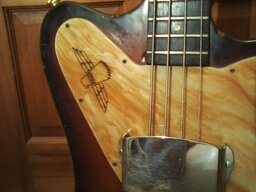
Nice amps. Real band. Good sound.
It’s after 4PM on the east coast. Most oldies have already had the earlybird special.
Waiting For The Wind


Better hit the prunes @GonePlaidBeen eatin' all day at WDW Food & Wine Festival. Barely able to move. Gig tomorrow night at American Legion in Port St. Lucie, FL. Always a fun crowd.
Don't wanna be going to the bathroom at the gig........
Yamaha has always had an excellent rep in my eyes. I remember friends owning Yamaha PA systems and they were quite (rightfully) proud of them. Excellent quality. Even in the 70's Yamaha bass and guitar amps were pretty good for their time.The introduction of digital equipment made a difference across the industry. I marvel at what Yamaha did in the 80’s with their pianos, synths, and drum machines. Their digital mixers were way ahead of everyone else. MIDI conflicts still manages to drive me nuts.
Hey, @agedhorse how's it going?There are earlier versions of tube overdrive algorithms in the ML-200, the ML-135 isn't as sophisticated but still way better than what anybody else was doing WAY back then... that was 20 years ago!
I have an ML-200 running my shop system and it has over 26,000 hours on those poor, often disrespected filter caps
(Actually, it probably has over 30,000 hours on it)

This is why I have such high hopes for Ampeg's future. IMO Yamaha has always been a thought leader in any area where they decided to engage and very solid in R&D/innovation. They have also consistently placed a high value on their reputation in the eyes of their competitors as well as their customers....I marvel at what Yamaha did in the 80’s with their pianos, synths, and drum machines. Their digital mixers were way ahead of everyone else....
I'm betting they'll come out with an Ampeg class D the size of a GK or TC Electronics. I think that would be cool.This is why I have such high hopes for Ampeg's future. IMO Yamaha has always been a thought leader in any area were they decided to engage and very solid in R&D/innovation. They have also consistently placed a high value on their reputation in the eyes of their competitors as well as their customers.

I thought they had some Portaflex models that were class D...although it's been years since I owned or even played on anything Ampeg.I'm betting they'll come out with an Ampeg class D the size of a GK or TC Electronics. I think that would be cool.
I recently bought and sold an Ampeg PF-350. It was nice and had great tone but it was twice as big as my GK MB500. Something between the MB200 and MB500....I thought they had some Portaflex models that were class D...although it's been years since I owned or even played on anything Ampeg.

but in this case I have positional authority for this Roll Call
Wow, that surprises me as I figured those heads (which I've never seen in person) would be of similar size and weight with their competition. I mean that size and weight convenience factor on the competitor heads isn't the only selling point, but it is really nice!!I recently bought and sold an Ampeg PF-350. It was nice and had great tone but it was twice as big as my GK MB500. Something between the MB200 and MB500....
We stand relieved...insert appropriate salute here.Relieve the watch, relieve the wheel and lookouts. On deck, condition 3, watch section 2...now relieve the watch.
Well, Al, the amp was very nice. The PF-350 was the smallest of the lot, but it was honestly significantly larger than the GK's. Here's the specs from the Ampeg site:Wow, that surprises me as I figured those heads (which I've never seen in person) would be of similar size and weight with their competition. I mean that size and weight convenience factor on the competitor heads isn't the only selling point, but it is really nice!!
I know this sounds ridiculous coming from a bass player who grew up with the gear we did Will, but these days I expect GK MB or Mesa D-800 size, weight and performance from a well-engineered bass amp. I know that's not necessarily fair, and in some cases wouldn't be a deal breaker, but my Mesa and GK class D heads readily check all the boxes and are my benchmark.Well, Al, the amp was very nice. The PF-350 was the smallest of the lot, but it was honestly significantly larger than the GK's. Here's the specs from the Ampeg site:
Gallien Krueger MB500:
- RMS power output: 350W @ 4 ohms
- Preamp: Solid-state
- Power amp: Class D
- Tone controls: bass, mid, treble
- Onboard limiter
- Balanced direct out
- FX loop
- 1/8” headphone out / line in
- -15db input pad
- Power supply: switching
- Dimensions (H x W x D inches) :
- 2 x 11 x 11 in
- 69 x 275 x 272 mm
- Handling weight: 8 lbs / 3.6 kg
Power
@4Ω
500 WATTS
Dimensions
10.75 x 9 x 1.75"
3.75 LBS
Preamp
SOLID STATE
INTEGRATED CIRCUIT