While I appreciate the skill and individuality involved in hand-crafting a bass guitar, can it compare to the precision and accuracy of CNC-manufactured production?

Enjoy the benefits of a premium membership!
Upgrade Account
-
TalkBass has been independent since 1998. Add your voice.
Create a free account to reply to discussions, view embedded media, and browse with fewer display ads.
Join free Log in
Want zero display ads or expanded classifieds tools? Compare plans.
You are using an out of date browser. It may not display this or other websites correctly.
You should upgrade or use an alternative browser.
You should upgrade or use an alternative browser.
Hand-crafted vs CNC-manufactured instruments?
- Thread starter Hambone 70
- Start date
-
- Tags
- vs
More options
Who Replied?
Yes, absolutely. Short answer, the cnc can only get you so close, the fine work is done by hand. There was a post, I think by @Rodent from a few years back that covered the topic very well.

Thanks! I'll look for that thread.
So can a 100% handmade instrument compare to a CNC/PLEK-produced instrument that is finished by hand?
So can a 100% handmade instrument compare to a CNC/PLEK-produced instrument that is finished by hand?

Ric basses are a case in point, they CNC the neck and body, but the finish sanding is done by hand or with hand-held random orbit sanders, so the final product is dependent on who sands it. That's sometimes problematic, a lot of the "tail lift" complaints are actually bodies sanded out of flat at the neck heel. The Ric necks can vary by as much as 1/8" thickness bass to bass despite the CNC. Plek is CNC applied to fret leveling, seems like it should be more accurate, but I've never owned a plek'd bass. It's standard on most or all G&L basses now, and they are impeccably set up right out of the box based on store models I've played.

The advantage of CNC is speed and consistency, not so much accuracy by itself. With enough skill, patience, and time you can achieve high precision with conventional tools. Plus, there are some things that are difficult or impossible to do with CNC, like fully smooth sculpted surfaces, undercuts, and sharp inside corners. CNC is great for speeding up production, but it's not a cure-all.
I've never used a plekked neck, but my impression is that it's not necessarily better than good manual fretwork, it's more that it's cost-effective for mass production.
I've never used a plekked neck, but my impression is that it's not necessarily better than good manual fretwork, it's more that it's cost-effective for mass production.

- Dec 20, 2004
- 4,267
- 2,481
- Disclosures
- Player-Builder-Founder: Honey Badger Pickups & Regenerate Guitar Works
Thanks! I'll look for that thread.
So can a 100% handmade instrument compare to a CNC/PLEK-produced instrument that is finished by hand?
Keep in mind that a CNC is really just your apprentice/helper who never calls in sick, takes a day off in the middle of a rush job, or quits to go form their own competing business. It's only as good as the craftsman who selects the wood, chooses how to orient the pieces, preps it into body and neck blanks, and clamps it into position for machining. A CNC is only as accurate as the machine's inherent accuracy and repeatability + programming skill + CAD design + hold-down clamp methods + machinist skills.
A CNC doesn't produce the final surfaces your hand feels while playing an instrument, detail sand out the tooling compression marks acquired while cutting, or cut key details that are more efficiently achieved utilizing a rasp or other hand tools.
There's a load of misconceptions of what a CNC does by those who don't have manufacturing experience working with them. There's also a significant difference in how they are utilized in the manufacturing process based on what type of machine is being used combined with the skill of those who do the design and programming that drives them.
While there is a significant upfront investment in tooling and programming skills, the eventual anticipated return is that the labor to produce significantly more uniform and accurate parts in a smaller timeframe, with less hand work on key features will keep time and overhead costs consistent from one unit to the next. Being able to build at a consistent rate allows me to better estimate the time required for a build, and that allows me to more accurately price the labor aspect of an instrument. It does not necessarily equate to a less expensive instrument, but it does open the door to hiring less skilled labor so they can be trained in specialized skills to produce a better product than they could otherwise.
So to your question - "can a handmade instrument compare?" The answer is a conditional 'yes' with the caveat that a LOT depends on the skill and templates of the craftsman doing the work. The bigger question is one of repeatability - can a handmade instrument be uniform enough from unit to unit so as to have fully interchangeable parts should the need arise for warranty or field use damage replacement parts?

Hardware templates and jigs vs software templates and jigs. I don't really see the difference. Whichever way you go requires a lot of time and money to invest in skills and tools. And it isn't as though CNC machines take raw stock as input and, with the push of a button, spit out something that resembles a completed instrument. I know there are people who think it is as simple as that, but they don't know what they're talking about. It still requires a lot of hand work and fitting after the machining is done.
Last edited:
Interesting and informative thread! Thanks for the inputs.
I'm amazed at the absolute precision and accuracy that can be achieved without the benefit of computer assistance by a truly skilled luthier.
I'm amazed at the absolute precision and accuracy that can be achieved without the benefit of computer assistance by a truly skilled luthier.
- Dec 20, 2004
- 4,267
- 2,481
- Disclosures
- Player-Builder-Founder: Honey Badger Pickups & Regenerate Guitar Works
I'd say it's more of a relative type precision vs absolute, since we're talking about woodworking and the lack of true machining precision required for the form/fit/function to properly work as intended. In woodworking you can be .005" off an it's considered a high precision fit beyond what's required. In contrast, the machining precision needed for metallic type parts can often be less than .0005 and include dimensional tolerances in relation to a datum plane while accounting for tolerance build-up within the larger assembly.Interesting and informative thread! Thanks for the inputs.
I'm amazed at the absolute precision and accuracy that can be achieved without the benefit of computer assistance by a truly skilled luthier.
There's a lot of 'forgiveness' in woodworking that can be brushed away as 'artistic freedom'

how precise and accurate CNC is depends on the machine itself - some are MUCH more precise than others - the program you use, the end mills you use and your knowledge of how to use that CNC machine. my husband works with CNC and metal at very high tolerences at up to 1/10,000 of an inch, so you can get pretty precise.
that being said, a $3200 shark or the $1300 zen machine (we have this one) plus some $10 for 6 end mills aren't going to be accurate, and they may be more frustrating to use than doing it by hand. they also may not work with the better programs.
that being said, a $3200 shark or the $1300 zen machine (we have this one) plus some $10 for 6 end mills aren't going to be accurate, and they may be more frustrating to use than doing it by hand. they also may not work with the better programs.

The best instruments are built using humans for what they do best, and machines for what they do best.
The cheapest instruments are built using humans for what tgey can do cheapest and machines for what they do cheapest.
Sometimes, cnc is the best AND the cheapest way to do an operation. But not always.
The cheapest instruments are built using humans for what tgey can do cheapest and machines for what they do cheapest.
Sometimes, cnc is the best AND the cheapest way to do an operation. But not always.
Last edited:
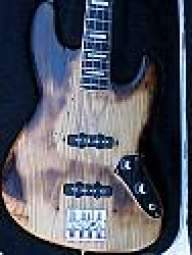
Yes ... they both come from a design 'template' ... most basses use off the shelf pieces/parts ... which is a good thing if you ever want to upgrade or replace .
and yes , i've had both ... i think the only way to compare a hand cut chunk of wood , would be to have another hand cut piece of wood right next to it .. !?? cut to the same shape by the same person ...
did i find it worth the extra bucks for more ' by hand ' whittling ... No
and yes , i've had both ... i think the only way to compare a hand cut chunk of wood , would be to have another hand cut piece of wood right next to it .. !?? cut to the same shape by the same person ...
did i find it worth the extra bucks for more ' by hand ' whittling ... No

In my purely anecdotal experience, my handmade Zon is closer to being "perfectly" constructed than any of the various CNC'd basses and guitars I've owned over the years. My favorite bass and guitar each were made with CNC (Carvin LB70 and CT4), but in terms of pure craftsmanship (and the corresponding effects on things like action and intonation) the Zon is noticeably in a different class.
Doner Designs
Steve Doner
- Jun 2, 2012
- 5,784
- 6,819
- Disclosures
- Doner Designs is an alias for Steve Doner
I doubt if too many of the hand crafting guys are doing it without any CNC equipment these days (unless they are really low volume shops).
My son is senior engineering student and I was just discussing with him the question of what comes between the designers output and the input to the production equipment (generally speaking).
As technology progresses it seems that there is less manual work between the drawing board and the roughed out product. Finish work and setup is another matter, but I guess plek machines can even cover some of that.
My son is senior engineering student and I was just discussing with him the question of what comes between the designers output and the input to the production equipment (generally speaking).
As technology progresses it seems that there is less manual work between the drawing board and the roughed out product. Finish work and setup is another matter, but I guess plek machines can even cover some of that.
There is a bit of a charm to knowing that every truly hand made instrument is a little different so no two are exactly the same ... or maybe that's just me romanticizing it 

Means2nEnd
Supporting Member
Absolutely Yes
I agree with MCS4 I have owned and gigged a ton of high end basses and I can say without a doubt my Zon Sonus was in a class by itself just absolutely impeccable in every aspect. I had looked at that bass at every angle under all different lighting over every square inch and it was flawless.
No other basses I have owned or worked on in my shop were as perfect and I have had everything from Foderas to Sadowsky to MTD... George Furlanetto and Mike Tobias are right there with Joe Zon and to my knowledge none of them use a CNC machine funny how that is.
I will also say as a builder as soon as I can afford to invest in a high end CNC machine I will.
I agree with MCS4 I have owned and gigged a ton of high end basses and I can say without a doubt my Zon Sonus was in a class by itself just absolutely impeccable in every aspect. I had looked at that bass at every angle under all different lighting over every square inch and it was flawless.
No other basses I have owned or worked on in my shop were as perfect and I have had everything from Foderas to Sadowsky to MTD... George Furlanetto and Mike Tobias are right there with Joe Zon and to my knowledge none of them use a CNC machine funny how that is.
I will also say as a builder as soon as I can afford to invest in a high end CNC machine I will.
Last edited:
While I appreciate the skill and individuality involved in hand-crafting a bass guitar, can it compare to the precision and accuracy of CNC-manufactured production?
There is soul in a hand built. Yet to meet anyone that uses CNC in their builds, but clearly they exist. They probably make some awesome instruments, after all, would they be any better if NO power tools were used. Not getting into that argument, too old.
Wood selection and quality seems to be better on hand builds but then again, they don't build the numbers and have to have consistency across a ton of production.
Not PC, but here's another example.......Glock makes some outstanding pistols, out of plastic. Remarkable design, will work under any condition, the plastic plays a part in that. That being said, I like metal. Plastic has no soul. Plastic. Seems to be lacking in something the metal does not.
I'd say repeatability to a higher degree is the main difference.

I sometimes wonder if my 2011 and 2016 cnc basses could ever match the broken in and roadworn feel of my handmade 73 and 83 basses, not sure if I'll end up playing them that much to find out though


I think many do both combined for best results. Start on Cnc and finish off/do the details by hand.While I appreciate the skill and individuality involved in hand-crafting a bass guitar, can it compare to the precision and accuracy of CNC-manufactured production?


