Whatever is most accommodating to a hunk of foam being tucked in there.

TalkBass has been independent since 1998. Add your voice.
Create a free account to reply to discussions, view embedded media, and browse with fewer display ads.
Join free Log in
Want zero display ads or expanded classifieds tools? Compare plans.


Whatever is most accommodating to a hunk of foam being tucked in there.



When have you ever seen anyone say that? I’ve been on here close to 20 years and never saw it once.The arguement usually goes like this..."There is absolutley no difference in sound. I put one on and it sounded terrible so I yanked it off ASAP!"

 ) of resale value ever achieved!
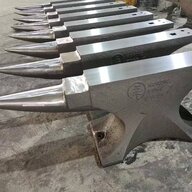



The ability to hear a difference in a blind test and pick which is which is the real question though. Then the next logical step is hearing it in a mix. Because physics is a thing of course, but the question here, and with the tonewood debates etc....is whether the difference is discernable. Extreme example is if you are playing along and a fly lands on your headstock, things have changed and the tone is impacted. But we'd all agree nobody could hear the difference. I did the same test a couple years ago and was biased going in. My roadworn P with the thin bent bridge was great, but I was 100% sure it would have even more sustain and have a better sound with a high mass bridge. So I bought 3 different ones and swapped them in and out and could hear no difference, even though I was 100% sure I would. I get it, just looking at them it seems obvious there would be a big difference in sound because they have like 3x the mass of the fender bent plate. No doubt the physics is different, but I couldn't hear it in my quiet music room, so no way would it make a difference in a real musical situation. And like I said, there was no question in my mind going in that I would get a different tone with a high mass. So the reality that it didn't change the tone in a way I could hear overcame a pretty significant bias I had going in.Ugh. Again?
You cannot use philosophy to solve a physics problem.
Density is a known contributor to vibrations/wave mechanics.
“I like” is a known contributor to bass procurement.
Make your own bed.
The difference in weight I though was very substantial, it just didn't change the sound I heard.A few ounces is more like it. I once weighed a bunch of bridges, including the high mass Fender and a Fender bent plate, and I seem to recall at least a 4 oz difference. That said, it’s been a few years, but I do remember it was a good bit more than a few grams.

Give me a Bent Plate, Threaded Saddle bridge every time. Or, just as important to me, original equipped bridges. I wouldn't change a Spector or Smith bridge. I have changed Fender type bridges. Always went back to the original.