This is such a ridiculously broad and stupid question that I don't know how to search for existing threads. I know, in the end, it's going to boil down to "Just use yer ears, mate," but a little head start would help.
I don't play at drum volume a lot. Never have. Now I'm jamming covers with these guys, walking cold into practice rooms, plugging in and struggling to sound good. Struggling to be audible without being too loud.
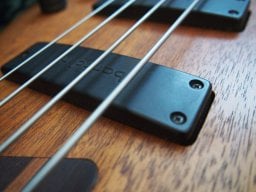
The backline gear is not the issue. Last night it was a Darkglass Microtubes of some sort (into I-don't-know-what-cab); last time it was an Aguilar Tone Hammer. I'm driving a P with a Lindy through a MarkBass Compressore, into the head. I'm moving my fingers from the neck back to the bridge, trying to find a spot where the E string isn't invisible and the D string isn't massive.
The question, I think, is figuring out what room nodes (is that the term?) are doing to the tonal balance and using EQ to counter them. (In retrospect, I think last night I was primarily standing in a horrible place, next to a wall across the room from the cab.) And also, how to find a place to live alongside the two guitar players and keyboard player.
So yeah. How do you do that? You walk into a room, you're getting set up; where do you start with the EQ?
Personally, I'm starting with a 1982 passive Jazz. It has an all-maple neck and the 70's era pickup spacing (4" center to center). It sounds a little brighter and has a lot more sustain than my '65 Jazz did that I bought in 1966 and was stolen from me in 1976. I run the V, V, and T, knobs all the way up. I run through either Eden or DNA amps, which are known for their clear, clean, articulate, and warm sound.
With the Eden amps I run everything flat except for the low-mids. I'll boost the low-mids to about 1:30 at either 250Hz or 500Hz, depending which amp I'm using. With my DNA-800 amp I also boost the low-mids the same amount. The low-mids control on it is set at 500Hz. I also run just a touch of boost (to about 1 o'clock) on the DNA Bass EQ because the Bass EQ on the Eden is a shelving control at 30Hz and on the DNA amp it's set at 35Hz. Just a little bump in that Bass EQ makes it sound like my Eden Bass EQ set flat.
One of the key comments you made was that you don't play at drums volume much. How loud you are playing makes a huge difference in your EQ settings. At bedroom practice levels, the human ear doesn't hear the bass or treble very well but has no trouble with the mids. To sound good at those low levels you typically will boost both the bass and the treble and may cut the low-mids. That is basically what most amps "shape" control ("enhance" control with Eden) does and also what those "loudness" buttons did on stereo receivers.
But then you start playing with a group at what you call drum level and all of a sudden your sound is muddy and gets lost in the mix. You can hear when your stop playing, but can't really hear the individual notes. AND, if you cut the low-mids, you pretty well disappear entirely. The Low-Mids are the sonic space that the bass lives in. The lowest bass frequencies belong to the kick drum. The guitars and keys own the high-mids and highs. The bass gets the low mids. The low mids give the bass presence and definition in the mix. Dial down the low-mids and you dial yourself out of the mix.
It doesn't take much boost in the low mids to get you that presence and definition and anywhere between about 250Hz and 550Hz will do the trick. If you put in too much boost in your low mids, your sound will honk at you. If that happens, just slowly dial down the boost until the honk goes away. That will make a big difference in how you sound and what you hear playing in a group.
Room anomalies are something else. When you have a bouncy stage, you almost always end up with a boomy bass sound. If the walls are covered with drapes, that will eat your highs. If you have a semi-parametric control on the amp you can usually locate the problem by setting the boost up to 3 o'clock and then starting at your lowest frequency, have someone slowly sweep through the frequencies addressable on that control while you play something that goes all the way across your strings. when you hit a frequency that's being reinforced but the room it will really jump out at you. If you hit a frequency that is being sucked out by the room that frequency will be much quieter than the others and is also very noticeable.
When you find that frequency, boost it a little or cut it a little and continue to do so slowly until it is no longer a problem. Then, you will sound good where you are standing in the room with the reflections you get off the walls and ceilings. Just be aware that the sound will change depending upon where you are hearing it from. The bass gets a lot of reinforcement off the back wall if you're standing close to it as well as any corners you're close to. The Dance floor may be totally different. I always use my wireless while we're doing a sound check and walk the dance floor, the table area, and the perimeter listening for the balance of sound.
I pay a lot more attention to the dance floor and table areas than the edges of the room. Usually a bar is on one of the perimeter walls and I want to make sure they can take orders while we are playing. Louder is better at the tables and loudest is best on the dance floor. Just coincidentally, your sound drops off by 6db every time you double the distance from your amp, so it naturally gets lower and lower as you move away from the stage.