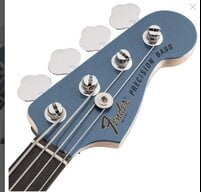
Well it doesn't make as much different as strings or pickups but, there is a somewhat subtle difference between Alder and Ash. Basswood has a distinctive tone as does Poplar. However, nothing near what strings or pup do.

TalkBass has been independent since 1998. Add your voice.
Create a free account to reply to discussions, view embedded media, and browse with fewer display ads.
Join free Log in
Want zero display ads or expanded classifieds tools? Compare plans.

I sense an oncoming closing of a thread. A shame that it might happen in the LC.
The second one, though, is a widely held belief that may or may not be correct. Consider: what if, maybe, old growth woods, with their tighter ring structure, etc., sound worse than new? Maybe fast growth new wood is superior in producing "good tone" in instruments?

...I don't see anybody who can say with undisputed authority excatly how a specific wood species will impact the tone of an electric solid body instrument. it's simply not possible, as there are waaaaaaaay too many variables within the wood itself...

It certainly is possible, inasmuch as one can determine the frequency response of speaker cabinets and use the data to confirm what your ears tell you...only with numbers instead of vague adjectives like "midrange" and "bottom end" and "mud". It just hasn't been done yet.
There is a way to do this. Larry may recall this...one of my sons was on the verge of making this a science project at one point a few years ago. Now that the boy is taking AP Physics this year, we may revisit it.
So the end result will be a bunch of frequency response data for different wood species which (my ears tell me) should show some differences. But the real question will be whether the variability within each wood species (the standard deviation on each response) will be sufficiently narrow that different species are statistically different from each other.
My intuition tells me that some will stand out from others, and some won't.....spruce won't bonk like cocobolo. But maybe mahogany bonks like walnut.



The OP asked, "how exactly does wood affect tone in electric basses?"
If you don't think it does have any effect why are you chiming in here?

don't you know the engineer is just going to EQ evrything out until you sound like a P bass?


It certainly is possible, inasmuch as one can determine the frequency response of speaker cabinets and use the data to confirm what your ears tell you...only with numbers instead of vague adjectives like "midrange" and "bottom end" and "mud". It just hasn't been done yet.
There is a way to do this. Larry may recall this...one of my sons was on the verge of making this a science project at one point a few years ago. Now that the boy is taking AP Physics this year, we may revisit it.
So the end result will be a bunch of frequency response data for different wood species which (my ears tell me) should show some differences. But the real question will be whether the variability within each wood species (the standard deviation on each response) will be sufficiently narrow that different species are statistically different from each other.
My intuition tells me that some will stand out from others, and some won't.....spruce won't bonk like cocobolo. But maybe mahogany bonks like walnut.
because the OP asked "how exactly does wood affect tone in electric basses?" the question itself is tainted and cannot be answered with 100% certainty, thus most of what has been said (except the great insight by Hoyt) is not valid.
This thread should be closed because there is very little (if any) useful information and has just served for a few folks to get angry do the religious-political standoff that never gets settled. Not cool.
The OP asked, "how exactly does wood affect tone in electric basses?"
If you don't think it does have any effect why are you chiming in here?

 . And Kevin Brubaker, along with many of the better bass luthiers out there think wood matters... so I doubt he'll have a problem with my stance here.
 . this isn't jr. high school. sheesh.